Search the Community
Showing results for tags 'creator'.
-
Hi everyone I'd like to present my latest MOC, a new modular building called Bricks & Blooms. I hope you like it. Bricks & Blooms is a modular Garden Centre built over 3 levels on a 32 x 32 base plate. in total it uses 2587 bricks. The facade is supposed to give the impression of being 2 buildings side by side but it is of course just one single building. The front to back measurement of the building is quite narrow, similar to Parisian restaurant. This is because I wanted to maintain plenty of space at the rear of the building for the main outside garden centre / plant sale area. THE MINIFIGURES I've included 6 mini figs and a cat with this MOC. Left to right they are: 2 customers (a father and his daughter), The garden centre shop keeper and gardener, the chef and the Aquatics shop assistant. THE GARDEN CENTRE AND GROUND LEVEL DETAILS The main garden centre area of the store is situated on the ground level. Outside on the street, I've included a tree, bench and lots of plants and flowers for sale. The garden centre also has a fruit and veg stall that sells it's produce directly to passers by on the street. Inside the shop I've included the cashier desk and more plants and gardening tools for sale including a little lawn mower side-build. Here is the interior of the fruit and veg stall that is accessed through a door at the back of the cashier desk. A door at the back of the shop leads out in to the main outdoor gardening area. Here I've included a large glass canopy covering rows of tables holding bedding plants. There are also more flowers, pots and other gardening products including a water feature. The stairs at the back of the building lead up to level 2. LEVEL 2 - CAFE/RESTAURANT No garden centre would be complete without its own cafe/restaurant. The cafe on level 2 has a fully equipped kitchen with serving desk and tables and chairs for the minifigs. There is also a small balcony in the cafe that looks out on to the street below. LEVEL 3 - AQUATICS Many garden centres here in the UK also have departments that specialise in pet fish and Aquatics. Bricks & Blooms is no exception and has it's own dedicated Aquatics section on level 3. The Cat below seems to have its eye on the goldfish. The door behind the desk leads out on to a small roof terrace area. FLOWER CART The model also includes a flower cart. THE FINISHED MODEL The picture below shows Bricks & Blooms combined with my other modulars and vehicle MOC's. Left to right they are. The Queen Bricktoria Convenience Store Brick Square Post Office Bricks & Blooms The Old Workhorse - Traction Engine LEGO IDEAS I have submitted Bricks & Blooms as a LEGO Ideas project. If you like the model I'd be really grateful if you'd be kind enough to head over to LEGO Ideas and give the model your votes. You can find the project at the following link. Many thanks! http://bit.ly/bricksblooms I hope you like my newest MOC and thanks very much for reading. As always, there are many more pics on my Flickr page and feel free to leave comments and let me know what you think.
-
 Welcome to my garage LEGO!!! Hello! My name is Michael. I'm a Builder from Russia, I love muscle cars! ZIL 130 Hello everyone! I've finished another USSR Legend, a true symbol of the era! For the first time, I was able to use a large windshield, and the entire model was built around it. Description: -Buggy motor drive -GeekServo steering -RCBrick control -Rear-wheel drive -2-speed gearbox (the lever is duplicated in the cabin) -The steering wheel rotates with the wheels -Working V8 -Doors, hood, sunroof, fuel tank, and glove compartment open. -Mechanical saddle lock -Detailed interior, rear axle, engine compartment, and more. -Weight: 2.2 kg. Length: 47 cm. Instagram: https://www.instagram.com/lego_muscle_garage/ Join my group in VK: https://vk.com/legomusclegarage All photos on the link:
 -
Welcome to my garage LEGO!!! Hello! My name is Michael. I'm a Builder from Russia, I love muscle cars! Dodge Challenger 2008 SRT Hello everyone! I'm presenting the updated Dodge. The color remains the same, but the car's sides have been rebuilt from scratch, taking into account the correction of proportions. The buggy motor has been relocated, providing additional passenger seating. Description: - Drive - 1 Buggy motor - Steering - Servo - Brain RC brik - Independent front suspension - Rear suspension bridge with four-point mounting - The steering wheel turns with wheels - Open the doors, hood, - Well-designed interior and under-hood space - About 2000 parts Instagram: https://www.instagram.com/lego_muscle_garage/ Join my group in VK: https://vk.com/legomusclegarage
-
 Then and Now - Comparing 4892 Prehistoric Power and 31058 Mighty Dinosaurs Just to provide an initial image of both sets together, please find below the main model of the 31058 with my MOC of a T-rex from 4892 using 85% of the available pieces. There are more pics of both sets along the post, which goes through Facts, Commercial, Parts&Techniques, Models & Community and Conclussions Now and then I buy old sets and they surprise me how archaic they look in respect to more recent ones. I am not trying to review boths sets here but to remark the changes in Lego across the years using these sets. Specially in the ball joints or articulation elements. If the Lego-volution topic is of your interest, please do not take this post as a comparison skipping to the end to find a winner because for me the meat is in the discussion so please feel free to share your thoughts. And my final conclusion is that both are excellent, “Each, in its own way”. I am publishing here to enable an open dialogue and your opinion is welcomed. Then and Now: Facts Year: 2006 2017 Set number: 4892 31058 Set name: Prehistoric Power Mighty Dinosaurs Branding: 8in1 3in1 Piece count: 380 174 (2.2 times) Weight of the pieces (grams): 381 108 (3.5 times) By the way, I am convinced that set size, part count and weight are only considered by AFOLs during purchase consideration, and not by children who are more comfortable with smaller sizes and sturdier and lighter models. Then and Now: Commercial Both Creator sets belongs to the 3in1 lineup, although the old one was advertised as 8in1. They are obviously similar because of the theme but going into the substance, both sets are alike because they were designed to build several brick-built creatures using articulated joints and giving them an organic look with wedges and slopes. The Creator line is now well established and there is a yearly spot for a “small brick-built 3in1 creatures set”, whereas in 2006 it was starting to understand its space in the product lineup. In fact it was its first year of life as we know it today, replacing the “Designer’s Set” range. The modern 31058 fills a spot in the 15 €/$ low range and the old Triceratops 4892 was positioned in the middle size spot of that year with a suggested price of 20 €/$. Do not get fooled by the proximity of the above numbers. Prices have changed in 11 years so the double box-size and piece count - and triple weight - puts the older set in the range of 2017’s 31064 Island Adventures or 31068 Modular Modern Home of 30 to 35 €/$. Pictures reflects clearly the differences in size. Then and Now: Parts&Techniques The old set has bigger, sharper and heavier pieces. By 2006 there were no small smooth curved slopes, as the 2008’s curved 4x1 no studs 61678, the 2013’s Curved 1x2 no studs 11477 or the 2014’s Curved 2x2 no studs 15068. So the organic shaping was achieved by straight slopes, being the smallest available the 45º 2x1, but in general by 4x1 and 4x2 wedges. This requires a bigger scale to achieve relatively smooth shapes and as a result the old set feels bulky, heavy and sharp in every ridge and corner whereas the new one is light and comfy to the hand allowing better child play. Even the old brick separator included in 4892 is heavier and sharper! Well, 31058 does not include the orange one but you get the point. The solutions for the articulation of limbs and jaws shows an even more drastic change. Joints have evolved greatly in 11 years. I suggest to have a look to the following links for further detail in joints: link1, link 2 (Mecha builders are the experts in this topic) My understanding is that the families of joints are, from strongest to weakest and from more degrees of articulation (flexible) to less: Special - as the “AT-AT leg joint” or compass seen in V-shape in the image Rackets - also known as Exo-Force joints, now discontinued and the 4892 main solution in red and grey Bionicle balls -could be “Big balls” but I am not looking for jokes- these are present in 31058 Hinges, as the yellow example, in many variations Mixel joints or “Small balls” also known as, small cups, also included in 31058 Old style turntables in various formats The old cups for small balls, in old grey in the top-left corner The infinite possibilities of bars and clips When I started with Creator animals I was a bit puzzled on how many solutions are available to provide articulation, the above pic is my effort to make sense of them. I think that Lego just produced different solutions at different moments in time for different needs/product lines (Exo-Force, Bionicle, Mixels…) Yes, the Lego brick is 60 years old and its patent has expired; that applies just to the old 2x4 brick. Joints and slopes in 31038 are designs of the recent 21st century, just around the corner; and I do not think that it was possible to produce them with quality even in 2006, comparing the loose grip of old cups with the nice one of the new small balls.This and the bigger one in black in the top-center of the image was one of the hardest family to distinguish across sets inventories and in bkicklink. The bigger is a bit stronger but both are excellent, the smaller is also simpler to use. Variations of SNOT pieces have been released in these years as well. Not sure what has refrained Lego from making available all variations at once from the beginning, apart from brackets which might have required additional technology to avoid cracking. The fact is that from the 2006 set we just get three models of 2-ways SNOT elements in small quantities which pales in comparison with the assortment of 2-ways and even a 3-ways pieces in the modern set. Then and Now: Models & Community At that time the AFOL community had not available all current tools and cameras, so 4892 reviews are not as detailed as the ones for 31058. Brickset’s Review 31058 and Eurobrick’s Review 4892 Jangbrick’s video review 31058 and Video for 4892 Regarding alternates or C-models, both sets are designed for this purpose offering each a huge number of possibilities. The old one missed a T-Rex among the 12 suggested in the instructions’ booklets, maybe because there was one as the main model of 4507 - Prehistoric Creatures from 2004, under the “Designer’s Set” range. I had filled that spot, which can be found in rebrickable , and anyone could make another dozen of excellent models. It is the first alternate to that set in rebrickable, a symptom of what was going on online in 2006. The instructions include 8 models but I’d say just 3 use 75% or more of the available pieces. The new one seems to “only” include instructions for 3 models in the box but there is a fourth one (diplodocus) available for download by Lego (plus some additionals!?) In addition to that it was the star of a contest for alternatives in 2017 and as a result it showcases 24 excellent MOCs in rebrickable and there should be many more in youtube and other pages. What I read from the above is that the Lego effort in producing alternatives /C-models has been substituted by the community activity, with an astonishing improvement. I do not mean that Lego is not doing nothing to promote, create and provoke us, the community, just that the move has been good and it is providing more “play” for all. Due to its nature and parts selection, there has not been any problem in finding examples or ideas to make equivalent models for both sets.I picture here the official main models for each set with the other set matching the “challenge”. I have enjoyed this a lot!! Then and Now: Conclusion Both sets are excellent but if you are used to the 2010’s Lego experience the old set feels … old Despite the new slopes giving a better look and the new SNOTs allowing amazing solutions, there is a complaint I keep on reading from AFOLs feeling a bit cheating in respect to the old times.That is because there are too many specialized pieces. There is a blurry border between a prefabricated plastic toy to be assembled once and played and a construction blocks toy to be built and rebuilt. And the line might be drawn based on the number of available elements and its ability to be used in several builds, fostering or killing creativity. I would say that yes, we have 10 times more parts than before, but the way they are designed to be combined gives as well 10 more models out of the same pieces, keeping the level up. I would say that creativity is king in both sets and the “specialized elements” in 31058 provides lots of opportunities,more than the old blocks from 4892. The main reason for that is the flexibility added by the small joints and the variety of SNOT elements. Anyhow, I am extremely happy with my old triceratops and its bulky and heavy feel fills me with nostalgia and joy.
 -
Hello dear Lego fans, After having signed up here in the Eurobricks forums in 2011, I posted a new thread in the "Hello my name is..." section about my plans to create my own Lego City layout. Now almost 9 years later, I can finally show you some of the progress that has been made just at the beginning of the new decade :) Good things come to those who wait. Renovations on the attic are finally complete (apart from the lighting) and we now have around 110 m² to unleash our imagination. The current plans of the Lego city layout add up to around 60m² in size and they are, as you can see in the video, far from finished. However, I thought you might be interested in some of the things that my girlfriend and me were designing in the last couple of days. The name of the city is still unknown, but the overall design has started to take shape with a downtown area, which includes all the modulars, and shops, a residential area, an amusement park, a winter village, a train yard and a harbor/beach area. I would also like to add an airport to the city and some of the classic monorail tracks have been placed already. We are also getting into MOC a little bit and we will add our own creations to the layout as soon as they look nice! The commentary of the video is in German, but I am trying to add English subtitles into the system. Please let us know what you think here in the forums or in the comments section of YouTube. I will keep you posted on future updates if you like :) Note: All of the parts used in this layout are original Lego parts, except for some of the baseplates. I thought that lime green in the Hogwarts castle area might look cool, but I will probably exchange it for regular grass green baseplates in the near future. Thank you so much for taking a look! :) Christof
-
Hi everyone This is my new MOC. A vintage taxi loosely based on American style taxicabs from the 1950's / 60's. The model is 6 studs wide and contains 187 parts. I've designed this model as my entry in a contest currently running on LEGO Ideas. The brief is to design a vintage car to compliment the style of the LEGO modular buildings. i felt that a taxi would fit the bill pretty well, especially with the more recent American style modulars like Downtown Diner and Corner Garage. Anyway It's a long shot but if I was lucky enough to win the contest then this model would be released as a future gift with purchase set. Here's the link to contest entry over on LEGO Ideas. VINTAGE YELLOW TAXICAB The trunk can be opened to provide plenty of space for luggage. there is enough space inside the taxi to seat three minifigures. Here's a pic showing the taxi alongside 2 of my MOC modular buildings which are both also on LEGO Ideas, Bricks & Blooms and Brick Town Police Station. I hope you like the model, feel free to let me know what you think.
-
 Instructions here: http://bit.ly/utb-boston-terrier
 -
Hi. I'm a Lego Technic MOC builder but when I got into Lego years ago I have got a lot of sets and made some... interesting MOCs. I'm considering to change up my display setup to make it look better, and I thought asking for advice and suggestions would be a great idea. Here's the collection as of now: The left shelf has my MOCs and the right shelf has sets and space MOCs. (The posters above are going to be removed) Left Shelf On the top of the left shelf are cars I made over 3 years ago. They're not pretty, and I probably won't be taking them apart for new builds since I'm giving my full time to Technic. On the middle of the shelf is some custom Bionicle figures I made as part of a weird story I made on the now defunct Lego.com gallery. On the bottom of the shelf is a... quirky house with a living room, kitchen, closet, bathroom, and bedroom that I made probably four years ago, broke, and rebuilt. It serves no use and its use as a display piece is kind of worthless, but it's one of the biggest things I built at the time. The playground on the middle shelf used to be connected to the right of the house. It hurts to remember having it on my dresser not playing with it because the house wasn't pretty. I should rebuild the house into something new but I'm keeping it as a memory and since all the pieces are a different color and I have no idea what to build. MineCraft Display A ton of MineCraft sets I got to connect to each other and make a cool display. Unfortunately I ignore it often and never got to my plans to put a MineCraft wallpaper up to make it look like a set box, but I'd like to. Right Shelf Just built sets and space MOCs I made forever ago. Top Shelf I expanded the shelf above by placing two poster frames and holding them up with a bar mounted in the wall, making it easy for removal and since I don't want to use a permanent structure. I like it but it's impossible to see items placed all the way back, so I don't know if I want to keep it or not. Here's the bar it was on... And here's the shelf I put the boards on top of. A lot of the items on the shelves are builds I don't have as much interest in as the large Creator cars I want to display here so I'm open for ideas. If this was your space to display your Lego collection, what would you do? How would you display creations you like and the ones that are not as interesting?
-
LEGO MOC #44 Vintage Stylish Convertible What thing can be cooler than driving a stylish convertible in Lego city. This convertible has a working convertible roof !!!! Also the hood, door and trunk can be opened. It is definitely a dream car for your minifigures. Please support this project and let you minifigures have a chance to drive it :D It is another project for LEGO Ideas contest "BUILD A VINTAGE CAR TO CRUISE THE STREETS OF LEGO® MODULAR BUILDINGS!" . Ideas: https://ideas.lego.com/challenges/bafd4186-bb49-4eb0-903f-910415f04391/application/d3de2218-e220-41a0-8e65-af4fc7642a95/comments_tab#idea-tabs My other MOC models: [MOC] Vintage Stylish Convertible [MOC] Vintage Bus [MOC] Halloween Pumpkin Horse Carriage [MOC] ISUZU NPR Light Duty Truck [MOC] Karsan Jest Mini-Bus [MOC] Ford F150 XLT [MOC] London Double Decker Bus Dennis Enviro 400 [MOC] Lada VAZ-2105 [MOC] Subaru WRX [MOC] Classic Cadillac Convertible [MOC] Toyota 6th Gen. HiAce Van [MOC] James Bond Aston Martin DB5 [MOC] Toytoa HiAce van [MOC] Toyota GT86 [MOC] Office Desk [MOC] Ferrari F355 [MOC] Toyota AE86 Coupe (2018 version) in Initial D Animation [MOC] Police Motorcycle #2 [MOC] Sport Bike Stop Motion Speed Build [MOC] New York City Police (NYPD) Car [MOC] Lego Mini Cooper [MOC] Japan Tokyo Taxi vol.1 東京無線タクシー [MOC] Ice Cream Truck [MOC] LEGO California Highway Patrol [MOC] LEGO Police Car [MOC] Police Motorcycle [MOC] New York City Taxi / Cab [MOC] LEGO NYC News Stand [MOC] New York City Transit Bus [MOC] Newspaper Rack [MOC] Coke/Beverage Cooler Initial D AE86 Racer AC Transit Bus AC Transit Bus Short Version Ice Cream Van
-
Well, after a long period of not doing much besides the giant Eleitian Central Command model, I present to you my newest model, The Cliffside Villa! The idea came about last Sunday, I was procrastinating on doing stuff I was supposed to, as one does. I decided to expand on the bridge, which I had been building as a standalone concept but couldn't figure out what to do with. I was going to build a fairytale castle on the cliffs that I eventually made behind the bridge, but then it morphed into an entirely different building altogether! The porches, stained glass window, and other elements of the actual pavilion came about next, after I'd laid the groundwork (literally) in the form of the cliffs. I then decided to make it into a combination of my previous Temple of the Moon Maiden MOC and something more open to interpretation. So it could be used, (it sits on a baseplate totaling 32 x 48) as an addition to a modular city! Perhaps a large city park with a pavilion, or some form of garden! From my official description: It's a fine spring day at the Cliffside Villa! The Moon Priest contemplates the deep questions of life on the porch, while his daughter strolls the elegantly appointed walkways of the garden. Two guards stand sentry by the staircase, protecting the inhabitants of the Villa from harm. Explore all the secret nooks and crannies of this large set, from the bell tower to the fish pond to the stained glass window behind which the statue of the Moon Maiden is placed! Set features: - 2568 Pieces - 7 Minifigures: The Moon Priest, Moon Priest's Daughter, Statue of the Moon Maiden, (2) Garden Statues, (2) Guards - Villa features a large stained glass window, metallic Statue of the Moon Maiden on a raised pedestal, and two spacious porches. Upper story features a movable bell! - Elegant bridge crosses a large frog pond filled with lily pads and other aquatic plants. See if you can spot the frogs hiding down there! - Statuary adorns the garden, which is built onto the cliffs with beautiful brick-built birch and cherry trees in full bloom. - Relax on the small bench set below one of the statues! - Features multiple unique pieces, such as the Ornamental gold fish adorning the roof, the Moon Priest's staff, and much more! - Spacious basement level beneath the Villa is perfect for placing hidden treasure or whatever you need for added suspense! But don't just follow that one story for this model, use your imagination to make it your own! This model, on baseplates totaling 32 x 48, can be placed as a standalone model or a complementary model for your modular city! Use it as a pavilion, a city park, or a historical monument in your LEGO town. This MOC is now on LEGO Ideas! If you want to, please help support it, I'd love for it to be one of the lucky few that makes it! The Cliffside Villa: https://ideas.lego.com/projects/4bfda07a-beb1-440e-bcfe-d9742e9d3746 Feel free to leave any comments below, and keep on building, everyone! :)
-
MOC#37 Isuzu NPR Light Duty Truck Isuzu NPR is a very popular truck in many countries. The cabin doors, back doors and lift gate can be functioned. My other MOC models: [MOC] Halloween Pumpkin Horse Carriage [MOC] ISUZU NPR Light Duty Truck [MOC] Karsan Jest Mini-Bus [MOC] Ford F150 XLT [MOC] London Double Decker Bus Dennis Enviro 400 [MOC] Lada VAZ-2105 [MOC] Subaru WRX [MOC] Classic Cadillac Convertible [MOC] Toyota 6th Gen. HiAce Van [MOC] James Bond Aston Martin DB5 [MOC] Toytoa HiAce van [MOC] Toyota GT86 [MOC] Office Desk [MOC] Ferrari F355 [MOC] Toyota AE86 Coupe (2018 version) in Initial D Animation [MOC] Police Motorcycle #2 [MOC] Sport Bike Stop Motion Speed Build [MOC] New York City Police (NYPD) Car [MOC] Lego Mini Cooper [MOC] Japan Tokyo Taxi vol.1 東京無線タクシー [MOC] Ice Cream Truck [MOC] LEGO California Highway Patrol [MOC] LEGO Police Car [MOC] Police Motorcycle [MOC] New York City Taxi / Cab [MOC] LEGO NYC News Stand [MOC] New York City Transit Bus [MOC] Newspaper Rack [MOC] Coke/Beverage Cooler Initial D AE86 Racer AC Transit Bus AC Transit Bus Short Version Ice Cream Van
-
C-Model for Creator set 31085 (Mobile Stunt Show). An oversized hot rod for stunt shows, spewing fire, going fast and loud and getting some nice air time after jumping from ramps. Features: - individual suspension for each wheel (hard front and softer rear for crazy landings) - minifig-scale cockpit with steering wheel, gear shifter and mock gauge - small but openable and functional trunk (set's wrench would fit, or maybe two pizzas?) Pictured is the render of exact .io model of the physical build (aside from the rubber band for the rear suspension) - I don't have enough space and proper lighting to make some good photos.
-
This topic has a lot of photos inside, to make it easier for everyone to see the latest version of my MOD, I have editted this first post to show version 5, 14th Nov 2020. Your feedback is welcome or share your MOD ideas Please! Port View by R Y, on Flickr Bow by R Y, on Flickr Stern Starboard by R Y, on Flickr My Lego collection consisted mainly of SW sets and its MOCs, I was tempted to get the 21322 Barracuda Bay when it came out in April but decided to save up for the UCS A-Wing, which I still haven’t got around to build yet, I have been modify the 75175 A-wing. A-Wing Mod by R Y, on Flickr I wasn’t too keen on the 31109 Creator Pirate Ship when I first saw its photos, especially the brick-built sails. During the Queen’s Birthday long weekend, I was reading posts on OZLUG of buying multiple sets to make it a bigger ship; that grabbed my attention as I mod all Lego sets where possible after I figured out Bricklink. However, at RRP of $160 AUD each, I might as well just buy the 21322 for $300 AUD; then again thanks to OZLUG, I realised that they are $119 at Kmart, meaning $238 worth of investment, no brainer! I quickly read up on reviews from Brickset and Brother’s Brick, how the completely brick-built design is its selling point, instead of using specialized boat hull pieces. My local Kmart had no stock, so I went to the next nearest one, nothing on the shelves again and a store girl told me all they have is already on the shelfs even though the online stock check shows limited availability. Disappointed, I was about the leave the store empty handed before I talked past the customer service counter, there was only one person in line so I decided to wait and check. The service girl was very helpful and checked the stock room for me, it turned out they do have three at the back, which I gladly picked up two; she told me apparently people try to steal Lego all the time, so they keep the good stuff at the back. I had to wait for my baby to settle and sleep before started building that night. As the original model is built in 3 sections: bow with forecastle, waist, stern with captain’s cabin; I decided to build 2 x waists sections and have 3 masts. I always build repetition sections step by step simultaneously instead of finishing one section and start another, personally I find this method quicker. My aim is to stick to the original Lego design and finish the hull asap, redesign the masts into foremast, mainmast and mizzen mast, and use the remaining pieces to touch up and make the 2 waists transition smoothly. 31109 Long Side View by R Y, on Flickr I wanted to rig the ship from the bowsprit to the stern flagpole, I had to move the “Plate Round 2 x 2 with Pin Hole and 4 Arms Up” to the mainmast beneath the lookout so the arms are equal distance to the diagonal spars from the foremast and mizzen mast. I spent more time on the foremast and rigging than any other sections. I tried a few different arrangements before settled down on the current layout, where the rigging goes down to the bowsprit from the upside-down diagonal spar. I used light bluish grey Technic Bush instead of the yellow ones provided. The hose piece is still slightly short and the bowsprit is pulled upwards, but the jib sail hides most of it. Overall, I was happy that I achieved my goal. Masts and Rigging by R Y, on Flickr I added a 1 x 2 red brown plate to each of the gun port openings so they are not too close to the waterline, I initially wanted to add 2 pieces per opening, but they were too high and affected the guns inside. You can tell where each of the section ends with the breaks from the 3027 6 x 16 plate in dark tan secured with 2 x 2 blue round tiles. I made sure the 1 x 4 special plates overlap the gap to secure the sections. The alternating red and light orange strip along the deck worked out perfectly, I was initially worried that I may get a double up of same coloured plates with my MOD. Joins of the Sections by R Y, on Flickr As Lego only gives half the number of guns compare to the gun ports, having 2 sets gives me 4 guns to fill up the front gun deck, squeezed 2 minifigs inside with torches. Gun Deck with Baboon by R Y, on Flickr I plated over the opening next to the gangways on the 2nd waist, to make it look like a quarterdeck, but not really raised due to the limitation of my skills in the mod. I really like the brick-built rowing boat from the alternative Skull Island bult, I made it longer using 2 x 2 slopes at the stern and made other changes as certain parts were already used in the main ship built. I also built a boat rack with 4 cheese slopes and some plates. The rowing boat fills up on the empty quarterdeck perfectly, I really like how it turned out. Rowing Boat by R Y, on Flickr With the 2 sets of 3 human minifigs, I swapped around their outfits, brought in a pair of black legs to swap out the peg leg. Now I have 6 different minifigs, I left out the epaulette for the officer to differentiate him from the captain. a9 by R Y, on Flickr a8 by R Y, on Flickr I built the red/green parrot and blue seagull according to the instructions, again had to use some different pieces due to availability. Lastly, I added the pet baboon hanging off the shroud, it’s a really fun build where its arms and waist are twistable to get a good pose. Baboon by R Y, on Flickr I really liked how this MOD turned out, this is probably the cheapest and easiest way to get a Lego 8-gun full-rigged-ship (three or more masts), even the 21322 only has only two masts. It’s around 58cm long from the tip of the bowsprit to the edge of stern flag, around 36cm tall from the tip of mainmast to the bottom of the hull, 19cm wide at the horizontal spars. With the elongated waist, it makes the forecastle and poop deck seem small in comparison, a bit out of proportion to be honest; but at this stage, I don’t have the skills to design and make them bigger. Side Front View by R Y, on Flickr Top Front View by R Y, on Flickr Back View by R Y, on Flickr
-
https://ideas.lego.com/projects/2fc13079-3c2b-4037-b71e-66b0904e7ca2 I love the modular buildings of the Creator Expert Line, this project is inspired by model n 10228 Haunted House. My construction is perfectly adaptable to the other Modular Buildings. Normally Lego Modular are made up of 3 or more blocks with a top view. I prefer to open the construction halfway to the side because it allows for greater playability and a better view of the internal rooms. Obviously it's my personal opinion. I have used Lego Digital Designer for the project while for the rendering Studio. The building consists of 2384 bricks and is divided into 3 levels. Ground Floor: Living Room First Floor: Kitchen Second Floor: Bedroom and Bathroom Measures 15.4” (39cm) high, 9.4” (24cm) wide and 9” (25cm) deep. Recreate the charm of a Victorian-style home that you might discover in many European villages or cities. The 3-storey house has many fun and surprising details, including a beautiful garden with barbecue, an elegant living room, a functional kitchen, a relaxing bedroom and a refined bathroom. Includes 2 minifigures. Collectors will love to display this large set with pride alongside other modular buildings.
-
Captained by a Scottish fellow named Albert McCartney, this ship, the "Kintyre", originally operated out of what became one of the Southern-most English Colonies. There mission was as a privateer to harass any Spanish ships coming from the Caribbean to the old world with gold and silver, (plus harass and steal from the French), for around five years, starting in 1705. But eventually, McCartney grew tired of paying his due of treasure to the English crown, and set off to make his own way in the world "free" of any government. He moved his base of operations to a small island in the Caribbean with his crew, where there resided a abandoned French attempt at a fort from years prior. He got his crew to complete the fort, and used it as his base of operations. He plundered many a French, Spanish, and other nations' ships, along with his former comrades in the English navy. In early summer 1717 the Kintyre was last seen by some trappers on land (near what later became the port of Savannah, Georgia) sailing low in the water, going north, unknowingly into the path of a massive hurricane. The resulting wreck has never been found, and it was rumored to have been loaded to the gun-ports with gold and silver taken from a Spanish treasure ship by Florida's southern coast. (which had been found empty of most of it's treasure in the 1960's.) This could explain the heavily laden shape of the Kintyre that day in June 1717. As to what happened to the ship after it left the later-day Savannah area is anyone's guess, as it seems to have vanished without a trace off the face of the Earth. This ship is named the Kintyre, and is a recolor and MOD of set 31109 (3-in-1 Pirate Ship) in the Creator theme. She is captained by a Scottish fellow named Albert McCartney (nicknamed McCartney the Green for the color of his ship and clothes), a former (fictional!) privateer turned pirate. Some parts are missing, as the plastic pirate flag from Ninjago, 12 lattice window pieces, etc. And yes, the name of the ship and it's Captain are both Paul McCartney references. (The Mull of Kintyre and Uncle Albert / Admiral Halsey songs along with their creator's last name inspired the names of the ship and it's captain.) This MOD was also inspired by this very similar model by Eurobricks user @Wurger49. The name of the ship is supposed to go on the back of the captain's cabin spelled out in 1 x 1 printed tiles, located just below the flag pole. The Captain's cabin has a desk and chair. Eight cannons are ready for firing on the Kintyre. It was said by the trappers that last saw the Kintyre afloat that one or two cannons were pushed overboard to make the ship more buoyant. (Most likely against the weight of the treasure they had just stolen from the Spanish ship in Florida.) Excavations for enlarging the port of Savannah in the 1970's found two such cannons buried under two hundred year of ocean silt. These were confirmed by the proper authorities to be of the same age and type used by the English Navy around the time of Kintyre's construction in 1699. The only question remains is this: where is the rest of the ship and it's treasure? Questions comments, and complaints are always welcome!
-
Hello! I am here with another nice MOC. I hope you like it! It is a "Old Town Hostel" modular building The video is available on YouTube here: Old Town Hostel here some features: 5283 Bricks Perfect Modular building dimension!!! Perfect compatibility with Lego® Modular Buildings Divided in 4 layers like all official Lego® Modular Nice scenario “broken window” Nice hidden garden behind the building with a barbecue and a chimney Nice tall city tree Ground Floor is furnished with a Reception Hall scenario First floor is furnished with curtains and tiles with a very nice spiral staircase Second floor furnished just with tiles Possibility to furnish first and second floor as you want You may get my instructions here: Stebrick.com Some other pictures at my Flickr page: Stebrick Flickr
-
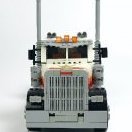
American truck Kenworth K100. The model is made in the scale of 1:22. Has a suspension on all wheels. Two l-motors are used for driving and a servo motor for steering model. The truck is equipped with an automatic trailer hitch. Thank you for watching.
-
It's been four years since the last classic European car graced the CREATOR range, and I said then I'd be delighted to see more of them. Since then we've seen the handsome Mustang and the sleek Aston Martin DB5 - technically a European classic car but I haven't counted that one! The range's latest offering, the Fiat Nuova 500 ('Cinquecento'), fits neatly into the category of small cute classics previously epitomised by 2014's 10242 Mini Cooper and 2016's 10252 VW Beetle. I was delighted to see the widespread use of a rarer colour (dark azure) in the Beetle; now Bright Light Yellow takes centre stage for the Italian classic. The Fiat 'Nuova' 500 was launched in 1957 as a successor to the 500 Topolino and was designed as an inexpensive, practical city car with a rear-mounted engine following the style of the successful Beetle. Its 479 cc engine boasted a stunning 13 horsepower (my lawnmower is 430 cc). Just short of 4 million were produced until the model was succeeded by the Fiat 126 in 1975. Earlier models featured rear-hinged 'suicide' doors; these were replaced with conventional front-hinged doors with the release of the 500F in 1965. Review: 10271 CREATOR Fiat Nuova 500 Parts: 960 Price: £74.99 | $89.99 | €79,99 | AU$139.99 Like the Beetle and Mini, the LEGO Fiat no steering, but aims at a realistic body for display with authentic features. Coming in at the same price as the VW Beetle (in the UK; the latter is pricier in most regions), the Fiat consists of over 200 fewer parts. Let's see if that price hike is worth it. Box I confess that at first glance at the box i thought this set was ordinary LEGO yellow, and it was only in looking at the little painting on the box that I noticed the paler tones of Bright Light Yellow - it's particularly noticeable when you compare to the yellow round tile on the artist's palette. The box art mimics approximately the scene of the painting, with the car posed attractively in front of Rome's iconic Flavian Amphitheatre, or Colosseum. I was disappointed not to see a tiny easel in the painting. Some lens flare adds sparkle. Cobbled streets abound. The box rear shows off the car's attractive rump, along with the set's other features which exceed the bounds of their respective insets. The car stands out beautifully in the otherwise nondescript and unidentified back street; a pronounced sepia filter provides a warm which contrasts but complements the dark blue of the CREATOR Expert range box trim. Sadly, thumb tabs are the designated means of opening - disappointing for an adult-oriented set such as this. I am pleased to see some schematics along with real set reference images on the box top: This saves me the job of sourcing my own reference images! They've even produced a LEGO schematic. The box contains some nine polybags - three modules with three bags each, the instructions, and a separately-packaged fabric part, which you can see here. Instructions The manual comes in a separate polybag which also contains the sticker sheet. There's no cardboard backing but the wrapping has in my case done a good job of preserving the booklet. I love this! The square manual evokes an old Polaroid photograph, and if that weren't obvious enough there's a rotated panel within the picture like a photo within a photo. The faded colours and dress provide the perfect 60s vibe and (even though I'm not that old) have me pining for family holidays long-since passed. Interestingly the car featured in the picture is an older model with rear-hinged doors. I think this is the first time I've encountered a LEGO instruction manual that doesn't feature the set on the cover. A downside to the cute square booklet is that it doesn't stay open, and I wasn't about to go breaking the perfect-bound spine just for the sake of some photos. The instructions are clear against a duck-egg blue background, with suitable callouts, and extra guidance for the few tricky bits. Some four double-pages at the front provide some interesting history into the car and the FIAT company. I'm a big fan of these educational instructions - what a fabulous way to preserve our cultural heritage. Also in the instruction pack is one of the prettiest sticker sheets I've ever encountered. The decals for the car are reasonably easy to apply, though the smaller square ones all go onto curved parts. They are well colour-matched. The 5x5 square painting is gorgeous. As is customary, a variety of nationalities are featured in the car registrations. The Danish (DK) and German (PN) plates both feature the set number formatted to a realistic registration number (although in Denmark, 10.xxx numbers were for motorcycles I believe). PN is not an obscure region of Germany but instead refers to the set designer Pierre Normandin. The Italian plate is worthy of note. 'TO' is the area code for Turin (Torino; the 'T' in FIAT and the firm's city of origin); 'F01965' can only refer to the 500F model which was released in 1965 and was the first to feature front-hinged doors, as does the LEGO version. Parts The three modules' parts are shown in the thumbnails below: click the pictures to see larger versions. I didn't identify any new moulds in this collection, but the headline is the shear number of parts appearing for the first time in bright light yellow. This colour has been in the ascendency for a few years, featuring for example as panels and bricks in Friends sets, or as the secondary colour of the new livery of the CITY fire sets, but I have not previously encountered such a fine spread. This extends too to the SNOT parts; there are SNOT brackets and bricks of various conformations all in BLY - contrast the Beetle whose extensive SNOT pieces were for most part grey. Otherwise, the 10x4x1 windscreen and the 4x2 2/3x1 trans-clear curved bricks are found only in the Old Trafford set, and there are three (one spare) 1x1 round tiles with a lovely FIAT logo - see later. The four medium dark flesh arms-with-pins in the centre photo took me a while to identify; they are originally Nexo Knight parts found more recently as ice cream cone limbs. Build I won't go through this exhaustively; instead I'll just try to give you a feel for the build and highlight some interesting bits. We join here fairly early in module 1. Of some interest is the construction of the chassis: In the centre are dark grey 2x4 plates with pins on each side, usually used as wheel axles, here connecting to the technic beams on either side. The centre beams are connected to the outer beams and the black 2x2 plates with technic hole via 3L pins. The result is a strong floorpan only a brick high. The underside is reinforced; see here. The rear bumper and lights is attached via SNOT plates, and also unusually with the 2x3 clippy-tile. I remain uncertain of the purpose of the two blue stud-pins on either side of each end of the chassis; they serve no apparent purpose except possibly to help put the axles into the right holes. If that's the case, I can't help but feel a little patronised. Next we build up the rear, at the start of Module 2. You get to see how the wings are attached at a slant using hinge-plates in a technique that will be familiar to anyone who has ever built an X-wing. See here for a part-assembled view. Above these slanted sections, SNOT-attached curved plates help define the car's double-curvature. Note the small 2x2 with corner cutaway, which attaches solely to the single stud of the grey headlight brick you can see mounted on its side - it's next to the turquoise brick if not immediately obvious. I always like headlight bricks used this way. You can also see the gearstick and handbrake, along with the bars to which the chairs will be attached. Up till now the build has been enjoyable, without being especially challenging. It starts to go up a gear at this point. r The dashboard section is a SNOTty conundrum that requires a bit of mental gymnastics to keep oriented correctly. This is made harder by the fact that a sticker needs to applied to one of the inverted 2x2 curved plates, seen here at the base of the dashboard but will face to the rear of the car when mounted - and it will be all too easy to set it upside down. The black block seen here is the fuel tank, which will attach to the visible forward-facing yellow studs of the dashboard section therefore reverting to studs-up. Towards the front are two black 2L pin joiners, the purpose of which is a little mystifying at this point. I (wrongly, as it transpired) assumed they were to attach the headlights. Next come the doors. I've part-deconstructed one here to show how it's made. 1x2 SNOT brackets - regular and inverted - hold some 1x2 clicky-hinges; these attach to 2x1 clicky hinges to produce a half-stud offset to which the contoured door upper is attached, delightfully smooth with curved plates on inverted tiles. Note the 1x1 corner panel brick just in front of the door hinges, and the 1x4 brick-with-slot at the base of the door - these are significant as will be explained later. On the right is the rear window made out of a door panel. The result is slightly asymmetrical, but it's barely noticeable. Moving into Module 3, the front panel is attached to the the inner studs of the 1x2 SNOT bricks, and the two 1x1 grey inverted brackets. You might think this would be a little weak, but the headlights help to keep it attached. Here you can also see that the black pin-joiners have nothing to do with the headlights, which instead will attach to the forward-pointing bars of the black 1x1 round-plates-with-bars (these things) sandwiched between 1x2 round-end plates. Why the round-end plates? And, for that matter, the heel-print tiles? Answer: they allow the wings to attach at a slant. Regular plates or bricks would interfere with the square front ends of the wings. Here, also, the purpose of the black pin-joiner part is made clear: the wings are seven studs long, and the 1x2 curved-top bricks require a 1x2x(4/3) curved brick to fill the gap. This has a protruding plate, and the black cylinders accommodate and also support this. Note the as-yet-unattached wing at the bottom of the picture. The free end of the hinge will be mounted on the black and yellow studs just in from the door hinge, and this reveals the reason for the 1x1 corner panel: it accommodates the rounded pivot of the hinge plate. Kudos to the designer for the problem-solving skills on display here . Finally, the secret of the folding roof is revealed to be more of those mini-frying pan pieces, this time in BLY. They leave a small visible irregularity in the roof edge, but I'm glad they are at least colour-matched. It is then a little tricky to attach the windscreen and the luggage-compartment cover without breaking it, but when it's done, plus wheels and the set's extra bits, we have a finished car. Overall, the build is deceptive. Apart from a few tricky bits, it is smooth and easy to follow, but enjoyable; it is all too easy to miss some wonderful design touches that help recreate the car's curvy outline. I'd rate the difficulty as 'Expert' (harder than Average but not Master or Legendary ) The Complete Set First impression: yup, it's definitely a Fiat 500. I think the LEGO version has the iconic double-curved bodywork down pretty well. I was pleasantly surprised by the slanted front and rear wings, which help to recreate the ovoid shape of the Fiat, and weren't immediately apparent from the box art or my brief look at the promotional pictures before receiving the set. It looks great in Bright Light Yellow which I think was the perfect choice: whilst the car would look stunning in a bright mid-blue tone, or dark blue or green, these have been used recently for CREATOR cars; possibly the only other colour I could see making such an impact here is the very rare Medium Green. The head-on view isn't the car's most interesting angle. The windscreen is perhaps rather obviously too rectangular, a flaw of the medium of course. There should be a curve to the top edge, and the screen of course should bow slightly. The front is nicely contoured, and I like the use of the unicorn horns to mimic the flashing here. I'm not quite so keen on the headlights, which I think might have been better made with inverted domes. You can see I've put on the Italian plated for the Italian car. A three-stud-long tile is used (3x2 at the back) which works well. The curvy rear has I think turned out nicely, helped by the stickers which are a reasonable representation of the vents for the rear engine. I'm not so keen on the flare of the wheel arches form these angles, but they are less obvious from any other viewpoint. Ideally, the lip of the wheel arches should extend all the way round, but no such part exists. You might also notice that the construction differs front to rear: Inverted slopes are used at the rear, but I think the SNOT-mounted cheese wedges at the front give a smoother more circular outline. The contour of the roof toward the rear is a little fussy from the side, with an obvious step between the roof and rear window. I do like the double-curve of the sides, but this comes with slight problems: notice the half-stud gap behind the door handle, caused by the upper bulge being offset, but this improves the front edge of the door, where the cut corner almost perfectly matches the rake of the windscreen. Ideally the top line of the upper curve would be continuous with the curve of the front luggage compartment; it's close, but not quite matched, and interrupted by the windscreen. The tricky curves of the rear have provided a significant challenge, which the designer has worked hard to overcome. The result is mostly successful: The convex engine compartment cover works superbly, and the light clusters look great and are instantly recognisable. The transition from the rear curve to the side is a little awkward: above the light clusters, there are two 45-degree slopes topped by a 33 degree cheese wedge, then moving to the almost-vertical bottom end of the yellow curved brick: the 33 degree cheese looks a little incongruous and I wonder whether another 45 slope would work better. I like the way the 45 slope echoes that of the cut-corner curved slope on the side, but below this the curved end of the rear wing ends a little messily. I can't suggest how to improve this though, and I am being super-picky here: the overall result is lovely. The birds-eye view really emphasises the car's ovoid outline. From here almost everything is smooth, and I hope you agree that the slanted wings are a triumph. I also like the minifigure skates as door handles. Here's a real one, in a similar colour, for comparison: The LEGO version has managed to reproduce the double-curved body sides pretty well, with only the step at the sides of the windscreen interrupting the curves. Missing are the tiny wing indicator lights, which i believe were standard on the 500F (correct me if I'm wrong), and the door mirror, which does not appear to have been mandatory and may even be a later addition. The lack of door mirrors does make the LEGO car look a little odd, conditioned as I am to seeing them on all cars these days. Features The luggage compartment cover lifts to a maximum of about 45 degrees to reveal a poky space taken up almost entirely by the fuel tank and spare wheel. No room for picnic baskets in this car. On the plus side, the spare wheel is the same size as the other wheels, unlike the Beetle's. I've switched to the German plates for this section. The inset shows a close-up of the 1x1 round FIAT tile, which is pretty and much nicer than the VW equivalent. You might notice here a slight quirk of the construction: the front panel sits half a plate height proud of the main body; the 1x8 tile on the top therefore half a plate behind. The latter lines up perfectly with the compartment cover when closed. It's barely noticeable, and if anything helps to smooth the contours. I'm not so keen on the black bars to which the headlights are attached, and wish they'd used light bluish grey. The doors open wide - really wide. On the inner aspect of the door is some dark red to match the seats, a telephone handset for the inner door handle, and an antenna to mimic the window handle (not a winder: it rotates the quarterlight window). Recall that I mentioned the 1x4 brick with groove at the bottom of the door: here you can see the reason for its use: it allows the door to close around the protruding pivot of 2x2-2x2 hinge plate at the rear (second panel). Again, an ingenious solution. The front seats flip forward, as you can see, using the ice cream cone arm pieces. True to life, the dashboard is rather Spartan body-coloured painted metal, and the steering column features an indicator lever and a single speedometer. You may just be able to make out some cheese wedges under the steering column to represent pedals. Compared to the real thing, the LEGO version is reasonably accurate. There's even a white round-end plate behind the speedometer, which would a more impressive nod to accuracy were the steering wheel also white. The wheel should probably be larger, but having seen the problem of the oversized steering wheel in the Mini, I think too small is better than too big. I've taken the roof off to give a better view of the interior. The decal does a good job of imitating the real dashboard switches, though there should be one more and some indicator lights. Here too you can admire the handbrake and gearstick, the latter crudely but effectively realised from a flick-fire pin in a ball joint. There's a surprising amount of space for such a dinky car; you could even sit two adults in the back, provided they have short legs and don't mind getting intimate. I'm not sure how authentic the white tops of the seats are; I can't find a reference image to a car which has them, except for this model. The rear engine is also given a bit of detail. True to life the cover opens downwards; the cover is perhaps a little thicker than necessary, but the effect when closed is pleasing. Here the engine looks like a rather randomly thrown-together collection of parts, but when compared to the reference image below, you can see that the designer has gone to some effort to make it accurate: Bonus points for the gold flower piece to match the oil filler cap! Finally we should look at the accessories. There's a sturdy travel case, emblazoned with national stickers of Switzerland, Sweden, Italy, Denmark, Poland, France, Germany, and Somewhere; there's a tall easel on which can be mounted the really quite beautiful artwork on a 5x5 grey tile. The accompanying artist's palette sports four paint colours only one of which (red) features in the painting: the yellow is regular yellow. Only the palette and brush fit in the trunk, requiring the easel to be stowed in the passenger footwell and poking out of the roof. The automotive masterpiece, meanwhile, must be thrown unceremoniously onto the back seat like grocery shopping or children. The trunk mounts easily onto the rear luggage rack, where the combination of reddish brown and MDF colours complement nicely the light yellow of the car. Comparison So how do the European small cars compare? Bear in mind that while the Beetle and Fiat and built at approximately the same scale (the VW Beetle is a metre longer than the 500), the Mini should be the same size as the Fiat. I now notice that somebody, probably a small child, has tipped both the Fiat's seats forward. I'm really quite positive about the Fiat, but I can't help feeling that it looks a little bland compared to its older siblings. Perhaps it is because the front is relatively featureless. The (intentional and authentic) lack of door mirrors is particularly noticeable here. All three look amazing from the rear. The Mini again has an unfair size advantage, and I am perhaps not doing the Fiat justice by showing it straight on where its narrow profile makes it seem that much smaller. However you feel, I think you will agree that the three make a great collection. Conclusion I really like this car. The slanted wings and double-curved bodywork help to capture the essence of this automotive classic, working well despite the constraints of medium of LEGO. The bright light yellow livery helps emphasise the car's playful nature, whilst bringing yet another peripheral colour to the LEGO mainstream. Realistic features abound and add to the display potential, and it will sit happily on the shelf by itself or in the illustrious company of any of the CREATOR Expert cars, including the Mustang and Aston Martin. The selection of BLY pieces will delight any parts-collector or MOCer, especially given the array of SNOT pieces. The build process is satisfying, and in the latter stages both entertaining and somewhat challenging, with interesting techniques from which I've certainly learned a thing or two. And now I find I have a conundrum. I reviewed the Beetle in 2016 and was quite critical; it is for the most part a great set, and an interesting build. It is currently still available, and in the UK is the same price as the Fiat, despite some 200 more parts; it is perhaps more interesting to look at, and not just because it is physically larger. On paper, the Beetle is the better set of the two. However, there is something about it which didn't sit right with me, and still doesn't: mostly it is the steep rake of the windscreen which resembled more a 2CV than a Beetle, but also the chunkiness of the wheels and wheel arches always felt a bit off to me The Fiat doesn't really suffer any of these issues. Aside from a few minor cosmetic substitutions, I don't think I would change anything about the set as it is, with the currently available parts, and I don't have any major criticisms of this set. And yet, if you asked me which of the two you should spend your hard-earned £75 on, I would have to say ... the Beetle. If you can afford it, get both. The Fiat is a better rendition of the original car, and has a wonderful informative instruction manual usually the preserve of Ideas or Architecture sets. Design 9 There's very little I would have done differently. Build 8 A little mundane at the start, but gets interesting from Module 2 onwards, with some mind-screwing SNOT work and some fascinating solutions to tricky problems. Parts 8 Lots of useful SNOT parts, and a ton of parts that are new to Bright Light Yellow. If you need BLY, get this! Play/Display 8 The car's small size and narrow profile might make it look less imposing compared to the Mini and Beetle, but its colour and curviness do make it stand out. Value 7 Parts per pound, it is still great value, although perhaps not compared to the Beetle. Whether this difference is due to licensing (TLG has a long history of licensed VW products) or the extended manual, I don't know. If the latter, I will just quote myself: Overall 80% My score 9/10 I love this set. Fiat or Beetle? Follow your heart. Oh, and TLG? More classic cars please! Rufus's 10252 Beetle Review Fiat 500 on Wikipedia
-
Octan Avenue, the newest addition to the modular street! I promised myself I would complete a new modular in less than the year it took to complete my previous: Baseplate Alley, but here we are. Exactly another year since my previous model, here’s my eleventh modular: Octan Avenue (yes, I'm simply using a well-known Lego brand as a street name, despite the building having nothing to do with it!) The design of this modular began in Autumn of 2019. On my way to university, every day I would go past a building in Les Rambles in Barcelona that just seemed quite fitting to turn into a modular. While in no way a stunning piece of architecture, the entrance to the Plaça Reial is orthogonal enough for it not to be a nightmare in Lego bricks but has quite an interesting mix of porticos, asymmetrical façades and clearly marked centrepieces in the corners to the middle street. This building reminded me of another similar building from Palma de Mallorca. Again, mirrored façades with an alley in-between. This one, though, with much more adorned Art Nouveau flair. For my model, I kept aspects of both sources of inspiration plus a bit of my own magic. My building has the alley over on one side, simpler window designs and the running portico (like the building in Barcelona) but much more pronounced tower-like elements protruding with very prominent designs on top (like the building in Palma). Building the tops of the towers was remarkably difficult. Because the yellow building naturally has more presence as it has more volume, I needed a spire that would draw attention and finalise the design effectively but not overshadow the blue building. This is why the tower top in the blue building is wider and a tiny bit taller. Hand on heart, I was stuck doing all kinds of spires for both buildings for a good month and a half until the combination of these two worked well. A simple 360º view: ============ Interiors: My focus is always on exteriors and nailing those. Interiors are always the second half of the job. I like coming up with original quirky shops to fill my modular and in this case, they are: Yellow Building: Model Store This one was quite fun to do. The ground level has models of two airplanes: 10226 Sopwith Camel and the one the kid in 10270 Bookshop is playing with (he had to buy it somewhere didn’t he?) The middle level has a model of the recent 10277 Crocodile Locomotive and of my three first modular: Magic Shop, Italian Villa and The Iron Horse (2016). You can find them on my Flickr, Instagram or their respective EB topics. The top level has five more mini-modulars of mine: Sweets & Co, A Summer in Tuscany (2017); Klee Corner, Disco 2000 Vinyl Store (2018) and Baseplate Alley (2019). Blue Building: Rug Store For the blue building, I needed a shop that housed items on its walls as it barely has any floor space. A rug store is ideal. The ground level houses the staircase to the middle floor and a bunch of boxes and items that are little Easter Eggs to official modular. Both the middle and top floors and full of rugs! My personal favourite is the black and white one on the middle floor. Video of the modules flying around and showcase of the interiors: ============ Like I did with my previous model, you can have a look at the 3D model to explore all the little nooks and crannies: Exterior Interiors ============ Thanks for reading through and hope you enjoy this model!
-
 Hello everybody, my latest iteration is the pick up truck. The ford F-150. I am questioning a bit if its Creator or Technic, but chassis and power train is technic aspect and body is made of system bricks to deliver that specific look. It has 2 RC functions, drive and steering, steering is possible by virtual pivot point for narrow fenders look of system bricks, and only few manual options, as openable doors and rear cargo door. More photos are either on my FB page or Bricksafe page Bricksafe page Facebook Page most of all, from my MOC´s sales i am able to continue to build more creations, so it would be great if you support me this way if you like the model. Instructions are available here : Iinstructions Also can be fitted with Buwizz for more power : Buwizz
 -
For my first published MOC I did an alternate for one of my favorite Creator 3-in-1 sets to date: the 31102 Fire Dragon. Dinosaurs are a popular choice for animal alternates, but I saw nothing from the velociraptor family yet, so I had to fix that! My primary goal within this project was to create a model that would be a reasonably accurate depiction of an avian dromaeosaurid, with the correct number of claws, that would also be fun to pose and play with. The final result exceeded my expectations in many ways. This thing can hold its balance very well for bipedal model! The adjustable feet claws and bendable knees resting on solid joints can support the body in a variety of complex stances, without falling over the weight of the heavier head. The tail can also bend sideways, meaning additional weight can be shifted if required to hold more precarious positions. The Pterosaur was a little extra made of the leftover bricks. I thought the raptor needed a pal or some form of prey to hunt. I think it also turned out pretty well given the limitations of the remaining parts. The longer tail (which is not necessarily accurate), was needed for the model to be able to hold a flight pose. Let me know what you think in the comments, and send a picture if you build it! Download free instructions + .ldr at Rebrickable Bricksafe folder
-
It's been a while since I had a finished Modular to share. Here's a new 16 wide - City Pizza & Hacker Space. Like my Bookshop, the architecture is based on buildings in Montreal. The first floor is "City Pizza" and utilizes a some of the stickers from the Lego accessory pack. Yes, I also took a Sharpie to three tiles to create some art for the walls. Those are some rather old windows in the front with the shorter height. Upstairs is a Hacker Space were some young people are up to who-knows-what. The top floor is a dorm with four bunks. As always - Thanks for looking!
-
 The red double decker bus is one of the iconic London symbol. My model is base on Enviro 400 bus in a minifigure scale. It is 8 stud wide The top and the second level can be easily detached for more playability. The front, rear, and the engine compartment door can be opened. I also designed the London phone booth and the bus stop in this Lego set. This bus does not only fit in London, it can also fit in every kids' Lego city. If you like my design, please vote and suppport my project. Thanks! Lego Ideas link: https://ideas.lego.com/projects/51819e3c-ab50-47aa-b219-724108ac65c4 I have slightly modified the London double decker bus. 1. Raised the base by 1 plate height. 2. The front grill and bumpers have been changed. London Hop-on Hop-off Sightseeing Bus: Stagecoach Bus Company livery: First Group Bus Company livery: Metroline Bus Company livery: Central Bus Company livery: Eight stud wide, in minifigure scale: Engine compartment door can be opened: Detail interior: Bus stop and phone booth: Bus is full!! Vote this project and bring them home :) : My other MOC models: [MOC] London Double Decker Bus Dennis Enviro 400 [MOC] Lada VAZ-2105 [MOC] Subaru WRX [MOC] Classic Cadillac Convertible [MOC] Toyota 6th Gen. HiAce Van [MOC] James Bond Aston Martin DB5 [MOC] Toytoa HiAce van [MOC] Toyota GT86 [MOC] Office Desk [MOC] Ferrari F355 [MOC] Toyota AE86 Coupe (2018 version) in Initial D Animation [MOC] Police Motorcycle #2 [MOC] Sport Bike Stop Motion Speed Build [MOC] New York City Police (NYPD) Car [MOC] Lego Mini Cooper [MOC] Japan Tokyo Taxi vol.1 東京無線タクシー [MOC] Ice Cream Truck [MOC] LEGO California Highway Patrol [MOC] LEGO Police Car [MOC] Police Motorcycle [MOC] New York City Taxi / Cab [MOC] LEGO NYC News Stand [MOC] New York City Transit Bus [MOC] Newspaper Rack [MOC] Coke/Beverage Cooler Initial D AE86 Racer AC Transit Bus AC Transit Bus Short Version Ice Cream Van
 -
 Hello everybody! It's been a while since my last creative input here, my apologies. Thus I am very happy to share something with you again. Besides mini model building, I am also a great fan of alternate building with the 3in1 Creator sets. These often come with a great parts variety and are a great source of inspiration. I very much like building alternate models with the whole parts of these sets to go beyond the official builing proposals, but not so this time! Today I would like to show you what can be done with the leftover pieces once you built one of the official building proposals. The set 31066 Space Shuttle Explorer was released in the year 2017 and unfortunately already disappeared from the market. However it is still widely available via online shopping. The set contains 274 pieces plus 12 extra parts, and has instructions for 3 main models: Space Shuttle (no leftover pieces) Surface Station (97 leftover pieces) 6-wheeled Rover (127 leftover pieces) Looking at the big number of leftover pieces, a new idea comes to mind: Additional models from the leftover pieces instead of new alternate models! The idea was to create an entire small space theme becasue there was none in the year 2017. Of course this entire project seems meaningless with regards towards the new official city space theme released in the new catalogue 2019. But I will share the general idea with you anyway. Image 1: Primary model - Space shuttle, no leftovers. Image 2: Secondary Model - Surface Station, 97 leftover pices! Image 3: Space Hopper built from the leftover pieces of the official surface station model. Image 4: Space Hopper and Surface Station. Image 5: Secondary Model - 6-wheeled Rover, 127 leftover pices! Image 6: Communications Antenna built from the leftover pieces of the official Rover model. Image 7: Communications Antenna and Rover. Image 8: The complete space theme consisting of 3x set 31066. So when you build a different model besides the primary model, have a look at the leftover pieces, there's lots of potential in them! Have a good time and happy building! ~ Chris
 -
 Do you feel that Creator's Three-In-One line is underappreciated to any degree by AFOLs? If so, why? Is it the limited color selection for most of its sets historically? Is it due to its tendency towards usage of more basic, preexisting bricks and/or parts within its sets? Is it the Three-In-One alternate build approach its sets take? Is it due to its historical tendency towards usage of only preexisting minifigure prints and/or parts? Is it due to its historically limited coverage of other playset subject matters, themes, and genres? Is it simply not as exciting as other themes and offerings from Lego? Is it something else altogether entirely?