Search the Community
Showing results for tags 'suspension'.
-
 Hello everyone! I am a recently new EB forums member (joined in 2020). I am a college student in the US pursuing Mechanical Engineering. I really enjoy building vehicles and mechanisms with Lego Technic to help visualize the ideas in my head and the designs I learn about from other people. I wanted to create this topic so I can record my older mocs and have a place to keep some current ones and W.I.P.'s as well. I will start adding more old pictures to this topic as I have time. I hope you enjoy all of these old (some finished, some not) M.O.C.'s of mine from my passionate hobby in Lego:) To get started, here is one of my oldest mocs to date, the R34 Wasp Jet (I made that name up btw): I have some other mocs from that era that I will share pictures of, but I have to transfer them from my camera SD card to my BrickSafe:) First I will share some other mocs that I have uploaded pictures of to my BrickSafe already. Here is an old Hummer W.I.P. I never finished... lol. I was waiting to buy some of these parts for the front axle wheel hubs. (sorry for weird camera angles) (note the use of a technic bushing as a differential lock selector ) Here is my one and only Battlebot. It is powered by two PF XL motors with a 24:1 gear ratio (worm gear to 24-tooth). I designed it as a big version of the 2x3 slope brick, but I have no idea if I actually created it at an accurate scale ratio, lol. I could have added a caster wheel towards the front, but I never got around to that. I used it against my brother's Mindstorms EV3 bot that he created which was 6x6 and my bot worked excellently. The Mindstorms just kept losing wheels and could not tip over my bot. The downside was that I did not create any attack mechanisms, so was really just playing defense the whole time:)
 -
 Three years after my previous model, the Hoonipigasus, here is finally a new MOC that I can present! But what’s that super long title? In other words, it’s a truck made by Matt! A truck designed to rescue vehicles stuck or damaged in off-road environments. Introduction This is a commissioned MOC by Benjamin Lorteau. He wanted this truck to be 100% manual, using the wheels from the Audi RS Q e-tron #42160, and featuring several steering modes thanks to two knobs, one controlling the front axle and the other the rear axle. I was free to do pretty much whatever I wanted as long as the initial constraints were generally respected. Here's a little paragraph from Benjamin: When the idea was proposed to me, I immediately saw strong potential. I thought it was possible to build something very interesting, the opposite of what is increasingly found in the Technic range, with lots of mechanically boring cars. The project would be based on an innovative mechanism allowing multiple steering modes, working in a similar way to the Claas Xerion #42054, while still being compatible with suspended axles. The model also had to stand out with a very good building experience. I will come back to this specific point later. Design I tried to reproduce the lines of the real truck as faithfully as possible. The visual appearance is split into two parts: the cab at the front and the exposed chassis at the rear. At the front, the cab stands out thanks to its yellow color, while the rest is entirely black. The cab was not easy to build, since the real model features many surfaces lying in different planes (doors and rear cab pillars, top of the hood and sides for example), as well as curves that are very difficult to reproduce at this scale, such as the roof. A panel with a curvature over one stud gave a result that was too thin, while two studs resulted in something too thick. I chose to simplify certain lines to ensure a smooth appearance, while staying as close as possible to the original design. The shape of the hood was made possible thanks to the new angle connectors #7. They allow for a simple, clean build and a faithful result. The rear section came together more naturally. It was “just” a matter of building the chassis cleanly, adding the rear winch, building the arm, and adding the toolboxes and the roll bar. This required a significant amount of optimization. After all, it was necessary to fit: The rear suspension The steering mode selection mechanism The rear chassis winch The arm The toolboxes All of this in a very limited space. Suspension What would an off-road recovery truck be without a good suspension? I reproduced the original suspension as faithfully as possible. It consists of suspended axles held by links, forming two opposing trapezoids at different heights. The suspension is responsive and allows for nice axle articulation, achieved solely by the weight of the vehicle - there’s no need to press down on the cab to compress the shock absorbers. Opening parts The following elements can be opened: Doors Hood (left and right sides) Toolboxes The toolboxes are built using studful parts and are attached to the chassis with pins and an axle. The doors do not have stops in the open position, so they can be opened until they touch the front wheels. I chose not to add any in order to keep the build simple and part-efficient, and I felt it matched well with the rugged style of the vehicle. All-wheel drive and fake engine Just like the real truck, my MOC features all-wheel drive, without a central differential, driving a fake V8 engine. The engine doesn’t spin very fast, partly by design choice. Indeed, the motion is transmitted through the differentials with a 22t/14t gear pair, then from the central axle the motion goes up to the engine via a 12t/20t idler/12t gear train, and finally two 8t gears. I could have added gearing, but it would have made the build less clean and more artificial. As with the door opening, I preferred simplicity. Winches and arm There are no fewer than… five winches on this model! Two of them are located at the front and rear of the chassis, to get out of difficult situations or tow a vehicle. These are mounted on a friction pin and are controlled by pulling the rope and using a gear. The choice of a friction pin was made to save space and to offer a different holding technology compared to the other winches. The other three are used for the arm. In all cases, they feature a ratchet allowing the rope to be held without any slipping. One of them controls the raising and lowering of the arm via the same pulley system as the real truck. The arm’s range of motion is slightly under 90°, with the upper limit being vertical, which can prevent the arm from falling back down. The last two control the towing cables. Their construction is light but sufficiently robust. 3-mode steering Alright, enough with the small classic functions, now we’re getting to the core of the model. What it was built around. As I mentioned at the beginning, I wanted steering behavior similar to that of the Claas Xerion #42054. But I couldn’t simply reuse the mechanism from this set, since my MOC features suspended axles, which requires steering to be controlled by a rotating axle rather than linkages. With linkages, the suspension would have influenced the steering. To counter that problem, it would have been necessary to add a translation/rotation conversion mechanism, which would have been a real mess. (Actually, using linkages wouldn’t be impossible with the right geometry, but it would add complexity and likely reduce reliability.) I based my design on a very simple principle that has existed for centuries: bevel gear transmissions. You’ve probably noticed that when the crown gear of a differential is placed on the left or right, the bevel gear connected to it will not rotate in the same direction for a given wheel rotation. That’s why, on chassis with multiple driven axles, the differentials don’t all have the same orientation. That’s what I needed: a mechanism with a bevel gear transmission, capable of reversing the direction of engagement - but using knobs to avoid losing wheel alignment. So I came up with this: Steering is controlled by the vertical axle. This axle is directly connected to the front wheels. The different steering modes are achieved by swapping, or not, or disconnecting, the rear axle steering shaft relative to the front axle - just like the Claas Xerion. When the grey knob on the carriage is up, it engages with the upper knob of the vertical axle. The front and rear steering axles rotate in the same direction: this is crab steering When the grey knob is down, it engages with the lower knob of the vertical axle. The rear steering axle rotates in the opposite direction to the front axle: this is 4-wheel steering When the grey knob is centered, it is disengaged: the rear axle is disconnected. However, this introduces an extra difficulty compared to the Claas Xerion: the linkage system naturally locks the rear axle on the Xerion, which is not the case with my system. So I added an automatic locking mechanism. When the carriage is in the central position, locks block the carriage knob. When the carriage is moved, the locks spread apart thanks to rollers pushed by slopes located on the carriage. The selection lever rotates almost effortlessly, but it can sometimes be a bit hard to grab since it is close to the toolbox. Just like on the Claas Xerion, the wheels need to be straight for the change to occur - within a certain tolerance. Since for each axle the steering shafts rotate slightly less than 90° in each direction (thanks to stops), you can’t, for example, switch steering modes when the truck has its wheels turned to the right in crab mode and end up in front-wheel steering while the rear axle is locked to the right. Well, it is possible - but you really have to want it and perfectly align everything while forcing against the stops. Front-wheel steering: Crab steering: 4-wheel steering: The selection lever rotates a cam fitted with a roller. This roller raises or lowers the sliding carriage of the moving knob. Position holding is ensured by the rubber band located at the front, which presses the rollers rollers against the slopes of the carriage. The carriage/slopes/elastic/rollers assembly naturally tends to return the carriage to the central position. For the upper and lower positions, a toggle point prevents the carriage from returning to center, enabled by a green connector located near the rear suspension - the travel is not ±90° but slightly more. Using a long CV joint makes it possible to compensate for the change in distance between the carriage knob and the rear axle steering shaft when the carriage moves, in addition to suspension travel. And that’s it - you know everything now! Build and instructions I did a significant amount of optimization work to achieve a build that is both elegant and enjoyable. I wanted to create a model that would stand out from most MOCs, which often feature poorly optimized construction and an unpleasant building experience. The construction is done through small assemblies that are attached to the main structure, as LEGO usually does. I reworked each sub-assembly until the build felt "obvious" and intelligently designed. (Well, I hope that’s the impression you get! ) The instructions came naturally thanks to the work done during the build process. I wanted them to be more “challenging” than current LEGO instructions, while avoiding all the pitfalls encountered with alternative brands. Concretely, I made sure that all parts in a step are clearly visible so none are missed, avoided (except in rare cases) mixing callouts and parts added directly in the same step, optimized the build order to avoid rotation steps, or prevented issues where a previous sub-assembly blocks progress, for example. Everything else came naturally during the build, and I didn’t have to do anything at the instruction stage regarding build contrast (use of colors), assemblies that don’t fit properly, etc. The goal was to make the build more stimulating by avoiding chains of single-part steps, without the difficulty coming from poor instructions. Basically, it’s a rally with a good co-driver, not an orienteering race with a bad map. It’s not perfect though - there are, for example, a few assemblies where I prioritized aesthetics over strength, such as the studful parts around the front and rear winches. But it’s the best I could do for now. Result: a MOC with only 1211 parts, featuring: 5 winches 3-mode steering Suspension All-wheel drive with fake engine Opening parts For reference, 1:10 scale sets usually range from 1500 to 1700 parts. Building instructions: Rebrickable Stickers: send a request to Forwartsticker Parts: (coming soon, on MOCBoxing) Video All photos can be found here: https://www.flickr.com/photos/162173007@N06/albums/72177720331182416/with/55013628563 That’s it for this truck. I hope you like it!
 -
 For my 8000th post, I'm presenting my model ideac for the TC30. I got the idea for the models by watching Bajd and Dakar racers, especially from the perspective of the helicopter. The same helicopter that records the races could also be used to provide support and rescue. One of the models will be a trophy truck with the following functions: Independent suspension in the front Live axle in the rear RWD with a fake V8 engine Steering actuated by a spare tyre in the rear Full interior with 2 seats and a steering wheel Opening doors and hood Monster livery Here's the current digital progress. I'm using the new large, thin tires and suspension parts to keep the model as compact as possible. The rear suspension uses a ball joint to attach to the rest of the bodywork. The angled spare wheels provides the HOG input. I am really proud of the following drive and steering solutions. The driveline basically goes directly from the axle to the fake V8, while the steering system uses linkages to transfer the steering input from the spare tyre to the steering rack. I think this is a more compact, and a cleaner solution than using gears. This being a trophy truck it needs some proper suspension system. Currently the suspension system is compressed a lot, so the physical should have a much higher gorund clearance. The front suspension is sharing a single shock absorber which is placed longitudally between the wheels. The rear suspension is an interesting hybrid of a ball joint and a trailing arm suspension. The suspension arms not only center the rear axle, but also act as levers for the suspension system, supported by hard shocks in the rear: That's the plan for the trophy truck, I will build and weigh it soon. it should just be under 300 grams according to the Studio. The second model will be some kind of a Rescue/camera/support helicopter which supports the race by providing video coverage and a means to a rescue if needed. The idea is to implement the following functions and features: Spinning rotors using a gear or a hidden rack trigger mechanism Collective control for the main rotor Winch with a ratchet mechanism Foldable landing gear Add lots of cameras, sensors, antennas, etc. Colorful livery, using neon yellow, red, white, black, etc. Modern styling with lots of curved surfaces Current progress so far is the basic concept of the collective control uisng a small turntable. Basically the central axle can move up and down and thereby change the angle of the rotors: So far that's all, I will update the topic as I go along.
 -
I got this idea yesterday and decided to build it. Its an improvmement of a classical torque tube suspension, but now it uses 2 torque tubes to form two half axles which are connected to each other via a turntable: To keep the half-axles from bending away there's a lower linkage made out of 5L suspension arms and some beams: So what's the difference btween this and classical single torque tube? Lets start with advantages: - No need for links or panhrads to keep the axle in place - Now each axle can have an independent drive, which cancel each other's torque therebye elimenating torque flex - Or you can use one ball joint for drive an dother for steering - Can carry much more torque And there are also some disadvantages: - Less flexible, maximum angle this setup can bend to is some 30 degrees - Steering is a bit more complicated, since the axles pivot in the center, you need some ball joints and links - Takes more space But you can even expand the concept to use three torque tubes. Now the side ones can carry power while the center one supports the steering system: This is just a concept for now, but I might try it in a realy model just to see how well it will work. What do you guys think? If possible try to build one your own and give me some feedback.
-
 It's been a busy start of the year in Thirdwiggville, with the two and a half TC9 builds, the 911, and now this, and it's only the first week of March. Granted, this has been on The Queue for a couple of months, but either way the productions is making me feel pretty good. This is a small scale MOC of the K-Tec 1233 Scraper. More can be found about the machine here, and where I learned about the machine here. Features: Steering 6x6 drive 2 cylinder fake engine full suspension lifting scraper opening dirt gate moving extractor plate Enjoy Front Suspension Trailer
 -
 Please Help me! I am making a LEGO truck, and I was wondering whether it is possible to build a vehicle with two suspensions like this. : 1. https://www.youtube.com/watch?v=b_bN7rFMjaw 2. http://sariel.pl/2010/11/steered-suspension-for-heavy-trucks/ Firstly, would it work if I have two of these style of suspensions and; Secondly, would it work if i have them without shock absorbers to return the wheels level in reference to the vehicle. Thanks, BuildSnapPost.
 -
For the "Fast car competition" organized by BuWizz, I have done that: For this contest, you have to make a vehicle with suspensions, and do a video showing it doing at least one jump. Of course, the MOC must be powered by a BuWizz! For the steering, there is a servomotor. The driving is done by two L motors, with a 1:1.8 ratio. So the buggy has a correct speed, and enough torque to be driven on dirt, sand... It is fully suspended. The front is an ordinary system. But for the rear, I couldn't do independant suspensions (not enough compact) or a suspended axle (because as the motors are in the chassis, when you accelerate the axle tilts). So I done an "amost suspended axle". The liftarms thin 5L have an effect of anti roll-bar. I have tried to do a light design. Thus, the MOC weighs 460 grams.
-
[MOC] Unimog 437
Thirdwigg posted a topic in LEGO Technic, Mindstorms, Model Team and Scale Modeling
I guess you could say I couldn't make up my mind about the kind of Unimog I wanted to make next. So I decided to make a platform that would support multiple versions. Features: Interchangeable platform Long and short wheelbase options Standard and Doka cabs, removable Manual control PF control (drop in) Front and rear suspension Steering 4x4 with I-4 fake motor Opening doors and hood Tipper bed options Feel free to check out thirdwigg.com to learn more about the build. Manual SWB with tipper bed. Manual LWB Doka with tipper bed. Power Functions (XL drive, Servo steering) LWB with cover. Manual LWB with canvas bed showing the suspension travel. You can find more pictures on my flickr. I have been adding instructions for the various versions here, and more will be added over the coming weeks. Someday I'll make a camper, because, everyone needs a camper. This was a fun project, and I loved the way it turned out. I have the LWB on my desk right now, and I keep getting distracted from work. I hope to add additional options for the system at some point, and will take other suggestions for versions to add. Hope you enjoy. -
 So this is my latest tank. It is a development of my previous tank, the Blacktron Liberator. The Liberator is very fast and fun to play with, but it also has plenty of shortcomings. With this build I tried to eliminate those shortcomings and at the same time be a little more purist: the only non-LEGO item in this build is a Buwizz brick. However this tank is not controlled by the Buwizz app. Instead I've tested @imurvai's BrickController app with this MOC (see video). And that proved to be a very positive experience. Ever since I've been playing around with Sbricks and Buwizz bricks one thing (well more than one thing to be honest) has bothered me, and that is the lack of any physical feedback. When I am playing with a MOC I am usually looking at it, not at the app on my smartphone. And so it can easily happen that my fingers lose touch with the controls without meaning to. This is totally not an issue when using a gamepad :). The MOC is powered by 2 XL motors for drive and 2 M motors for rotation, elevation and shooting. Functions: - Working torsion-bar suspension - Shooting; - Driving; - Turret rotation; - Gun elevation; Very roomy tank for minifigs :) Of course I've also made a video :) Hope you will like it!
 -
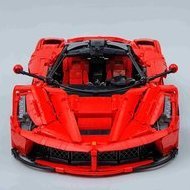
 It's only photos, but it is a design I've been working on for quite a while now. It will work with the standard 7 long steering beam and Track Rod 6mm, it even gives you Ackerman Steering. 17.5mm, 34mm diamiter rims. So that should cover all 1:10 scale models. You can swap the large spring for a smaller and uses these parts at the top one with parts x1 "Tube with double Ø4.85", x1 "Cross Block/form 2 x 2 x 2", x1 "3 with arch with Knob & Shaft Ø3.2", x2 "Technic Lever 2m" and x2 "Axle 3mm with Stoppers". I have only shown instructions for one side, it should be self explanatory on how to make the opposite side Please find photos Here! Lego McPherson Suspension Enjoy.
 -
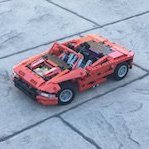
 Hi everyone, This is my first MOC to be published here on the forum: a small/compact rally hatchback. It is not a copy of an existing car, but the front is inspired by modern Audi's. The design parameters that I want to achieve include the following: Fast drivetrain Lots of torque (the car must be able to drive on tarmac, dirt and sand) An average scale of 1:12.5 Front and rear independent suspension Front and rear PF lights Servo steering with small turning radius Buwizz 2.0 to increase performance (located under the bonnet for better weightdistribution and easy acces) A light and rigid chassis Openable doors and bonnet A realistic/clean interior (no visible moters/wires/chassis beams) A gapless body, using rather pannels than beams Drift (on sand) It contains 100% LEGO parts (excpet BuWizz) with a total of 1178 parts. I am very happy with the result. Here are some pictures The Buwizz with easy acces... Clean interior... Openable glovebox... Rear suspension... Front suspension... The underside shows the chassis, wires and motors... Annd finally a little video to demonstrate the fucntions and the oudoor performance. Building instructions/partslist: https://rebrickable.com/mocs/MOC-14441/T-Lego/technic-rc-audi-rally-car-with-buwizz-20/#comments Hope you like it, comments, criticism and questions are welcome!
 -
-kpia.thumb.png.a265cddff9575859eea3a4d2aad663c2.png) Czechoslovakia WW2 tank. Power functions: 1x XL motor 2x L motor 3x M motor Fuction and chassis Lego. Desing Cobi small army WW2.
Czechoslovakia WW2 tank. Power functions: 1x XL motor 2x L motor 3x M motor Fuction and chassis Lego. Desing Cobi small army WW2. -
 This is my first WIP post on EuroBricks where I will show my progress on my newest build, an EV3-powered 1:8 replica of Lexus' newest flagship coupe, the LC500. The car will most likely be a combination of both the standard and the V6 hybrid LC, but it will have a V8. The body will also be orange. Here's a photo I found of an LC that looks a lot like the one I am shooting for. Features I'm planning to add: Four or six-speed paddle-shift transmission Retractable spoiler Detailed interior Fake V8 engine (but I would like to achieve moving pistons) Full independent suspension All I built so far was the rear axle for the LC. It's exactly like the one in the Porsche 911 GT3 RS set but more reinforced. I also made the V8 engine using Lego Digital Designer. I plan to build the paddle-shifting mechanism used in Didumos' Ultimately Playable Porsche 911 GT3 RS (the one with the tilted wheel) and pair it up with a gearbox. I currently am having trouble whether to motorize his gearbox with the EV3 motors or to pick a different one with less gears and friction. I also am having a little bit of trouble finding the right front axle, though I like the one that Didumos put his Porsche because of the fact that is has two shocks for each wheel. However, I find it very difficult to fit the V8 engine in the middle since the axle is made for a rear-engine car. Here's a poorly drawn render I made of what I'm trying to achieve with the front axle. And here's the chassis in the real LC and the measurements for the LC Lego model. Overall, I'm excited about the build. I would welcome some helpful comments about the V8 engine, axles, and the gearbox I planned to use before I order pieces on BL. Once I start working on the body and aesthetics, I would appreciate some input with that as well. I can also give you the download for the .lxf file of the engine if you'd like to check it out. I look forward to replying to your comments and sharing my progress. Thank you.
 -
Time for everyone's favorite childhood vehicle, a Fire Truck! This one is modeled off of @HorcikDesigns fabulous Truck. This one takes his design, adds a little Renault, and some special features, and it's done. The manual truck has four wheel drive, with suspension based off my 8081 4x4, a I-4 engine, a link based steering system controlled by both roof lights, and a tilting cab with seating for four. Much more at thirdwigg,com, with a full gallery at flickr.com. Video is here.
-
 Hi, I have been working on a new MOC (which I will leave as a surprise) and I can't seem to build a tiny rear suspension with a buggy motor driving it. I have seen these in other models before, but it is just too hard to reverse-engineer it. I am trying to make it within 15L by 15L. Help is appreciated
 -
 This is my latest MOC: an Ariel Atom 500 in 1:9 scale! Technically it isn't a true scale model since I didn't use exact dimensions (I just build what I think looks best), but size-wise it's about 1:9. The real car is the fastest ever variant of the Ariel Atom, a street-legal car built for track racing. Released in 2008, the Atom 500 features a 3-litre transverse-mounted V8 made from two motorbike engines. It produces 500 horsepower (hence the name) and redlines at a rather insane 10,500 RPM. Other modifications include massive wings and the gold-painted exoskeleton. The car weighs only 550kg, giving it a power:weight ratio of over 900hp/tonne (higher than anything short of a Koenigsegg) - It recorded a 0-60mph time of just 2.3 seconds and could reach 200mph. It was the fastest road-legal car around the Top Gear Test Track for over two years. That record lap was on damp tarmac - had the track been dry, it would probably still be at the top. Only 25 of these cars were made, selling for around £200,000 each. My model features: Remote control drive and steering with Power Functions - 1 XL motor for drive and 1 M motor for steering 4-speed sequential gearbox operated with paddle-shifters Working steering wheel Full independent suspension with longitundinally-mounted shock absorbers Steering has zero scrub radius V8 engine replica with moving pistons The zero-scrub radius was a new idea for me. When playing around with suspension linkages, I discovered that mounting the links in a certain way would cause all four to move when turning (rather than just the steering link). The center of steering was further outwards, almost exactly in the middle of the wheels (I think it's where the suspension links would intersect when extended, but I'm not sure of this). The geometry I chose works almost perfectly for 68.8x36 ZR tyres on 56mm rims. Here's a picture of the steering links in their two extreme positions superimposed - the point where the wheel shafts intersect is the center of steering: The suspension is standard double-wishbone in the rear, but with a sideways lever converting the upwards motion of the suspension into longitudinal movement of the shock absorber: The transverse V8 was very difficult to fit in because it has even dimensions and the rest of the chassis has odd dimensions. It is connected directly to the XL motor The interior (or as close as you can get to an interior in an Atom) features two racing-style seats, a steering wheel and paddle shifters: The aesthetics were rather difficult at times. The framwork was very difficult even with the 42055 yellow parts (in fact, getting that set is the reason why I built this model), and at times I had to use some tricks. For example, the rear framework looks like it has two beams crossing in an X-formation when in fact the left and right halves of the "X" are two separate structures: I also replicated the exhaust pipes and gigantic rear wing. One of my favourite parts of the model is the side intake and its red stripe: The PF IR receiver is disguised as the air intake and roll hoop: For more pictures of the car, see my video below. Music is composed by me as well: [media]https://www.youtube.com/watch?v=RhmgbCIpHT0[/media] This project is also on LEGO Ideas! I know the success rate is extremely low for such projects, but it would be amazing if this set because a reality! Please support my project here. Any support is much appreciated.
 -
Hi everyone This is a model i built a while ago, but only now had the time and eqiupment to showcase. I was asked to build a Buwizz showcase model for a toy fair in Boogna, italy. After some thought I decided to combine the rare dark blue panels from 41999 with tracks and a couple of RC motors. The finished model has following features: 2 RC models for drive Spring supported pendular suspension Two working fake V8 engines - hence the V16 Rollcage reinforced interrior with 4 seats Openable 70's muscle car style openable bodywork A working winch LED bar powereed by a total of 10 LEDs So lets start with a 360 view of the model: As you can see the body is inspired by 70's muscle car styling with large chromed grill Detailed view of the grill with the cute bunny: Lifting up the body exposes the internal rollcage and the two massive engines: Further the rollcage can be lifted by pulling out the two red pins, showing the 4 identical seats, making this a perfect family car The two V8's are powered by the RC motor's faster output: The power passes via cardan axles under the seats and up the gears: In case the model ever gets stuck there is also a functional winch powered by an M motor via 1:5 gearing ratio: The suspension is highly flexible: And here is the most important photo of any technic model : And to finish up with a bang here's a video of the Ripster in action: A quick summary of my thoughts regarding this model: Because the tracks are powered by the RC motors directly this is THE fastest tracked model I ever had the pleasure of building. But that speed comes with a price, the model has problems steering on spot on surfaces with high friction such as carpets. Sudden acceleration on such surfaces with quite a heavy model like this (1,5 kg) can cause problems with tracks coming apart. For that reason this is a perfect vehicle for smooth surfaces or ice. It is also very good at drifting, though it takes a lot of coordination to control a tracked vehicle like this. Suspension is extremely durable, the wheels were originally held with frictionless pins, but that proved insufficient, so they were replaced by axles 5 with stops. After that upgrade I had zero issues with suspension and it proved to be very flexible, yet reliable. Biggest problem with the model is the cosmetic stuff, the V8 chains tend to slide off after a while at such high RPMs, the bunny likes to jump into oblivion and the front grill can fall apart when crashing into stuff. Oh and one last thing, ITS LOUD. Driving this on my floor sounds like machine gun fire, so I hope my neighbours wont file a complaint . At the end of the day even with its positives and negatives its a very fun model to drive around and that is all that matters.
-
I mainly build Technic C-Models, but I also enjoy Creator alternatives, so here's what I built out of set 5763. In the photo, hot-rodder sigfig is added for scale and reference). Features: ► minifig scale (with adjustable steering wheel) ► openable and adjustable canopy-cage with roll bar ► rear suspension (individual for each wheel) ► details such as engine with radiator and twin turbo, lights, steering wheel, twin exhaust and rear view mirrors Browsing through OLX (online marketplace fo classified ads) I found old (2011), used 5763 for a price of a new small, ~50 piece set. I liked how the set contained big wheels and offered possibility to build suspension, so I bought it right away. Only one super-cheap plate was missing, so it was a nice deal. The MOC Alternative uses almost every part from the set. As you can see, the build came out quite clean:
-
 Hello all, I have been building recently a 1/10 scale SCORE Class 1 Buggy style vehicle. I have figured out all suspension geometry, caster angle and whatnot, but I would really like to be able to make the suspension not as bouncy. So, I guess my question is, does anyone have good methods for damping shock absorbers so that they are still soft, but return their compression and don't take too much force to compress? I have tested pneumatic cylinders, but they hold my springs from returning, and arent as soft as I'd like. Thanks
 -
 Here's the last of my three MOCs. This one is a 1977 Holden Torana. It was created to take on the big Falcon's in Australian touring cars, by putting a large 5 litre V8, in what was a comparatively small sedan. It was a great idea, but executed too quickly. The V8 was only tested on a dyno, but when put in a racecar, the high cornering speeds caused oil surges and creating reliability issues. These were fixed in the followup XU1, which became dominant. That didn't stop Holden fans from buying the SLR5000 in droves. My SLR5000 features: - Full independent suspension. - Remote control driven by 2 L motors servo and sbrick. - V8 motor - 4 opening doors, bonnet and boot. IMG_20170528_140254 by Russell Murphy, on Flickr IMG_20170528_140309 by Russell Murphy, on Flickr IMG_20170528_140406 by Russell Murphy, on Flickr
 -
The second of my three MOC's, the Audi TT. Again, apologies for the photo's. The TT is one of my favorite cars, and I've tried to capture the design as best I can. This one has the following features: - Full independent suspension. - 6 + N + R sequential gearbox (design by liftingbricks), driven by a porsche flappy paddles. - All wheel drive and five cylinder engine. - Opening doors, bonnet and trunk. You can see more on my Flickr IMG_20170528_140525 by Russell Murphy, on Flickr IMG_20170528_140510 by Russell Murphy, on Flickr IMG_20170528_140649 by Russell Murphy, on Flickr
-
After taking apart my class tractor I was looking at the new hubs, and got a great idea. Why not create a proper tatra concept with the 62.4 mm wheels. Fiddling around in LDD I created a 10x10 concept model: The main features I wanted to have are as following: Seperated drive axle from the weight bearing axle - this way the friction is greatly reduced and efficiency improved Linked steering - realistic, simple and relaible solution for which steering angle is almost unaffected by suspension travel Leaf suspension - a simple leaf sprung suspension which allows smooth travel over bumps without weight transfer First the drive, as you can see the pivot axles are a stud off center of the cenetr drive axle, therebye carrying all the weight. You can also see the 9L link resting on the brown 3.2mm bar acting as a reinforced leaf spring. Notice the half a stud offset between left and right side wheels. Looking at the whole chassis you can see front and rear suspension are pretty much the same, the only difference bing the front steers and has one wheel per axle, while the rear has dual wheels for maximum traction Steering uses small linear actuators and links in order to steer the axles. The steering angles can be adjusted by steering lever length and position of the linkage on the red steering swing. This way the first axle steers at a higher angle than the second. And finally here is the whole truck. I know it does not look very Tatra-ish, but I couldn't resist the bright color (vomit) Rear view: I finished up the truck with a working steering wheel and a fake V8 engine. Here are the final stats: Length: 37 cm Width: 16 cm Height: 15,5 cm Weight: 1200 grams Gear ratio: 1:2,78 powered by a single 1 XL motor Expect a video of the truck soon P.S. I really hope this model will inspire more people to build models at such scale.
-
So yet again, I have set myself up for disappointment by entering the 2017 Rebrick Technic challenge. My future BMW motor cycle is a streetfighter concept that has dual single sided swingarms with suspension, and steering on the front. Much more at Thirdwigg.com. Full picture album can be found on Flickr. com.
-
 UPDATE: Changed the title of the thread, since people have already guessed the model! Hey guys! Feels good to be back with a WIP. This is one that I've been developing mostly digitally, since the Koenigsegg is still assembled, and I spend most of my days at uni. Anyways, if you follow me on Flickr or Facebook, you've already seen some LDD screenshots and perhaps this photo of the front suspension: Prototype Front Suspension by VKTechnic, on Flickr As you can see, the front axle has McPherson strut suspension with drive and Ackermann steering! Took a lot of tinkering to get the wheel hubs just right without modifying anything, but I'm happy with the result. Moving on to the rest of the chassis, I've decided to try a few new things. Inspired by the LPEPower E30, I've made the B-pillars and roll-cage structurally sound, so I can roll the model (and pick it up by the roof) without worrying about anything coming off: Virtual WIP by VKTechnic, on Flickr Over the past few days, I've been working hard on building a physical chassis, and similar to the Koenigsegg's WIP, I'm using odd-colored pieces to fill in the pieces I'll need to order in white: Mystery WIP! by VKTechnic, on Flickr At this point, the chassis is driveable, and the majority of the functions are, well, functional. The rear suspension is another new one for me: proper trailing arms! I've mounted two XL motors in the very rear of the chassis along with the batteries and receivers. There's also a manually locking central diff, and a fake engine that I've removed for the photo (it'd spoil too much ). Front end is in the works, but I may have to do the rear end first to minimize spoilers
 -
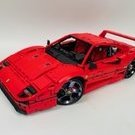 This is my first WIP thread for a vehicle I've wanted to create for some time now. The most difficult part of this build so far has been the air ride. When Air ride is at its lowest or highest point, it clicks. This also lets you know when to stop lifting so it doesn't over rotate and jam the gears. I placed the 1X1 angled black system Lego on the L shaped beam, so the drop is only 45º on the axle. Then I noticed the weight of the car might not be able to hold the body work up so I added torsion bars to all 4 wheels. This design can be setup as 4 wheel steering, because the front suspension is exactly the same as the rear. (But the SUV I'm building doesn't have that function, so I opted out of it ) This beast comes stock with a V8 engine, air ride & torsion bar suspension, servo for steering, 2XL motors for drive 2M-motors for lift. I had to hide the servo in a different place as the axle for 4wd goes through the center. I am trying to get the steering wheel working but its tough... SUV framework for my new MOC by lachlan cameron, on Flickr I've been working on this frame for 2 weeks and am happy with how well it functions. I placed 3 pounds on the framework and the lift still works. SUV framework for my new MOC by lachlan cameron, on Flickr 2 M-motors are geared down before they turn 1 worm gear on each wheel to lift the whole vehicle.