Search the Community
Showing results for tags 'ww2'.
-
The Battle of France, also known as the Fall of France, was the German invasion of France and the Low Countries in 1940 during the Second World War. In six weeks from 10 May 1940, German forces defeated Allied forces by mobile operations and conquered France, Belgium, Luxembourg and the Netherlands, bringing land operations on the Western Front to an end until 6 June 1944. Italy entered the war on 10 June 1940 and attempted an invasion of France. I wanted to start creating some mocs with WW2 theme and Brickwarriors with their amazing new figs, gave me the inspirastion !! I created a diorama with the Germans after a fight.. in the roads of Paris! The main moc.. The squad.. The buildings.. I hope you like it!! C&C are welcome!! P.s. The Panzer IV Ausf. G Tank is a design from Brian Fitzsimmon with a little upgrade in some parts from me for stability and to move turret around and up-down.
-
When I was a kid in a primary school I had lot of fun with model-making of tanks, aircraft and armored vehicles from World War II. I also created some dioramas out of gypsum, styrofoam, wood etc. for models I made. Probably that's why I wanted to... Read more » https://www.youtube.com/watch?v=Ifi9fys03Ls Bigger photos and full story here: LEGO Gallery - [MOC] Sniper at church WIPs, Behind the scenes and other extras at my: Instagram | Facebook | Flickr
-
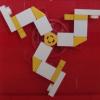 The recent Brickmania magazine featured instructions for a Type 97 Ke-Te Tankette from WW2. I did a bit of research into this obscure vehicle and discovered it spawned a couple of variants which I decided to try and recreate using the chassis of the original vehicle. The Original Brinckmania Type 97 Tankette (the real life version performed reasonably well against the Chinese but was no match for US and Soviet forces) Untitled by g.nat, on Flickr Untitled by g.nat, on Flickr Type 98 So-Da Troop/Ammo carrier The first variant was a troop and ammunition carrier. The turret was removed and the engine relocated to beside the driver freeing up the rear to carry troops/cargo. Type 98 So-Da Troop/ammo carrier by g.nat, on Flickr Type 98 So-Da Troop/ammo carrier by g.nat, on Flickr Type 98 So-Da Troop/ammo carrier by g.nat, on Flickr Type 98 So-Da Troop/ammo carrier by g.nat, on Flickr It was also fitted with a frame to add a canvas roof and opening rear doors. It also had a towing hook and could pull artillery pieces. Type 98 So-Da Troop/ammo carrier by g.nat, on Flickr Type 98 So-Da Troop/ammo carrier by g.nat, on Flickr The original could carry up to 10 troops!! My LEGO version... not quite as many!! Type 98 So-Da Troop/ammo carrier by g.nat, on Flickr Type 98 So-Da Troop/ammo carrier by g.nat, on Flickr Type 100 Te-Re Artillery Spotting Vehicle Almost identical to the Type 98, this variant was intended for use by artillery spotters to direct long range fire. The troop/cargo section was equipped with radios and a rangefinder could be mounted on the engine deck. Type 100 Te-Re Artillery Spotter Vehicle by g.nat, on Flickr Type 100 Te-Re Artillery Spotter Vehicle by g.nat, on Flickr Type 100 Te-Re Artillery Spotter Vehicle by g.nat, on Flickr Type 100 Te-Re Artillery Spotter Vehicle by g.nat, on Flickr Close up of the radio (a printed tile from a Brickmania accessory pack) Type 100 Te-Re Artillery Spotter Vehicle by g.nat, on Flickr Figures are Lego minifigs with Brickmania torso stickers on. Accessories are mainly Brickarms and Brick Warriors. Thanks for looking - comments always welcome.
 -
-kpia.thumb.png.a265cddff9575859eea3a4d2aad663c2.png) Czechoslovakia WW2 tank. Power functions: 1x XL motor 2x L motor 3x M motor Fuction and chassis Lego. Desing Cobi small army WW2.
Czechoslovakia WW2 tank. Power functions: 1x XL motor 2x L motor 3x M motor Fuction and chassis Lego. Desing Cobi small army WW2. -
Czechoslovakia WW2 tank. Power functions: 1x XL motor 2x L motor 3x M motor Fuction and chassis Lego. Desing Cobi small army WW2.
-
Hi all, It has been a long time since I presented my project Dora: German railway gun 800mm. I have now completed the diorama (or at least the first section), I hope you like the result. E 'it completed by 2 SDKF-Z, 1 panzer TIGER, 1 Raupenschlepper. I really like the final outcome, and I hope it's the same for you Full View: Front view: Panzer Tiger 1: Raupenschlepper: Opel Blitz destroyed by aviation: SDKF-z Units:
-
Hello, I am Franck from France ! after my darkage, I fall again on bricks since 2012, and I begin to expose since 2015 (some small scenes and mocs) I am interested by History, so many scenes I make are about military history : as old ages (Greek or Roman), XIXth century (I begin a 1870 war scene), and essentially WW2. As I like some SF or apocalyptic scenes, I try to make some scene about StarWars or Metro 2033
-
Hello guys! As far as you remember May 1945 was the last month of ww2 in Europe. So I decided to make a lego ww2 stop motion about the battle of Berlin. The stop motion itself is not ready yet but I 've made a trailer.
-
Hello guys! Finally I added English subs to my ww2 stopmotion "Battle of Berlin" So, last great battle of ww2!
-
This diorama shows a scene from Fury movie. It's a moment before Sherman tank crew attack approaching German infantry. In the movie this was the last battle where damaged Sherman tank defends the crossroad.
-
 To kick off the new year, BrickWarriors just released even more WW2 accessories! Following gains on the Pacific front of World War II, the US, Britain, and other Allied nations launched a strategic takeover of the Italian island of Sicily, grabbing control from the Italians and Germany to open up sea lanes in the Mediterranean and disrupting German campaigns on the Eastern Front. Today, BrickWarriors introduced the British Sapper accessories in honor of the success of this major European gain: -Allies Grenade -British Rocket -British Rocket Launcher -British LMG -British Revolver There were mass atrocities committed during World War II. But one of the most egregious was the Commando Order issued by Germany, in which any Allied forces be killed on sight even if they surrendered, completely contradictory to the laws of war. The Germans felt this necessary after countless raids on their territories and subsequent perceived mistreatment of German forces taken by these raiding Commandos. Today, the new British Commando accessories land on BrickWarriors: -Commando Cap -Commando Knife -Harpoon Gun -Oxygen Tank -Commando Carbine With the Americans now landed in Europe, Operation Torch was carried out on Northern Africa to fortify the Allies position from the south before taking Germany head-on, helping to alleviate the pressure on the Soviets on the Eastern Front. This campaign cleared the Mediterranean more completely in combination with the taking of Italy, a strategic move to keep supplies flowing as the Allies advanced on Germany. Today, BrickWarriors is excited to release our US Mortar Man accessories and torso: -Mortar Tube -Mortar Shell -Binoculars -Mortar Man Torso
 -
.
-
Good evening. This is my first post here in Special LEGO Themes; so far I appeared only in Star Wars department, so... hello everyone! To be honest, I wanted - finally, after so many unsuccesful attempts! - to build an early 76 mm turret (model 1940) for my T-34 tanks family but I failed again and then found some consolation building this - a tank destroyer / self-propelled gun SU-85, also based on the famous T-34 chassis. It happened very quickly (by my standards, anyway ;) ) - in just 5 or 6 evenings and virtually zero Bricklink orders. I'm pleased with the gun mantlet and general proportions of the model. Not so pleased with gap between glacis and side walls. And that's it, I guess. Please take a look at the photos. Comments welcome! P.S. I did not bother building ground plates just for this model - what you see in the last picture are modular plates I created for my ongoing Endor Project. False perspective rules ;) . SU-85 - left front by Maciej Szymański, on Flickr SU-85 - right front by Maciej Szymański, on Flickr SU-85 - top view by Maciej Szymański, on Flickr SU-85 - on the battlefield by Maciej Szymański, on Flickr
-
Hey guys, Never posted in this topic before so here we go... I was inspired when playing World of Tanks to recreate a tank from the game and behold... Lego Jagdpanzer 38(t) 'Hetzer' by Tom Gray, on Flickr (sorry for pic quality) Those tankers among you may have noticed there is a pair of wheels missing. Is this too obvious? Any criticisms welcome
-
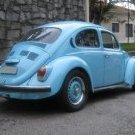 here my U-boat, hope u like it, people asked me for some images, i made a video for lego ideas, i will put soon the link here and into yt video for voting, im waiting for approval Thanks!!! Omar
 -
Hi all, let me introduce last MOC. Year 1944, september, Holland. Small village near Nijmegen. Scouts from 82. airborne division discovered hiding german tank from 10. SS-Panzer-Division „Frundsberg“ at the beginning of the operation Market Garden. NJ1 by Jan Špička, on Flickr NJ2 by Jan Špička, on Flickr nijmegen 6 by Jan Špička, on Flickr NJ3 by Jan Špička, on Flickr www.flickr.com/photos/127256529@N08/
-
hello, im selling all my legos, need some money so i will keep my mocs, so i builded a huge one, to use all parts that could be nice to put in use into a future moc its a pre ww2 based plane, i already put the wip step into another topic, here i will put the final version, if you guys have ideas to improve, you all are welcome! Video: Pics: PB214220 by Omar Dib, no Flickr PB224235 by Omar Dib, no Flickr PB224237 by Omar Dib, no Flickr PB224226 by Omar Dib, no Flickr PB224227 by Omar Dib, no Flickr PB224228 by Omar Dib, no Flickr PB224229 by Omar Dib, no Flickr PB224230 by Omar Dib, no Flickr PB224231 by Omar Dib, no Flickr PB224232 by Omar Dib, no Flickr PB224233 by Omar Dib, no Flickr
-
I'm usually only posting in the Star Wars forum, and I love to build all sorts of vehicles. From time to time though, I want to build something from the real world, and I'm particulary fascinated by the look and design of military vehicles from WW2, which brings me back full circle to Star Wars, since the design of Star Wars is significantly inspired by WW2 military vehicles. So I set out to build an iconic tank - the Tiger 1. Granted, there are lots of Lego-versions of this vehicle out there, and a quick google-search immediately makes it obvious from which creations I took cues on how to build certain elements - because why re-invent the wheel? Still, I did many things differently and on every step referenced an accurate model of the vehicle. The turret is my own take, because I felt that none of the turrets I saw in other creations truly captured the characteristic shape in a clean, uncluttered way. You will notice that I simplified the gun to keep the overall look uncluttered and avoid unnecessary texture where should be none. Last but not least, I also built the model with a detailed interior to make it more interesting as a whole. I hope you like it, and feel free to comment.
-
Every Army needs an ambulance. I hope that enemy will see all this Red crosses. Medics are on the way. Plenty of room for injured soldier.
-
The M3 Half-track, known officially as the Carrier, Personnel Half-track M3, was an American armored personnel carrier widely used by the Allies during World War II. Since this is a personnel carrier, there's room for more minifigs. Next to the driver, there's seating for the soldiers in the back. Three soldiers in the back have more than enough room. Considering the monochrome structure of the Carrier, the backpacks and the soldiers' uniforms provide some colour distraction. The soldiers mount the Carrier through the back door, which can be opened and closed in this LEGO model.
-
The Volkswagen Kübelwagen was a light military vehicle based heavily on the Volkswagen Beetle. It was prototyped as the Type 62, but eventually became known internally as the Type 82.
-
 Hi please see the prototype that I made. The color of the body is a bit too dark that the shadow drawn on the cloth is invisible. Also I have to draw the lines of textures in white. Are they too thick and bright? Something is wrong with the printing on the legs and hips. And the color of the hips should also be dark green but I couldn't find one. I also attached some photos of scenery that I made from other minifigures. Any suggestions will be welcomed! http:// http:// Some dioramas that I made: http:// http:// http:// http://
 -
This MOC is very fragile. Lots of SNOT technique were used when I built it. But still, the cockpit cabin can be opened and the propeller is rotating too.
-
After watching James Cameron's documentary on the underwater expedition to the wreck of the battleship Bismarck and a few other documentaries on World War 2 naval warfare, I wanted to build some of the warships of that period with Lego. I decided to build these models in scale to each other and in a size resembling common model kits of such ships - small enough to be a challenge to build with Legos, yet large enough to allow for detail and characteristic shapes and features. Since I never built ships with Legos, I searched the net for examples of World War 2 warships built with Legos at the size I had in mind. My first build, the Bismarck, was at first a reverse-engineered build based completely on the MOC Operation Rheinübung by Locutus 666, which you can find here: http://www.mocpages.com/moc.php/377978 I especially liked the accuracy of the complex superstructure, which was fun to re-create and taught me a few neat building-techniques for achieving lots of detail at this 'small' scale. When I was done, however, further research into the short but dramatic history of this battleship led me to improve quite a few things. First of all, I wasn't very pleased with the hull, and built a completely new one using SNOT and stacked plates and tiles to achieve a correct shape, size, and the characteristic wooden planks on the armoured main deck. I also changed some details on and added a few more to the superstructure to make it more accurate. For instance, the funnel is much more accurate now. The changes I made which are readily apparent deal with the colouring. I chose to build the model according to the paint job the battleship actually wore during Operation Rheinübung. The Swastika inside the red banner on the bow and stern sections of the main deck have been painted over with grey, as were the black and white stripes on the side of the hull. The Bismarck only retained its white fake waves on the sides of the bow. The masts and radar installations had been painted a very dark grey which almost appeared black. Also, the funnel top was silver throughout the Bismarck's lifetime. The dark red parts resembling the boats are a bit of an artistic choice. The real boats had dark red-brownish elements, yet were mostly a light grey, but in order to make them stand out and not have them look like some other part of the superstructure, I chose to use dark red pieces for them. Here's how my model looks: Since building this model was fun and I'm very pleased with the result, I decided to have a go at another ship, this time of another type and with its construction stopped after the Bismarck was destroyed. It's the german aircraft carrier Graf Zeppelin, the first ship of this type in the german Kriegsmarine. The most notable feature of this ship were it's two steam-powered catapults, at the time said to be by far the strongest to be found on any aircraft carrier. Since the real thing was never finished and we will therefore never know how the superstructure and armament would have finally looked, I chose to base my model on detailed drawings by the U.S. naval intelligence from that period. Note that the armoured flight deck would most likely have been covered with wooden planks, but I went for a grey finish with a few markings to indicate the two lifts, the catapults and the rear edge of the flight deck. Here's the model: Last, but not least, I built a smaller support vehicle, namely a 1936B-Type Destroyer. Here it is: What better way to end this post than with a photograph of the whole tiny flotilla? Here it is. As for scale, the Bismarck is almost 46 cm long, and the Graf Zeppelin is 47 cm long. It's quite possible that I will build more ships from that period, maybe the german pocket battleship Graf Spee, or one of the fast battlecruiser of the Scharnhorst-class. The Mighty Hood (HMS Hood) is a great candidate to be turned into a model as well. Wheteher you like or dislike what you see, have suggestions, ideas, or something interesting to add, please comment!
-
In my quest to improve the diffusion of my instructions all over the world (;) I just uploaded a video-instructions for that model on youtube. If it's popular and people like it, I publish more video like that in the future. In the meanwhile you watch the video here: https://youtu.be/lM9DGfVrtDE Build well and tell me if you enjoy.