Search the Community
Showing results for tags 'Porsche'.
-
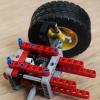
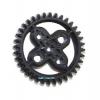 About 5 years ago, rumours were around hinting at a new supercar positioned between the 911 and 918 Spyder. Some dubbed it the "914.5", coming from the mean of the two model numbers. Unfortunately, such a car hasn't yet arrived, and I plan to solve that problem. This will be the true "Dream Porsche", taking features from both the 918 Spyder and the 911 Targa. It will combine the hybrid all-wheel drive and 4-wheel steering of the 918 with the iconic rear-mounted flat-6 engine and roof of the Targa. Here are my definite features: Flat-6 engine mounted in rear 8-speed paddle-shifting manual gearbox (connected to piston engine, driving rear) Fake electric motors "driving" the front and rear (as in the 918) Full independent suspension with camber angle, castor angle and adjustable ride-height (independent adjustment for each wheel). Not sure where the ride-height controls will be - probably under the front hood. 4-wheel steering (as in the 918) operated by the steering wheel. Opening hood and locking doors. 2 seats inside. Folding roof modelling the 911 Targa's mechanism. Here are features that I might add if I have enough space and parts: Brakes - not sure how these would be operated if they get added. A PF Large motor and battery box to drive the front axle. Like the 918, the front is single-speed. Unfortunately, the only RC stuff I have is MINDSTORMS, which would be too bulky for this. Opening rear revealing the engine. The car will be 1:10 scale - considerably smaller than the 911 GT3 RS from LEGO. I haven't started building yet - I still need to add a couple of finishing touches on my current build. However, most of the "technologies" (such as an 8-speed gearbox and adjustable suspension) already exist in my current build, so this will likely be finished by mid-July. UPDATE 1 (03/07/2016): Paddle-shifting mechanism and steering wheel mount Having dismantled my previous build, I have built this compact steering wheel mount with an integrated paddle shifter. The two levers on either side of the steering wheela are paddle-shifters. They shift when pushed inwards. Here is a side view: Each paddle makes a lever move downwards and hit the cross-shaped element. I initially used a knob wheel, but it was too small for the lever to make it advance far enough. When the lever extends, the cross rotates about 75 degrees before the lever blocks it from going any further. When the paddle is released, the lever retracts and allows the cross to rotate the final 15 degrees. The paddles have rubber bands to make them return to their original position when released. The part with the wedge-belt wheels can slide a short distance. It too has rubber bands - this makes the cross "snap" to the nearest 90 degrees and provides the turning force for the final 15 degrees of rotation. There is also a universal joint - this is connected to the steering wheel.
 -
 Hi, Here is my entry for the build the Porsche of your dreams contest. It is a remote controlled, lightweight Porsche of an undefined type (unless someone recognizes this instantly as a particular Porsche type). The model weighs 1.5 kg of which 300 g is 12 AA batteries. It is powered by 2 L-motors that have each their own batterypack. Steering is done with a servomotor. The steeringwheel inside is functional as well (as in, it turns also when the servo turns): I tried to minimize weight as much as possible, so I used both the motors and the battery packs as structural elements in the construction. Changing batteries is now not something you want to do . I always wanted to make a model without paneling and since this model needed to be lightweight it was the perfect excuse to finally build a completely open model. I particularly like the top view. Here you can really see how the lines flow on this model. Something that I find difficult to capture in the other shots. As usual comments and questions are highly appreciated. Leg godt, Jeroen
 -
 Hi Here is my dream Porsche. It features and combines 3 of my favorite things of Porsche: The front V8 TT engine and front bumper of Panamera Turbo S The 911 shape The RSR look and feel The result is this. Hope you (and judges ) like it Features. 1:10 Scale RWD and Fake V8 engine 4 Speed Gearbox with remote stick Independent suspension in the 4 wheels Working Steering Wheel (No HOG) Openable hood and doors (With lock system) Adjustable seats with gears Big Spoiler (Like the RSR models) Miscellaneous things like hand bag, lights etc. *Surprise feature* Removable V8 engine and transmission like a car About the last feature, well, I'll show it later in another pics and video. (I haven't had time to take more pics) Here are the pics of the last feature Making this function was the most difficult of the model, because it must be work smooth in every gear and I must find the proper joint points in the gearbox to the chassis. Also it must be easy to remove without bending or forcing the rest of the car. After many tests, I achieved it. More pics of the car This photo scream for the bigger Steering wheel (Sadly I don't have it yet) More pics and video will come soon The full gallery https://www.flickr.com/photos/137229326@N08/albums/72157668154949314 Video. The car was completed some days ago, but I decided to post it as my 100 post here, in the greatest Lego community
 -
 Hi everybody ! So today, I'm really happy to present you the car I've worked on day and night for the last 3 weeks : a Porsche 919 Hybrid, my dream Porsche ! So the model features : - Direction with a HOG and a working steering wheel - Independent suspension on each axle - Realistic door opening mechanism - 4 speed sequential gearbox - V4 fake engine with turbo. The design : I worked a lot on the design, trying to make it look as close as the real model. Functions : Front suspension are done like this : This system allow a small travel and it lets enough space to place the gear rack just under the shock absorber, so the front axle is really compact. The door are opened by a simple mechanism using 6L links. The most important function is the 4 speed sequential gearbox. It use NLF77 shifting system, slithy modified to make it smaller, like so : The V4 engine is just above the gearbox, to save some space. The gearbox is not really special, except the fact that the 2 driving rings aren't close to each other ( a bit like the 42056, except the fact that it works ) Full flickr gallery : https://www.flickr.c...157669736641790 Video :
 -
 Hi everybody, This is my entry for the Porsche contest! It features: - working steering wheel and HOG steering - full independent suspension - 5 + R gearbox using a link system - opening doors and hood The gearbox mechanic: Animated gif, switching from 3 to 4 to 5:
 -
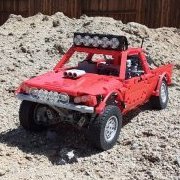 Hello All, Today I present my entry to the Porsche contest on rebrick. I am waiting on a Bricklink order to improve this model's aesthetics and then I will post better images. The model has: Steering Front and rear spoilers An interior Roll bars Fake brake calipers, and a working mini V8 engine . NEW: The engine is now a flat 6 and the doors open. There is more coming soon... Thanks for reading, and have a great day!
 -
 G'day all. So last week I decided to enter the Lego Porsche contest with this idea of a dream Porsche car. In Australia we have a racing category called V8 Supercars and since I follow this series and a masive Holden fan I thought well Porsche should race a car as well and that became my dream Porsche, a Porsche V8 Supercar. The car will be made in 2 parts, chassis and body.Overall size when finished- 570mm x 230mm x 170mm. My aim was to create a realistic car with roll cage and stuff but to have the body separate so that I can create other car brands to go over the chassis since in the race series the run a control chassis. If there is time Ill add front and rear independent adjustable sway bars. The chassis functions are: 4 wheel Independent suspension. 4 wheel disk brakes that work through the brake peddle. camber and steering geometry. 4 spd sequential gearbox. working clutch through the clutch peddle. HOG steering with a moving steering wheel. air operated car jacks. fake V8. V8 Supercar Porsche by Jono Mckinlay, on Flickr Hopefully it will be finished in time for the comp.
 -
This was built for the ReBrick Porsche competition. IMG_0741 by JJ2Sam, on Flickr IMG_0743 by JJ2Sam, on Flickr IMG_0742 by JJ2Sam, on Flickr IMG_0745 by JJ2Sam, on Flickr IMG_0747 by JJ2Sam, on Flickr IMG_0746 by JJ2Sam, on Flickr It features -Full RC with radio control -Rear wheel drive -Full independent suspension -3D printed rear differential, CV joints, and motor mount -Traxxas Titan 12T 550 motor -Futaba servo -Rear differential cover -futuristic bodywork -39cm long, 21cm wide, 12cm tall More pictures here https://www.flickr.c.../136426592@N04/ http://www.youtube.com/watch?v=aRihM7Z2sns&feature=youtu.be Hope you like it.
-
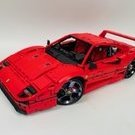 As soon as the Porsche contest began, I knew Dug and I would be in this contest. It began with a trip to his work where he was fixing a 1973 Porsche. It was on a hoist and he was explaining how the rear suspension with the torsion bars work. I didn't think it was possible, but we found a way to create torsion bars for the front and rear suspension. 75 studs long x 31 wide x 21 high. This is the first car we have created to scale. This creation comes with Hidden battery, motors wiring tucked, 1:7 scale, trailing arm, torsion bar rear suspension, realistic interior, wide body, 1973 Porsche RS custom race inspired body, spare tire and vn in original location, working fan on motor, 2xl for drive, 1 servo for steering. Flicker: http://flic.kr/s/aHskAQ6Li7 Extended Version: Porsche Contest: IMG_8074 by lachlan cameron, on Flickr Classic rear flow IMG_8056 by lachlan cameron, on Flickr Agressive front lip IMG_8147 by lachlan cameron, on Flickr Whale tail IMG_20160729_140645 by lachlan cameron, on Flickr Side Profile IMG_8129 by lachlan cameron, on Flickr Realistic Suspension with torsion bars. Very effective, and only required the use of 1 shock per wheel IMG_7942 by lachlan cameron, on Flickr IMG_8216 by lachlan cameron, on Flickr IMG_20160729_140543 by lachlan cameron, on Flickr IMG_20160729_140701 by lachlan cameron, on Flickr Bucket Seats IMG_8183 by lachlan cameron, on Flickr
 -
This is my entry for the Rebrick competition. Essentially, it is a mashup of the 911 Targa and 918 Spyder (the 914.5 is the average of the two model numbers). It is built to 1:10 scale. Back in 2011, there were rumours of Porsche introducing a model between the 911 and 918 Spyder (one website did joke about calling it the 914.5), but such a model hasn't yet been manufactured (although it is being developed as the Porsche 960). The model is roughly 1:10 scale at about 58 studs long, 25 wide (27 including mirrors) and 16 high with 68.8x36mm wheels. Please bear in mind that I am a relatively inexperienced builder having only been building for 2 years and with only a few thousand parts to hand - by the end, I had completely run out of light grey parts. I went for function over form - while I am good with making ultra-compact mechanical systems such as gearboxes and suspended axles, bodywork isn't really my strong point. Sorry that the video is a little shaky - looking into getting better video equipment. Please watch it - you'll get to see the internal workings right down to the core! I haven't provided many pictures here because the detailed stuff is in the video. This is the FULL video (>1min) - the video I submitted to the Rebrick competition is a cut-down unlisted version of this. A full list of functions: Flat-6 piston engine in rear, driving rear axle. 8-speed paddle-shifting gearbox (sequential) for the piston engine. PF Large motor driving the front (no gearbox, just like the 918). Unfortunately, I don't have any IR components other than MINDSTORMS, so it isn't RC. Full independent suspension with non-zero camber and castor angles (I think it also has kingpin inclination - not sure about that). Steering wheel operates 4-wheel steering. The knobs on the front (black 12-tooth gears) and rear (hidden, accessible through rear window) control the suspension's ride height. Each wheel has its own control, so it is possible to make the car lean to one side (might be useful for oval racing). Two seats in the front with opening doors. Retractable rear wing. Folding targa-style roof. I also made a few custom stickers for this model (unprofessionally of course - just printed them out on paper). The Porsche logo is on the front, the steering wheel and the wheel hubs. The rear air intake slits (911-style) are also done with a sticker. I added the Porsche brand name and a fake model name on the back. The "Spy" and "Targ" bits were edited out of the actual "Spyder" and "Targa" logos; the "914.5" was done from scratch. The number plates aren't my own - you may recognise them from the 42043 set. You can probably tell that I lacked good headlight pieces even after searching though my dust-filled System brick collection. The best I could find were white 24-tooth clutch gears - I guess that gives it a hardcore-TECHNIC feel. Thanks for reading :D!
-
Hello All, Today I present the teaser for my 2nd entry into the Porsche Rebrick contest, the Porsche 917 2070, from 100 years after the original 1970 Porsche 917K. More will follow this photo. UPDATE: Another photo.
-
[PORSCHE] GT X
marceriusLV posted a topic in LEGO Technic, Mindstorms, Model Team and Scale Modeling
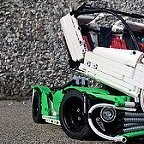
Hi! Yes, you have stumbled upon another Porsche in this forum :D Built for LEGO Technic Ultimate Contest "BUILD THE PORSCHE OF YOUR DREAMS" I present you my dream Porsche. A blend of past, present and future: sleek and curvy lines, rear mounted flat 6 engine, 4 gear manual transmission, rear wheel drive, full independent suspension grand tourer - Porsche GT X. I did not base on particular car, just went with flow. What started as a base for something like 911 developed to something Targa like car and ended up as next gen 928? I am quite satisfied what I managed to achieve as this is first completed so called supercar for me. Yes there were tons of things I wanted to put in the car, but I decided to scrap them, because they worked like crap (for example: raising rear spoiler in high gears, sequential gearbox). I believe that the greatest challenge to implement high number of functions is to make all mechanisms as small as possible and at the same time incorporate them in chassis and that takes time. For me it takes 2-3 months to figure out how to fit all wanted things in small places :D It was great experience to build this car, I hope, that next supercar will be better looking and more functions packed :) Some WIP pictures Gallery with more pictures here Just wanted to share my creation and get some feedback from other members, so please share your opinion. Cheers! -
 My latest creation, and entry for the Porsche contest. E9Porsche by Saberwing007, on Flickr This model is a possible production version of the radical Mission E concept, dubbed the E9. Now, for some backstory. I started on the model roughly the week after it was announced, but I only finished 10 hours before the competition closed. As such, there are several shortcuts taken with the model, which means that the interior is not quite there, I had to omit some features I wanted to add, some pieces aren't solid, etc. But, aside from that, it looks better than I thought it would, and the chassis features worked until I added the body. Now, onto the features that actually do work. Drive, via 4 L motors, two per axle. I also used one receiver for each set of two. 2 speed gearbox, actuated by 1 M motor, and two small linear actuators. The ratios are probably a little bit close together, with gear 1 being 1:3.89, and gear 2 being 1:2.33 4 wheel steering, with two servos. Steering mode switch, with 1 M motor actuating a PF switch. Allows for four wheel steering, normal steering, and crab steering. Independent suspension on all four wheels, control arm with 2 shock absorbers per wheel. No Ackerman correction or fancy geometry here, which made it more solid, and also made the crab steering work better. I also had a couple of features I wanted to add, but due to lack of time I could not implement them. Lights Opening doors/hood/trunk Adjustable aero Panemera style rear spoiler Indicators for gearbox and steering mode. Interior with functional steering wheel. Adjustable suspension, although I actually made the decision early on to nix it, due to how the axles and suspension are set up. Also, I made a few mistakes with the body work, and so the wheels collide with it That, and there are a lot of dodgy/illegal connections, and the back end looks rather bad, like a real Panemera. Well, at least my gearbox works better than the official one, and it has more interesting suspension to boot. Well, I did learn a lot, and proved that I can still build with a deadline. On the other hand, I am probably never building a 1:8 scale car again, given how freaking ginormous this thing ended up being, and yet it still somehow ended up with not a lot of interior space for functional parts. I might take more pictures later, if you guys want it. The bodywork sucks, so I'm probably not going to include it if I make a video, but the chassis might live on, as something else... We'll see.
 -
 Hi! I present my entry to the Rebrick Porsche contest, a 962 C Le Mans racecar. In this moc I tried out some newly developed techniques. I was happy that I could finish it before the deadline, many, many working hours, days, "sleepless" nights were required to make it. If I had to choose, the 962 C is my dream Porsche, it exists. A legendary Le Mans racer, the first race car with real ground effect, and a road version was also produced in the nineties. I tried to design everything to represent the real car, both esthetically and in functionality. I put every information, explanation into the video, so here I list the main features: - Full independent suspension, in the rear with rocker arms and angled springs - 4 speed sequential transmission with indicator in the cockpit - Automatic friction disk clutch - works when a gear change happens - Working front brakes with small pneumatic cylinders and air tank - Brake pedal works, too - Openable doors and removable rear cover - HOG steering and working steering wheel - Kingpin inclination, Ackermann geometry - Real boxer crankshaft (instead of 180°V) Details: Antenna, interior, engine, turbos, rear view mirrors, headlights, windshield wipers, fuel caps, fire extinguisher, instrument panel, radiators, etc. Video: Pictures: Gallery: https://www.flickr.c...157668905453474 Hope you like it. Comments, questions are appreciated, as always.
 -
This is my entry to the Porsche contest: The Porsche Mission E concept car! This model features: openable doors, hood, and trunk, the arc of light in the rear, steering controlled by the steering wheel, full independent suspension, four speed sequential gearbox, and the option to choose forward, neutral or reverse. Sadly I couldn't motorise it because I had no motors able to be used... This model also has no fake engine, because in real life the Mission E has no piston engine, it's all run by electric motors! Many other things have been left out too, like mirrors, just to keep the realism. Anyway, I put a lot of thought into it, and hope that you like it! Questions and comments are welcome!
-
 Imagination of legendary rally Group B electrical car (design is from those times, pullback motors imitate some kind of electrical drive). Model has: - independent suspension on all wheels - HOG steering - steering lock, which is made as gear switch, to lock wheels for pullback function - openable doors - and front part - rear mudguards, which move together with wheels. Steering unlocked Steering locked Of course, it is not very good lock because of other steering parts, but HOG steering button is locked very good.
 -
[MOC] Porsche 911
Lox Lego posted a topic in LEGO Technic, Mindstorms, Model Team and Scale Modeling
This custom creation was created with a variety of old and new Technic pieces for a different effect to the final build. Designed by an actual Porsche mechanic and myself. Original: Rework: FInal version: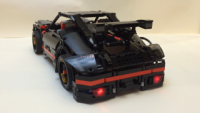
-
A while back, there was this topic, about doing some of Crowkillers cars in white. That, and the fact that white was cheaper than either red or black, gave me the idea to build the Porsche in white. There were a couple modifications I had to make, but those were fairly straight forward. Of course, the 44 connector isn't available in white, so I made a black accent line that goes over the roof, and made the mirrors black. Now for the pictures: More pictures are at my BrickSafe (see sig).
-
Hello, the Ferrari-Truck (2015) was fun - and 75876 is great, too. This is my compact Porsche 919 Hybrid and 917K Pit Lane review. Have a nice day Andres
-
 I never imagined I would say this, but as of today I am the proud owner of a Porsche 911 GT3 RS. How cool is that?! Waiting for this set to arrive seemed to take ages, so I was definitely on cloud nine when the set finally arrived. The 911 is one of the oldest sports cars on the market. It's lineage dates back to 1963, which is quite impressive! Since the production of the 911 there have been lots of different versions, like the Carrera, Carrera S, Targa, Turbo, R, GT1, GT2, GT2 RS, GT3 and GT3 RS. The GT3 RS can be easily recognized by the race-inspired inlets in the front wheel arches. Due to legislation there's a grill in the inlets. It can be removed during track days, which will improve the downforce. The LEGO Technic Porsche 911 GT3 RS is a 1:8 scale model and is 17 cm high, 57 cm long, and 25 cm wide. It has been designed by Andrew Woodman and Uwe Wabra. When TLG started the initial drafts in 2013, the Porsche 911 GT3 RS project remained top secret. Therefore TLG had to build the first LEGO version using photos of the camouflaged prototype of the original from the internet. The first LEGO prototype was ready in a matter of weeks. Like every sports car with the Porsche emblem on the hood, the LEGO version of the Porsche 911 GT3 RS also combines design, performance, and functionality. Still concealed in black-and-white foil as a mystery model at the Nuremberg toy fair late January, the color of the characteristic bodywork has now been revealed and shines in bright orange. Thus, it corresponds to the special coating of the original sports car in lava orange authentically. With the right skills you can get the GT3 RS around the Nürburgring in 7 minutes and 20 seconds. Factory driver Brendon Hartley took it for a spin on the Nardo circuit in Italy. The video can be found here. When you talk about a genuine sports car, you immediately talk about performance, which is pretty impressive, to say the least. Let's take a look at the specs: Horsepower: 368 kW or 500 pk (at 8.250 rpm) 0 - 100 km/h: 3,3 sec 0 - 200 km/h: 10,9 sec Top Track Speed: 310 km/h or 193 mph Price: around 250.000 euro (no extras, Dutch price) If you are interested in buying (or configuring) your own 911 GT3 RS, you can click here and indulge yourself. Instead of buying or configuring we will be building a Porsche 911 GT3 RS today. That's something not a lot of people could say, until now! Although I must admit that even though this version is a fraction of the price of the real car, it still has a pretty heavy price tag. Forking out 300 euros for a collection of ABS isn't something everyone will understand. Before we start I like to point out some of the questions which have arisen. For example; why is this set rated 16+ while the Mercedes is 12-16 year? Is the price tag of 300 euros justified? Does this model replicate some of the real world mechanics? Does the luxury packaging add any value to this set? These are just some of the questions I will be answering in this review. This review will have a different setup than my regular reviews. Since this sets focuses on the entire experience instead of the model alone, I will try to share this experience in my review. Instead of opening the box, discussing the parts and taking you through the build, like I usually do, I like to focus on the different aspects of the set and model. When it comes to the model, I will try to compare it with it's real life counterpart. TLG made a teaser for this set using the word Ultimate. There will be little discussion about the real Porsche's association with this word. But will it's LEGO counterpart live up to the expectations?! I think it's time to move onto the interesting part and find out whether this LEGO Technic set also deserves the predicate Ultimate. PICTURES Pictures can be clicked to view hi-res versions. More pictures can be found in my Flickr album. DISCLAIMER This set has been provided by the CEE Team of TLG. It's not my goal to promote this set. It's my goal to give you an honest opinion about it. Therefor, the opinion in this review is my own and is in no way linked to TLG. Number: 42056 Title: Porsche 911 GT3 RS Theme: Technic Released: 2016 Part Count: 2704 Box Weight: 4,8 kg (approx) Box Dimensions: 47,1 cm x 37,3 cm x 14,7 Set Price (MSRP): € 300 Price per Part: € 0,111 Links: Brickset, Bricklink Will this be a Limited Edition set? No, it will be as limited as other Technic sets. Which is also stated in the press release: The exclusive LEGO set of the exceptional sports car, which has been developed in close conjunction with Porsche AG, will initially be available at shop.LEGO.com from June 1st, 2016, as well as in the 13 LEGO stores throughout Germany and Austria. It will be available in other stores from August 1st, 2016. This means that when you are reading this review, the set is already available, which is usually not the case with other Technic sets. The box is a key feature of this set. Instead of a regular Technic box, this set is packaged like the 41999 - Crawler Exclusive Edition. The term Exclusive indicates that we are dealing with a special set, which is obviously the case for the Porsche as well. The following question (asked by JGW3000) is more than justified: Since the box presentation is a key feature of this set, perhaps Jim can comment on packaging and outer packing used to protect the box, so we can determine if we should go to a LEGO store or risk mail order in order to purchase this. In my Review of the 42043 - Mercedes Arocs I explained that my box was severely damaged. Obviously that's something you don't want to happen when you are buying a 300 euro Ultimate LEGO Technic set, with exclusive packaging. Lo and behold; the box arrived in pristine condition. The set box snugly fits inside the outer box, which avoids taking damage too easily. I am very pleased with the condition my set arrived in. I don't think getting the set in a physical store will guarantee a better condition. Thumbs up for shipping it this way. I hereby present, the Porsche 911 GT3 RS...in a box! It's way more luxurious than a regular LEGO box. Black and orange obviously work very well together. The bright color, combined with some post-crop vignetting really makes the Porsche stand out. I can honestly say that the box makes you anxious to open it. A LEGO box has seldomly made me feel more exhilarated before opening it. This is definitely a plus. This box is pretty big and feels massive. Since it's filled with additional boxes it feels very sturdy and doesn't dent easily. Since it's filled to the brim, the box isn't much larger than the box of the 41999. The width and height are the same. It's a bit deeper though, which can be seen in the image below. FRONT SIDE The front side of the box shows the model itself, along with the Porsche emblem and the set information. In case you are wondering what the 18 means in the upper right corner; that's not 18, but 1:8, the approximate scale of the model. It also states that this set is 16+, which is rather unusual. Hopefully we can answer Allanp's question at the end of this review: What makes this set carry the 16+ symbol? It isn't the largest or the most complex set to date, so why the 16+ age thing? BACK SIDE The backside of the box shows a top down view picture of the Porsche, along with four key features (interior, suspension, engine, upholstery). INSIDE The reason the box feels so sturdy is that it is literally filled to the brim. I can't think of any other Technic set which was filled like this. In the old days TLG used an inlay, but they never entirely filled a box like they did now. Showing the rims instead of packing them inside the box is a nice touch. The way the book and rims are being presented, is an indication that you are in for a treat. Another bonus is visible on the inside of the cover. It shows the history of the 911 from the original 911 (911) to the 2011 911 (991). The box contains: 1 x Book 1 x Sticker sheet 4 x Box with parts 1 x Box with rims and tires Each of the smaller boxes depicts what you will be building during that phase. I sure hope we will be building more than just an engine, seats, hood and a spoiler After discussing the box, the book definitely needs our attention. It's presented as the center piece of the contents and it's an absolute eye-catcher. The book packs a whopping 580 pages (including the front and back cover), which is unprecedented (not having seen the 2016 2H BWE instruction manual). Being designed as a coffee table book, it doesn't simply provide the building instructions. It also contains an abundance of historic information about the Porsche 911 and of it's LEGO counterpart's design process. Comments have been made that this book makes the set more expensive, which is debatable. Around 40 pages have been devoted to this additional information, which boils down to around 7% of the book. Maybe I'm simplifying the calculation, but this means this book can't be more than 7% more expensive than regular instructions would have cost. While we are on the subject of a coffee table book, TLG could have gone the extra mile and provide a hardcover book. This surely would have increased the costs, but you would get something in return. I'm not saying they should have, I'm saying they could have. Personally I think this book is fine, since it only contains about 7% additional information (concentrated at the beginning). It would have been a different case, if it contained more information throughout the book. Riffling through some pages of the book, we even see the previously mentioned Brendon Hartley making an appearance (top right image). The first step in the construction of your 911 GT3 RS is to build the drivetrain, complete with dual clutch gearbox (PDK), paddle shifters, suspension and the heart of the 911 GT3 RS, the 4.0 flat 6 engine. When you have completed all the steps in box 1 you will be able to test out all the functions and see how they work. Reading this means we are working on the fun part of the vehicle. Which immediately raises the question; is all the functionality of the car built during this phase? The first box contains 11 numbered bags. It even contains the new fender pieces, two printed and four unprinted. Will we be using these already in the first phase? Below are two images showing the new (and orange) parts contained in the first box. New pieces are the orange fender pieces, flex axles, the 3L axle with stop (color coded brown), new wheel hubs, changeover catches, suspension with red finish, panels and a tile with a unique code (supposedly to unlock online content). Instead of taking you through the build, I will discuss the different technical aspects of the real vehicle and compare them to it's LEGO counterpart. The single most interesting part about this set is the gearbox, which you start building early on. The picture below shows where the lever, to change the selected gear mode (Drive, Neutral or Reverse), will be placed (between the two blue 3L pins). As you can see, selecting Reverse simply changes the direction of the gears. Does this mean we have the same number of gears in Reverse as we have in Drive? Yes, it does! It’s the year 1983. In the new 956 Group C racing car, Porsche is putting a double-clutch transmission – Porsche Doppelkupplung (PDK) – through the rigors of motorsport for the first time. PDK offers a crucial advantage: the driver can keep the accelerator pedal depressed and change gear easily by using buttons on the steering wheel, even in the corners. This is how it works. PDK is essentially two gearboxes in one and thus requires two clutches. This double-clutch arrangement provides an alternating, non-positive connection between the two half gearboxes and the engine by means of two separate input shafts. During a gear change, therefore, one clutch simply opens and the other closes at the same time, enabling gear changes to take place within milliseconds. Highly responsive and particularly sporty. More information can be found here In the picture below we can see how TLG implemented the double clutch mechanism. There's a clutch at the top and one at the bottom. This is obviously a simplified interpretation of the real PDK. How about making your own four wheel drive Porsche? Does the transmission have an output that could be sent to the front easily, like 8448's (asked by Lego Nerd)? The red changeover catch is probably placed for stability (you will connect a liftarm to it later on), but it also provides a possibility to turn this into a 4WD car. Of course, you would need two additional differentials, one between the front wheels, and one in the gearbox between the front and rear axles. What's the point of having clutch gear inside all this? (asked by Allanp) Unlike in a real car, there's no stop after the highest or lowest gear, meaning that you can switch the car from 4th to 1st gear and from 1st back to 4th. That's one of the reasons the clutch gear is used, since the axles/gearbox will generate a lot of resistance/strain at some point. Another reason is that it's there to prevent possible damage to the gears if two speeds get temporarily engaged at the same time while rolling it. Or possibly if rolling in neutral and engaging drive while in first gear. Here's a video of the gear changing sequence. I have temporarily attached an axle to demonstrate the gearbox. Obviously you will not be shifting gears by turning a gear. You will be shifting this car, using the flappy paddle gearbox! How cool is that! The paddles are integrated in the steering assembly, which is shown below. The right paddle shifts the car into a higher gear, while the left one switches down. Here you can see the steering and shifting assembly attached to the chassis. The video below demonstrates shifting with the flappy paddles. Bear in mind that the subassembly is not yet properly secured, so there's some movement, which will be gone when the chassis has been finished. How am I supposed to shift gears by the way? As you can see there's no convenient position to operate the paddles. You need to grab the bushes and elastic bands to operate the gearbox. I can hardly imagine there's no better solution for this. Extending the axle by 1L would probably have done the trick. This feels somewhat cumbersome. The best solution would have been to design custom flappy paddles, but I understand this decision can't be taken lightly. What I don't understand is that TLG didn't provide an extra set of elastic bands. The bands will wear out after a few years on the shelf, rendering them useless. Providing a spare set would have been a nice gesture. Onto a more delicate matter. Some of you might have heard or read the rumors about this set being potentially flawed. Before jumping to conclusions, let's take look at the supposed flaws of the gearbox. First of all, the gear sequence is incorrect. Instead of switching from 1st to 2nd to 3rd to 4th, it's shifting from 1st to 3rd to 2nd to 4th. Say what?! I talked to Paul (Boratko, Crowkillers) about this possible issue, and without seeing any picture he immediately figured out that some of the gears must have been switched. As it turns out, there's indeed a mistake in the building instructions, or in the design, but I reckon it's not the latter. The video below demonstrates the incorrect sequence: I can (more or less) understand why this mistake has been made. What I can't understand is that this has not been caught before production. Quality control guys most likely aren't petrol heads, like some of the AFOLs. Let's take a look at what's wrong. On the left you will see the assembly when you follow the building instructions. On the right you see how it needs to be built. The grey 16T Gear and the black 12T Double Bevel Gear need to switch sides. the center gears are placed correctly. Here's a short video of how to apply the fix. The mistake has been made on page 267, 268 and 269 of the manual. So make sure to apply this fix when you reach that stage. After this fix, the sequence of the gearbox has been corrected. The gearbox is now shifting in the proper sequence, which can be seen in the following video: So it's all good now?! Well, not exactly. There's an even more pressing matter which we need to discuss. Occasionally the gearbox seems to stall completely. Take a look at the video and see what happens: Since you are not supposed to hook up a motor near the fake engine, the white clutch gear can't do it's job to prevent stalling. However, the main question is; why does the gearbox stall completely? And why does it stall so often? One of the reasons can be that the fins on the new red driving rings are slightly too thick. This will increase the change of the gears getting stuck. However, it happens quite often so I am not sure whether this is the case. The majority of the people building this set will probably never notice this flaw, since the clutch gear will hide the gearbox issues. But this set being The Ultimate, you'd expect the gearbox to function properly. The gearbox being the single most important technical function in the car, I am baffled by the fact that the mistake in the building instruction has not been caught, and that the actual gearbox itself seems to be flawed. Next time TLG better contact Paul before releasing another supercar This issue has been communicated to TLG, so let's wait for them to come with an official statement. Comparing the Porsche to the 42039 - 24 Hours Race Car we can see that the width from the end of the wishbones (where the ball joints connect) is 23L versus 19L. The Porsche itself is actually 4 studs wider than the 42039, two on each side. Compared to the steering assembly of the 42039. You notice the gear rack is much smaller, yet the turning radius is better. Two of half pins are limiting the turning radius of the Porsche. Removing them will slightly improve the radius, but the wheels might slightly touch the inside of the chassis, especially when the suspension is compressed. Here you can see the steering linkage, a pretty straightforward mechanism. Fitted as standard, the new rear axle steering with sport tuning combines performance and everyday driveability. An electromechanical adjustment system at each rear wheel enables the steering angle to be adapted based on the current driving situation, steering input and vehicle speed. The advantage for day-to-day driving: during low-speed maneuvers, the system steers the rear wheels in the opposite direction to that of the front wheels. This has the virtual effect of shortening the wheelbase. The turning circle is reduced to make it easier to park. The advantage for sporty driving: during high-speed maneuvers, the system steers the rear wheels in the same direction as that of the front wheels. Driving stability is increased by the virtual extension of the wheelbase and agility is enhanced by the simultaneous steering of the front and rear axles, especially during overtaking maneuvers on the racetrack. One of the coolest feature about the real 911 GT3 RS is the fact that it has rear axle steering. It even alternates between steering modes! At low speed it counter steers (to improve the turning radius) and at high speed it steers in the same direction (to increase driving stability). That's so incredibly cool. And it's definitely something we expect to see in The Ultimate supercar TLG is releasing. Unfortunately they haven't. I am very disappointed to conclude that there's no real axle steering at all. Not even counter steering rear wheels, which would have sufficed. Obviously having both modes would be super duper awesome, but at least give us the counter steering mode. Not sure why TLG hasn't implemented this feature. They might have felt the need to do both of them. But omitting rear axle steering altogether is a huge letdown for me. RECTIFICATION I need to rectify something. According to this interview on the Top Gear site, Porsche vetoed the inclusion of the rearsteer. Obviously Uwe was able to recreate this mechanism. Makes you wonder why it wasn't included. This electronic active damping system offers continuous adjustment of the damping force on each wheel based on the current driving situation and your driving style. At the press of a button, you can select between two different modes. ‘Normal’ mode is designed for sporty driving on public roads and on wet racetracks. ‘Sport’ mode is specially tuned for maximum lateral acceleration and offers the best possible traction on the track. To continue with cool features, or letdowns, the 911 GT3 RS has, what's called PASM (Porsche Active Suspension Management). This basically boils down to ride hight adjustment, which is another potential cool feature to incorporate into the model. Unfortunately, like the rear axle steering, this feature has been omitted too. The engine of the new 911 GT3 RS sits just above the tarmac. At the rear end, of course. With its low center of gravity, it was predestined for motorsport. Indeed, this water-cooled six-cylinder unit with four valves per cylinder, VarioCam and dry-sump lubrication with a separate engine oil tank could not be more ideally equipped for its role. The engine draws its power from a capacity of 4.0 liters. This equates to a power output per liter of 92 kW (125 hp), and acceleration that simply knows no limits: the sprint from 0 to 60 mph is completed in a mere 3.1 seconds. The real Porsche has been fitted with a 4.0 liter 6-cylinder boxer engine, while its LEGO counterpart is fitted with a flat 6 engine. The difference between a boxer and a flat engine, is the movement of the pistons. The boxer engine has horizontally opposed pistons (when one piston moves in, the opposite piston moves out), while the flat engine has pistons on each side moving in and out simultaneously. More information about flat engines can be found here. Edit: Techniccrack pointed out that it's exactly the other way around. So the boxer engine has pistons moving in and out simultaneously. Thanks for pointing this out. While the engine in the LEGO version isn't realistically correct, I certainly don't mind TLG choosing this solution. It would have been cool to see new engine parts, but it's perfectly understandable that TLG used the currently available parts. After 323 steps (of 856) you have finished 38% of the model, resulting in the chassis. If there's no additional technical functionality (which seems that way) this means that 62% of the build consists of adding body and interior parts. Constructing the gearbox is interesting, but the overall build of the chassis is a bit underwhelming. The engine has been completely covered by panels and other parts, which is true to the original Porsche. But it does prevent you from seeing the pistons move at different speeds when shifting gears. The calipers are looking rather rectangular. Makes you wonder if it would have been better to use black parts combined with a rounded sticker. This would have reflected the actual shape better. Another option would be to create a custom part, but we obviously TLG can't keep designing new parts. It's cool that they included the calipers in the first place. The rear side has double shock absorbers, while the front uses a single absorber (per side). The back of the car is very heavy compared to the front, so this is good decision. Another aspect which has been discussed is the color vomit in the interior. I don't really mind using colors in the interior (like UCS Star Wars sets), as long as the different colors aren't clearly visible. Clearly visible are the blue pins (especially two of them in the gear box (D/N/R selector). Shouldn't these pins be black? More on this later. During production of the real 911 GT3 RS there is a stage called 'the marriage', where the drivetrain is connected to the body of the car. In this box you build the floor plan of the 911 GT3 RS, complete with seats and roll cage, before placing it over the drivetrain in a similar way to the production of the real 911 GT3 RS. The second box contains 9 numbered bags. The orange parts, including a 11L liftarm and axle connectors, which I already spotted in the Maze set. For me this was an indication that the Porsche would be released in Orange. The floor plan of the car is built separately from the car, in a modular fashion. Note that the body can't be easily detached from the chassis after completing the model, so it's not a real modular build. Here's a video demonstrating the marriage: After the marriage, and adding the seats, the car looks like this. At this stage you have completed 531 steps (of 856) or 62%. I really enjoyed building the second box. Placing the floor plan over the drivetrain is gives you a sense of building a real car. Clearly visible is the roll cage behind the seats. In box 3 you start to assemble the body of your 911 GT3 RS. Starting with the rear of the car and then onto the build of the iconic hood, now with distinctive shaping. Then it's the roof, again with distinctive shaping indicating the lightweight magnesium design only found on the newest 911 GT3 RS. The third box contains 4 numbered bags. Since you will be building the body, this box mainly contains an abundance of orange parts, including lots of panels. This set contains the full range of available panels in orange, except the 5x11 Panel. If I counted correctly this set contains 31 black, 59 orange and 2 grey panels, resulting in a grand total of 92 panels! It also includes 18 frames, which is quite a lot. At the end of box 3 you have finished 79% of the car (679 of 856). It is starting to look like a real Porsche! I absolutely love the new-ish 13x3 Curved Panels. They work really well on this model. Thumbs up for the part designer who designed this part! Now you build the front before adding the distinctive wheel arches with air outlets only found on the 911 GT3 RS. Next you add the massive, motorsport inspired, adjustable rear wing before finishing off your 911 GT3 RS by adding the doors and the exclusive wheels. Like box 3, this box also contains 4 numbered bags. Also containing mostly orange parts and panels. This leaves us with a finished car...okay, almost finished. Next stop, wheels & tires. 20 inches at the front axle, 21 inches at the rear axle. For a wheel size combination, that’s a first in the 911 model range. The larger footprint makes another improvement to dynamic performance. The wheels are made from a forged alloy and feature a platinum-colored paint finish. The central locking device bearing the ‘RS’ logo is derived from motorsport. Compared with the conventional five-bolt wheel connection, it offers enhanced performance thanks to the reduction in rotating masses. And, of course, it ensures a faster wheel change, which is vital when you’re in the pit and the clock is ticking. The tire sizes on the new 911 GT3 RS are nothing short of impressive: 265/35 ZR 20 on 9.5 J x 20 at the front, 325/30 ZR 21 on 12.5 J x 21 at the rear. The last box contains the rims and tires (stored inside the box). As you can see the LEGO wheels have the same size for both the front and the rear wheels. I think this is a perfectly understandable choice. Different sizes would have been hardly noticeable, but it would have added significant costs. Great thing about these rims is, that they are custom designed rims for the GT3 RS. Another great technical specification is that the offset inside the rims reflects the real rims, resulting in a better steering geometry. The printed RS emblems on the 1x1 tile add a nice touch. What size of construction can fit inside the new wheels for when making custom steering and suspension geometries? 5x3? 7x3? 7x5? How deep are they? (asked by Allanp) Can you tell me if they fit on the portal hubs? (asked by Zblj) Hopefully the following images will answer both questions. The portal hub is touching the rims, so it's not possible to fit them without spacers. The image below shows how far the frame is protruding from the rim. Let's talk rims and tires! From left to right (links to Bricklink for easy reference): 42039 - 24 Hours Race Car (and 10 others) 42000 - Grand Prix Racer or 8146 - Nitro Muscle 42056 - Porsche 911 GT3 RS 8674 - Ferrari F1 Racer 1:8 42030 - Volvo L350F or 8110 - Unimog or 76023 - Tumbler 8466 - 4x4 Off Roader or 5659 - Power Puller This picture shows which wheels will fit nicely under the new wheel arch panels. Front view of all the rims. As you can see the Ferrari F1 tires are slightly wider and almost the same height. The Ferrari tires have a slightly higher profile than the Porsche tires. Hopefully this image will give you some reference as to how the different rims compare to each other. This clearly shows the depth of the different rims. After adding the wheels, you have finished your very own Porsche 911 GT3 RS! Let me start by saying that I absolutely love the looks of this car. It sure is a 911 GT3 RS, no doubt about it. I have read some criticism that the car doesn't look good from certain angles. I beg to differ. Taking in account that we are still talking about a LEGO model, I think this car looks magnificent. There's a gap between the headlights and bumper, which people have complained about. Admittedly, it would have looked better when the transparent dishes would be positioned half a stud deeper and half a stud lower, but I'm not too bothered with it. Here are several pictures showing how the model will look after approximately 10 hours of building time. I love the front view of the car, with the black gear racks in the front bumper/spoiler. And I love how the hood worked out, but that's because I love them curved panels Back of the car looks pretty decent too, although I am not really sure about the rear lights. On the other hand; these kind of shapes are hard to capture in a Technic model. EXTRA FEATURES We have spoken about the technical functions of this model, but obviously there are some extra features as well. These are depicted in the picture below: Open hood/bonnet Open trunk/boot Open doors Adjusting the spoiler (regulate downforce) A bag for storing your racing gear COLORS Take a look at the image below to see some of the color choices TLG has made. What's catching our eye, is that the decision has been made to use a Black 2L axle in the door handle, instead of the usual red one. Kudos for TLG! However, in the rear wheel arch they used a tan frictionless pin and a blue friction pin. Maybe I am missing something, but why did TLG use the tan frictionless pin?! There are no rotating parts in that assembly? Furthermore; wouldn't it have been a great opportunity to use black 3L friction pins throughout the model. This would acknowledge the fact that it's a 16+ set and it would have made bodywork look way better. This would also solve the blue gearbox pins issue. And while we're at it, throw in black axle pins, as the icing on the cake. I understand the regular color policy, but this set being a 16+ set, and the Ultimate, and blabla, well....you catch my drift. 16+ AGE INDICATION This is the right moment to continue the discussion about the 16+ age indication. Asked by Allanp: What makes this set carry the 16+ symbol? It isn't the largest or the most complex set to date, so why the 16+ age thing? To be honest; I am not entirely sure. The build isn't that complex to justify the 16+ indication. My best guess it has something to do with the set being more of a display set than a play set. If it were a real 16+ set, all axles and pins would have been black and the instructions would have had a lot less steps. There's probably a good reason for it, but at the moment I can't explain why this set it 16+. COMPARISON WITH 42039 The picture below shows a comparison with the 42039 - 24 Hours Race car. While it's only 4L wider, you can see it's much longer. The next two pictures show the entire bill of material. A lot of discussion has been going on about the price. It is pretty steep, there's no denying that. But does this set justify spending 300 euros? I have tried to come up with a fair calculation, without any prejudice. Basically it's the same car as the 42039 (24 Hours Race Car), only bigger. Meaning it doesn't have Power Functions, Electronics or Pneumatics. Nor does it have an abundance of very special parts (some new molds and colors, which I will account for later). Both cars use lots of panels to make them look nice (don't get me wrong, I love panels). In my opinion a comparison with the 42039 is justified. I can even add the 42000 Grand Prix Racer to the equation. Also a car, more or less same scale as the Porsche, no Power Functions, Pneumatics, whatsoever. So let's do the math. The 24 Hours Race Car has an MSRP (Manufacturer's Suggested Retail Price) of 100 euro (same goes for the 42000). The Porsche has an MSRP of 300 euro, which makes it three times more expensive. The 42039 has 1219 parts (1141 for the Grand Prix Racer), so the Porsche should have around 3657 (or 3423 parts). Let's take the average, round it down and make it 3500 parts. 3500 versus 2704 parts. Something doesn't add up. Why am I missing around 800 parts?! Based on the 42039 and 42000, a Technic set like this should end up with a price per part around 8,5 cents (the average of 8,2 and 8,8 cents). Meaning the Porsche should have cost around 230 euro, but it doesn't. So, the conclusion of this little calculation is that you are paying 70 euro for added value. What can be considered added value? A nice book, special box (and packaging), new rims, and an official Porsche license. I don't think that counting the book as added value is fair, since any set of around 3000 parts will have a pretty thick book. The book actually contains around 40 pages without instructions. So around 7% percent of the book is added value. This seems negligible when it comes to printing costs. This leaves you with the box (including extra packaging) and the license. We've probably all seen the video where you see the packaging process, which is mostly done manually. Let's say the box and extra packaging adds another 10 euro. Still 60 euro to allot. For those of you who haven't seen the video; LEGO Technic Porsche 911 GT3 RS Sneak Peek from LEGO Factory in Kladno: Some new molds have been created (rims, fenders, panels) and a lot of parts in orange for the first time. Imagine this this eats up another 10 euro per set. This leaves you with 50 euros for the Porsche license. Maybe I underestimate the new rims/molds, booklet or packaging. That could very well be the case. But it's a fact that this model is relatively more expensive than the 42039 or 42000. Simple mathematics, no more, no less. I'll let you decide whether the added value is worth paying the extra bucks Almost at the end of my review, it's time to summarize how I feel about this set. Usually I am not overly critical. I acknowledge the fact that at the end of the day, LEGO is a toy. However, this is a different ball game. Being a 16+ set and TLG calling it The Ultimate made it clear that this set means serious business. UCS TECHNIC First of all I am really pleased to see TLG venturing into the Technic realms of what's commonly referred to as Ultimate Collector Series in the Star Wars theme. We've seen hints about this being the first in a new series, so I surely hope to see more models like the Porsche. UNBOXING EXPERIENCE When the set arrived I was on cloud nine. This is more than your run of the mill Technic set, so I was really excited to get building. This excitement continued during the unboxing phase. The box has a deluxe appearance and it's filled with nicely packed goodies. All in black and orange, which absolutely looks stunning. THE BOOK The books which has been included contains some cool additional information about the Porsche. Mainly before the start of the build though. The vast majority contains building instructions. Being a coffee table book, a hardcover would have been cool. It's no biggie that it's not though. THE BUILD The technical part of the build is concentrated in the first box, meaning that after 38% of the build you are done with the functional parts, leaving 62% of the build adding cosmetics. This is somewhat underwhelming. I really enjoyed 'the marriage' phase though, which gives you the feeling that you are actually building a car. TECHNICAL FEATURES Unfortunately, when it comes to technical accuracy there's a lot left to be desired. No active suspension management or rear axle steering. So two of the most interesting potential features have been omitted. Being the Ultimate it would have been cool to see both, or at least one of, these functions implemented in the model. GEARBOX The flappy paddle gearbox is supposed to be the star of the show. It's absolutely cool that TLG has implemented this feature. However, the mistake in the building instructions leaves you with an incorrect shifting sequence. This issue will most likely be corrected in a later version and/or an errata will be provided. I am not sure whether TLG will address the gearbox locking issue. This being a display model, I don't think this issue will be noticeable for the majority of the builders. The fact that Reverse has the same number of gears as the Drive mode is not accurate, but for me this is an acceptable choice. The flappy paddles could have been implemented in a way that you can actually operate the paddles, without touching the rubber bands constantly. PRINTED PARTS The RS 1x1 round tiles on the rims have been printed, which is nice! Makes you wonder why the 1x1 tile on the steering wheel (with Porsche emblem) hasn't been printed. It's plus that the wheel arches have been printed. This ensures the model still looking good after a decade on the shelf. At that time the rubber bands will be petrified and will most likely break when operating the gearbox. Therefor, it would have been great if TLG provided an extra set of elastic bands, for future use. PIN COLORS TLG has used a black 2L axle in the door handle, which definitely looks better than red ones. However, they haven't included 3L black pins. Instead they still used the blue ones. If you decide to use black 2L axles, why not use 3L black pins in several places. WOW FACTOR I showed it to some friends (non AFOLs) and the only interesting thing to show is the gearbox. Which actually doesn't really present well, since you don't see what's happening. You don't even see the pistons moving faster. Basically there's not much to demonstrate, other than it's an impressively big model. A very good looking, yet slightly boring, model. PRICE I have devoted an entire chapter on the price of this model, of which the conclusion was that you pay around 70 euros for added value. It depends on the type of LEGO buyer or builder you are (and the size of your wallet) whether this is justified. The price tag of 300 euro seems a bit steep for what you get in return, so I can imagine some of you will wait for a nice deal to emerge. CONCLUSION TLG definitely brings a unique experience, and I really like the looks of the model. However, the feeling that this "could have been" a better set predominates. That being said, I still think it's a must have for every LEGO Technic car enthusiast. It looks cool when you put it on display. And it offers lots of possibilities to modify. Or like brunojj1 phrased it: Seems to me like the Porsche delivers a perfect base for MODing and MOCing variations such as B-models or PF upgrades to make it a real ULTIMATE. If you are looking for the perfect set, you better look further. If you are looking for a unique Technic set with great potential, this is the set for you! ...and with this bombshell it's time to end Leaves us with the scores. 9 DESIGN This definitely is a 911 GT3 RS! 8 BUILDING EXPERIENCE Build itself is okay, the total experience adds a point. 5 FEATURES It lacks two functions and the major function is flawed. 6 PLAYABILITY This being a display model, it's virtually non-playable. 9 PARTS New rims, entire range of orange panels and new orange parts. 7 VALUE FOR MONEY Depends on your budget, purpose to buy it and other motives. 7,3 COULD HAVE BEEN BETTER I really wish TLG would have been more clear about the embargo rules. Pictures and videos were popping up everywhere on the Internet, while the review embargo stated the 1st of June. Additionally, the set already seemed to be available at some locations. Other than that, I still enjoyed the ride and I'd like to thank TLG for providing me this set! Thanks you for reading this review. All pictures can be found in my album.
 -
Hi everybody, new guy here! I'll admit, I've been reading and following Eurobricks for years, more years than I can count fingers on my hand. I officially signed up a couple months back, but have yet to post anything until now. I wanted to have something interesting to show you guys before I did, and now I do (hopefully). Allow me to present my custom LEGO Speed Champions MOC's! First of all, I love the Speed Champions sets. As a car guy and a LEGO fan, these are the best of both worlds. That being said, the designs leave a lot to be desired, which is also part of why I love them so much. I see an opportunity to exercise some creativity and do some hands-on building to make them as accurate to their real counterparts as possible. It starts with widening these models to 8-studs. That makes them too large for City-scale, but improves the look dramatically. Plus, with the added dimensions, you can put more detail into the models and get the proportions of auxiliary features (such as lights, exhaust, grille, etc.) correct. Truth be told, many of these had been in the works for almost a year, the first wave, that is. Most of the second wave is still in the works, though the Mustang and Corvette you see above are almost done. I've been constantly tweaking, retweaking, and fine-tuning my designs and I feel like I'm never fully satisfied with any of them. Some of the cars you see above haven't been fully completed. Some of the other Speed Champions are not shown in the photo because they're still half-built. In time, I will eventually show all of them. Today, I'll be showing one that has been completed to my liking: the Porsche 918 Spyder. With these models, I stick to a few rules that I set for myself: One, use as few of the stickers as possible. Stickers can only give so much depth; therefore, brick-built designs will look more authentic. Two, no custom parts or custom stickers. In the occasion that I do use stickers, I only use what's given on the sticker sheet. Three, no illegal building techniques. I want these to resemble a model that LEGO themselves would put out as a set. The common opinion is that the Porsche 918 is the dullest of the first wave of Speed Champions. I quite enjoyed tooling with this one, and it was actually easier than expected. I ditched the stickers for the front and rear intakes. I used stickers for the badges, fuel caps, and headlights. Technically, I could've gone with trans-clear cheese slopes for the headlights, but it didn't look quite right to me. I'm not a fan of the Speed Champions window/cockpit pieces for doing 8-wide builds. This is a Spyder, so it wasn't too hard to come up with a brick-built substitute. Without the window pieces, I'm now able to fit two minifigures side-by-side. It works because the construction of the sides is relatively simple and not very bulky. Being a convertible also helps too. I went with the brown leather plastic interior because I think it looks very classy. I try to recreate the interiors as accurately as possible. Side mirrors are an extra touch for added realism. This model also features a removable front trunk (frunk?) that can fit a couple of the suitcase pieces. You can see it in the short little video I have below! So, that's it for my first post! Let me know what you guys think! I'm always open to constructive criticism and if you have any alternate building techniques in mind, I'd love to hear about them! Also, please let me know if I'm doing something wrong with regards to posting and/or forum conduct. I'm still learning!
-
 Hello, back in January, I have seen the amazing LEGO Technic Porsche 911 GT3 RS (42056) in Nuremberg at the International Toy Fair as a prototype. I wrote an article (in English) about the mystery car: A camouflage version in black and white (stickers). So, I was wondering: Which one looks better, the prototype or the final orange version? What do you think? Have a nice day Andres
 -
So i finally got the new 917 919 set, and being a huge fan of the 917 i knew i'd have to mod it to make me completely happy but i didn't realize just how much it would need it. below are 2 pictures top one is mine in front of an unmodified 919 (its 3 plates taller than my 917!) the second is a borrowed image of a standard Lego 917. the drop was achieved by 2 things primarily, first i lowered the canopy down 1 plate, and the second was switching to smaller tires/rims this took off a second plate (it was already 1 plate lower than the 919) there were also numorus less obvious changes inside and out to achieve the end result. My Modified 917 Lego's 917 Front View, showing narrowed front opening and reshaped nose. also the one downside to the older fender, the gap rear of the front bricks Rear View, here you can see i added some greebling to fill out the space better, also the tail lights were removed as the were just way to big on the standard car. If you look close here you can see through the canopy to the driver, he is leaned back a very long ways to fit, and this was a trick. the driver sits so far forward in the real car that the minifig legs should actually be placed where the wheel hubs are located. so the standared chassis has been thrown aside to move the driver cavity forward as far as it could go. also if the helmet is removed he can sit quite a ways up further. simple side by side, you can see quite a noticeable height difference between the 2 cars. So there you have it a still speed champion styled Porsche 917 but much better wheels height and shaping in my opionion, feel free to comment, suggest, or anything. and Thanks for looking!
-
Hi every EuroBrickers from all around the world! I like the Speed Champions theme and i in love with the sets.My favourite one is Porsche 918 Spyder,maybe because Porsche 918 is my favourite Porsche car. But however,I find that the new parts from Speed Champions is not available in LDD yet,so i need to find a alternate solution. But now,i have just successfully find a alternate solution to build Speed Champions car in LDD,that is using the existing LDD parts to modify the chasis. Here, i introduce you Porsche 918 RSR concept race car in LDD form.No printings or stickers are available on the car. You wonder how i make it?See the picture below. I build the chasis according to the instruction of 75910,and i modify the chasis using the parts that used in City Theme vehicles. I don't very like the back section .the tail lights looks blocky and because of the absence of the Speed champions pieces,the back section been not as curve like the real porsche 918 RSR concept car and looks too sharp.Hope the next LDD update will including the Speed Champions parts. Because the absense of the Speed Champions Windscreen in LDD,i use the windscreen and car roof from City theme.This cause the car looks less sleek and dynamic,but at the same time,You don't need to lean the driver down to fit in the car with the roof. The real Porsche 918 RSR Concept race car. I know that it's not 100% accurate,but because of the part limitation, that is the best i can do. Any comments and critism are welcomed. Need the LDD file? Download here: Porsche 918 RSR.lxf Have a nice day!
-
 Last week I was caught up in the internet moment and requested a topic for the 100th LUGNuts Build Challenge. It was a momentary lack of wisdom. I requested random number 27, and I was tasked to build any year Porsche 911 or a 2015 Jaguar F-Type. This being the Technic year of the Porsche, I, of course, decided to do the 911. I have 13 days to finish the project. I'm not sure it will happen, but the process will be fun. I'll try to post the process here daily, and if I don't finish in time, maybe I'll end with a pretty good MOC. WIP 1 WIP 2 Tonight I'll place the steering wheel and HOG. Here we go...