Search the Community
Showing results for tags 'history'.
-
I present, Version 2.0 of my LEGO Queen Anne Victorian dollhouse! (I'm still working on getting the bricks to build it in real life). I have loved Victorian houses since I was a little kid, and my absolute favorite is the George Comstock House, in Bridgeport CT (It's in one of those illustrated magazine floor plans from the time period, in 1891, but I can't seem to find any real life photos of it, doesn't exist anymore). Another great love of mine is designing things with LEGO bricks, so naturally I had to try and put the two together. I've learned that Victorian houses are really, really hard to execute properly in LEGO form! My first attempts were absolute messes. But I've slowly been getting better at it. Earlier this year I entered LEGO's Bricklink Designer program with an earlier version of this MOC. Sadly, it didn't make it, but I've been taking the time to modify it a bit. Some of the furniture was a bit too big scale wise, so I redesigned it. I was also able to add a partial back to it, a kitchen, and do some landscaping to improve the blockiness of the base. The living room furniture is my absolute favorite, the bookshelf and the potted plants I'm dying to create in real bricks. (I ordered the parts from Bricklink, so I should be able to build them on Monday!) I already have an absolutely enormous Playmobil Victorian dollhouse at home that I've added to and painted and customized. Decided it might be time to try and create a LEGO dollhouse version with furniture that was somewhat similar. Following the advice of several members of the Dollhouses subreddit, I submitted this build as an entry in Ideas (due to the increased parts count limit and less competition from castles like in BDP). There are more photos and angles of the entry that can be found at the link below (it is also available for consideration/voting, any support would be greatly appreciated): Queen Anne Victorian Let me know what you think! Comments are always appreciated :) Update: I received the parts to build the living room and dining room furniture in real bricks, and they look so cute!
-
Through the Jungles of Yucatan Through the Jungles of Yucatan, 1519 by Nicholas Goodman, on Flickr Through the Jungles of Yucatan, 1519 by Nicholas Goodman, on Flickr Through the Jungles of Yucatan, 1519 by Nicholas Goodman, on Flickr Through the Jungles of Yucatan, 1519 by Nicholas Goodman, on Flickr Through the Jungles of Yucatan, 1519 by Nicholas Goodman, on Flickr Through the Jungles of Yucatan, 1519 by Nicholas Goodman, on Flickr
-
Do you want to learn history in an easy way? I have a cool history lesson for you in LEGO style. The battle of Narva (1700), Check it! https://youtu.be/TjVikqB6Xp4?si=Ugaa07WL8JKeHzh6
-
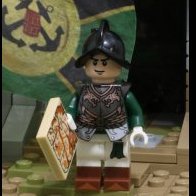 Merchants of Baghdad, Abbasid Caliphate 819 AD Merchants of Baghdad, Abbasid Caliphate 819 AD by Nicholas Goodman, on Flickr Merchants of Baghdad, Abbasid Caliphate 819 AD by Nicholas Goodman, on Flickr Merchants of Baghdad, Abbasid Caliphate 819 AD by Nicholas Goodman, on Flickr Merchants of Baghdad, Abbasid Caliphate 819 AD by Nicholas Goodman, on Flickr Merchants of Baghdad, Abbasid Caliphate 819 AD by Nicholas Goodman, on Flickr Merchants of Baghdad, Abbasid Caliphate 819 AD by Nicholas Goodman, on Flickr Merchants of Baghdad, Abbasid Caliphate 819 AD by Nicholas Goodman, on Flickr Merchants of Baghdad, Abbasid Caliphate 819 AD by Nicholas Goodman, on Flickr Merchants of Baghdad, Abbasid Caliphate 819 AD by Nicholas Goodman, on Flickr Merchants of Baghdad, Abbasid Caliphate 819 AD by Nicholas Goodman, on Flickr
 -
 Hello guys! Welcome to a real history lesson with some action scenes! Battle of Verdun... History on my channel!
 -
Venture into the Interior, North America 1700s A group of British Regulars accompanied by their Frontiersman Guide, head west, from the colonial towns of 18th Century America, into the unexplored territories to the west. Venture into the Interior, North America 1700s by Nicholas Goodman, on Flickr Venture into the Interior, North America 1700s by Nicholas Goodman, on Flickr Venture into the Interior, North America 1700s by Nicholas Goodman, on Flickr Venture into the Interior, North America 1700s by Nicholas Goodman, on Flickr Venture into the Interior, North America 1700s by Nicholas Goodman, on Flickr
-
My last Vietnam war animation - MACV SOG in action
-
 Since it's the 25th anniversary of LEGO Mindstorms this year I thought it would be interesting to share a history of LEGO Mindstorms. One post every Thursday. Of course everyone is welcome to chime in. Mindstorms History - 01 1984 - Kjeld Kirk Kristiansen watched a TV program, 'Talking Turtle', where MIT professor Seymour Papert demonstrated how children could control robot 'turtles' using LOGO, a programming language he developed. Related pages: More early history by Evan Koblenz http://www.brickhacks.com/0.php
 -
Part III ‘Clash with the Tabascans’ Cortés and his expedition left Cozumel, and by late March his armada anchored off of the coast of the Tabascan settlement of Pontonchan. Cortés took a group of small oared boats up the Tabasco River into the thick mangrove swamps. Hidden in the lush jungle lining the river were, seemingly, countless Tabascan Warriors armed with bows and spears. The warriors rushed the Spanish boats forcing the Conquistadors to fight back in waist deep water. Cortés lost a boot on his way ashore, but he managed to continue fighting and directing his troops. The Spanish organized once on land and managed to repel the waves of Tabascan Warriors until they finally retreated back into the overgrown jungle. The Fall of the Aztec Empire: Part III 'Clash with the Tabascans' by Nicholas Goodman, on Flickr The Fall of the Aztec Empire: Part III 'Clash with the Tabascans' by Nicholas Goodman, on Flickr The Fall of the Aztec Empire: Part III 'Clash with the Tabascans' by Nicholas Goodman, on Flickr The Fall of the Aztec Empire: Part III 'Clash with the Tabascans' by Nicholas Goodman, on Flickr
-
This project is based on the house of Ole Kirk Kristiansen, the founder of the LEGO group that celebrates its 90th anniversary this year. I made several rooms in the house. The workroom contains various details such as his typewriter and various blueprints. If you want you can support this project https://ideas.lego.com/s/p:ddb75bfdf7644f8386cb25501c7a685e
-
Okay, first off: I'm starting a new topic out of not wanting to perform necromancy on dead threads. Apologies in advance if I'm retreading old ground, but I couldn't find the answer I'm looking for on the old threads. Recently I was devouring old threads both here and on Lugnet from the time of the great colour shift (when the old greys and brown were replaced by their new variants, and the palette of Lego shrunk considerably). I'd never delved into these threads before, and curiously found that what I'd always taken to be the reason for the colour change - that Lego had been forced to seek a new supplier of ABS that did not provide the old colours - wasn't true. In response to the AFOL backlash, Lego's community rep ended up making a post on Lugnet apologising for the decision but confirming that it was going to go ahead. This obviously is well established (we're nearly twenty years on and the new colours are still here!) but interestingly he mentioned the possibility of Lego making available service packs of key elements like train tracks in the old colours, even asking for community advice as to what was seen as key elements. This leaves me with two questions, neither of which were answered satisfactorily by later threads on the topic - many of which seemed to be more concerned with exactly what the untouchable core colours were. 1. Did Lego ever end up releasing the mentioned service packs? If so, how long were they available and what was the reason for their discontinuation? 2. If the decision to switch colours and stick with the new ones was economical rather than enforced by their ABS supplier, is there any technical reason the old colours couldn't return? I'm not talking economically - I'm well aware that it's unlikely to ever be viable to bring those colours back unless they were replacing the new greys. Simply in a physical sense, is there any possibility of the old greys being revived? In writing this I'm reminded of the survey from the other year which had a question concerning possibly making old sets available. If the old colours could in a technical sense be revived, it opens up the possibility of remaking these sets of yore exactly as they were.
-
Presenting one of my newest MOC redesigns, the Hidden Oasis! There's kind of a longish story behind this one. I started building something that was kind of similar to it for a LEGO Ideas entry way back in the day, in 2019-2020 ish. I've always been fascinated by Egyptian architecture and Ancient history themes, and I also have this weird thing where I tend to choose a single piece and see if I can build something around it. The teal flower petal was the factor for this MOC. I saw it and was thinking about ancient Egyptian hypostyle columns and the stylized lotus capitals and thought "ooh, maybe I can build a column around it!" I ended up building the hall around the columns, and then expanding to include a base with kind of a musty ancient tomb atmosphere. I also have a fondness for trying to replicate water features in my MOCs, so I included a garden area in front of the temple with date palms, lotus blooms and papyrus. The original iteration of this MOC was actually larger than what this final model turned out to be. It was really ungainly, because I made the pools perpendicular to the temple, rather than horizontal like I ended up with in the final version. So there was this nice compact temple, and then this long mess of plates sticking out the front that made our real brick version impossible to carry around or display properly! So this new version is a bit more stable and a lot more compact, which I like. The original version also had this really cool lotus roof structure to the right of the hall. I was inspired by a movie I saw back then that had similar roof styles. I don't have a picture of the older MOC which is a shame, but when I was redesigning it, the roof on the lotus tower was a little too hard to replicate. (I should also mention that we moved in between iterations, and the version I'd created in real bricks was disassembled, placed in a bag, and then I had to reassemble it. Problem was, I only had a couple of pictures and the original digital file was corrupted. Lesson learned, always have backups! Reverse-engineering a MOC from an exterior picture is hard.) Another favorite feature of this MOC are the two Anubis statues guarding the staircase. I'm normally not the greatest at creating brick-built things like statues, my brain just doesn't work spatially to create the right angles and curves and things. But I think they're quite cute, especially the little ears! The date palms too were really fun to design. They are surprisingly not as unstable as they look. In the real brick model that we have on our shelf at home, they stand up pretty steadily and only break if I really knock it around in transit. (The fez pieces are sturdy, plus there's a bar inside the cone that holds it in place pretty well). As you can see the real brick counterpart is slightly different. Small differences in pieces and things like that. The digital version is the more spruced up version that I will eventually fully create once I modify the brick version, just have to order a few more pieces. Currently I've been adding more treasures to the interior of this digital design's real brick counterpart, the sarcophagus piece comes in really handy for that. And it makes for a good sort of display for my old Pharaoh's Quest minifigures!
-
Treasure of the Spanish Plate Fleet, 1716 On July 31st, 1715 one of the wealthiest Treasure Fleets in history wrecked off the coast of Florida. Millions of Spanish coins, jewels, and other valuables littered the shallows. After months of Spanish recovery efforts a small fortune remained lightly guarded on the beach, open to anyone daring enough to steal it. In early 1716, a small group of pirates lead by Henry Jennings, Sam Bellamy, and Benjamin Hornigold raided the small Spanish garrison and made off with a haul equivalent to 10 years of wages for only a single nights 'work'. The wealth of this raid and the inspiration it provided for would-be pirates across the New World, kicked off the final stages of the Golden Age of Piracy. Treasure of the Spanish Plate Fleet, 1716 by Nicholas Goodman, on Flickr Treasure of the Spanish Plate Fleet, 1716 by Nicholas Goodman, on Flickr Treasure of the Spanish Plate Fleet, 1716 by Nicholas Goodman, on Flickr Treasure of the Spanish Plate Fleet, 1716 by Nicholas Goodman, on Flickr Treasure of the Spanish Plate Fleet, 1716 by Nicholas Goodman, on Flickr
-
The Battle of Mechanicsville, June 1862 The Battle of Mechanicsville was one of the first major engagements of the Seven Days Battles, where the Army of Northern Virginia attempted to push the Army of the Potomac out of Virginia during the initial stages of the American Civil War. The Battle of Mechanicsville, June 1861 by Nicholas Goodman, on Flickr The Battle of Mechanicsville, June 1861 by Nicholas Goodman, on Flickr The Battle of Mechanicsville, June 1861 by Nicholas Goodman, on Flickr
-
The Sacking of Portobelo, July 1668 On the 11th of July 1668, Henry Morgan, the greatest buccaneer Admiral in history, took a force of several hundred privateers to raid one of the largest settlements on the Spanish Main, Portobelo. At this time, Portobelo was a vital cog in the imperial operation that pulled unimaginable wealth out of the Americas destined for Spain. After successfully sacking the town, Captain Morgan and his men remained for roughly a month. During their stay they successfully repelled a Spanish attempt to retake the settlement and eventually forced the payment of 100,000 pesos for the return of the town. Although not explicitly allowed by Morgan’s Letter of Marque, those back in England cheered the Welshman’s daring raid, leading to several more attempts like it during Morgan’s long and successful privateering career. The Sacking of Portobelo by Nicholas Goodman, on Flickr The Sacking of Portobelo by Nicholas Goodman, on Flickr The Sacking of Portobelo by Nicholas Goodman, on Flickr The Sacking of Portobello by Nicholas Goodman, on Flickr The Sacking of Portobelo by Nicholas Goodman, on Flickr The Sacking of Portobelo by Nicholas Goodman, on Flickr
-
Trouble in Vulture Creek Here is my take on an Old West Town, called Vulture Creek. A few bandits have helped themselves to the contents of the Town Bank's Vault. Local sheriffs and the US Calvary do there best to restore order to this frontier town. Trouble in Vulture Creek by Nicholas Goodman, on Flickr Trouble in Vulture Creek by Nicholas Goodman, on Flickr Trouble in Vulture Creek by Nicholas Goodman, on Flickr Trouble in Vulture Creek by Nicholas Goodman, on Flickr Trouble in Vulture Creek by Nicholas Goodman, on Flickr
-
Hello everyone, this is my MOC of USS Constitution. I estimate it to be between 5-7000 pieces. I will eventually rig the ship fully as well as add minifigs and longboats. I am currently working on the Guerriere for a battle diorama. If anyone has any feedback or changes I should make, plea feel free to let me know. more photos at Uss constitution - Imgur
-
Welcome to Babylon! Let Akitu begin! The new year’s celebrations have begun with the entrance of the king through the Ishtar Gate to the city of Babylon. The Ishtar Gate is the eighth access gates to the city of Babylon and was built in 575BC by king Nebuchadnezzar II, second king of the Neo-Babylonian empire. The gate is adorned with beautiful blue tiles, and two animals representing gods of the Babylonian pantheon: the dragon Mušḫuššu for Marduk and an auroch for Adad. ============ I've created this build for the Bricklink Designer Program Series 4. Go give it a VOTE if you want it to become a real set! ============ The model is not only a representation of this beautiful monument, but an ode to the history and culture that originated in Mesopotamia. The back of the model opens up to reveal some secrets: This project originated from a fictional sub-theme I created a couple of years ago (you can read all about it here). I was a space theme about planet exploration. In the first wave, I suggested a sort of Ishtar Gate set in a dusty moon far away. I've always really liked ancient antiquity, and Babylon in particular, so I think it was kind of inevitable I would sooner or later redesign the fictional gate into a larger and more complete replica of the original. Living Quarters The back opens up to reveal a few scenes of daily life in Babylon during the time of construction of the gate. There is a board game called “The Game of Ur”, which consists of a race and a battle between two players to see who can get seven pieces across the board first. Plenty of clay tablets are stacked on the table, along with cylindrical seals and a tablet with the world’s oldest map. On the shelves sit a few frog-shaped weights and a little Mušḫuššu sculpture. King’s Throne The other part of the back has the throne, a staff, a chest and a tiled mosaic with floral themes and lions. There are close to no remains of babylonian furniture because it was all mostly made from wood. Details Dotted around the model, there are other important artifacts from the history of Babylon. The Basalt Monument of Esarhaddon sits in front of the model and tells the story of the reconstruction of Babylon by Neo-Assyrian king Esarhaddon. Next to it, sits a tamarisk plant typical of saline soils. In the footing of the other tower sits the Stele of Nabonidus showing the last ruler of Neo-Babylonian empire standing next to the moon god. Model Dimensions: Length: 40.5cm / 16in Width: 28cm / 11in Height: 28.8cm / 11.3in Thank you for reading along and hope you like the model!
-
This is one of four models that I built in 2016 for a book with a LEGO scene for each US president, that unfortunately didn’t work out. Portrayed here is Calvin Coolidge’s Address to Congress, which was the first in the US to be broadcasted over radio. You can compare it to this reference image: A non-immersive picture of the build can be seen on Brickbuilt. Thanks for looking
-
Hi everybody! We welcome you to the new edition of "Brickstory" by Kockice! Everyone is invited, All Fans Of LEGO®, to join and create awesome models. This year only one theme but with two categories. Again, four renowned judges are here to make it even more exclusive. And like all contests, there are a few prizes to spice everything up. Don't be a stranger, make the long winter days more fun with "Brickstory" by Kockice. Good luck! https://www.flickr.com/groups/brickstory2018/
-
LEGO Soviet Military parade 5000 parts are used for this tower and wall LEGO Red Square by kou2000R, on Flickr LEGO Red Square by kou2000R, on Flickr IMG_E0592 by kou2000R, on Flickr IMG_E0590 by kou2000R, on Flickr
-
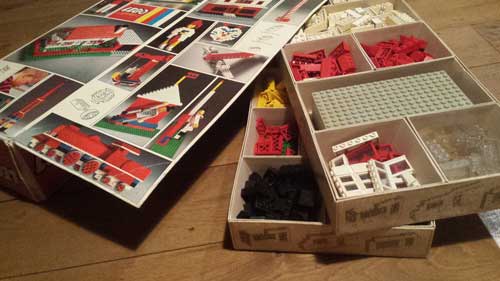
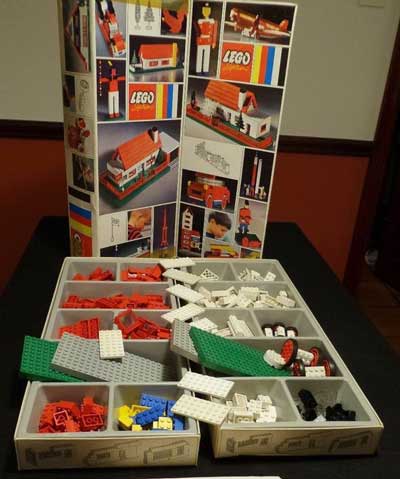
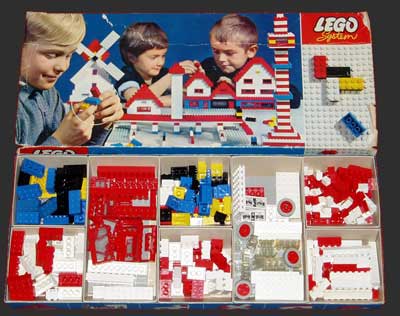
Hello, I own a 070 universal building set from 1967 or so (photo1), but this one has cardboard inlays instead of the plastic ones you can commonly find (photo2). Does anyone has an idea whether it is an older type, or some transition box? I cannot find more info on this. Except: the set 050 from 1964 has similar inlays (photo3)... Thanks for helping me out!
-
While searching around on Brickset I found these four Lego sets: Car = 4033 Aeroplane = 4034 Boat = 4035 Space Plane = 4036 Are these hoaxes or something? They are marked in Brickset as "Designer Sets". Upon further investigation I found a Lego set called "4037 Helicopter". If anyone knows about the source material let me know.
-
Hi!My name is Atilla from Hungary and I'm new to this forum. I have been lurking for a while, mostly reading the splendid pictorial reviews. Lately I decided to start a blog of my own, something between the mentioned reviews and Blackbirds technicopedia, displaying the sets I own.I have only 1 post so far, and I would like to expand a bit on that. (If somebody is interested, I can post the link to it. I'm not sure whether it counts as advertising or allowed at all).I'd like to ask for help with my research for an upcoming post. I'm writing a review of the first supercar, 853, and I would like to have a section of the history of the Technic product-line in the review.Here's what I know:I found, that the first Lego set ever to include any sort of gear was the set number 001, released in 1965. These gears did not have the X shaped hole in the middle, as the first axle with a X cross section wasn't released until 1970. Then a new set of gears was released, very similar to the previous ones, which now included the X shaped hole. These gears was not compatible with the Technic gears at all, because of the different teeth profiles.I also know that that the first universal joint was released in 1972, it was very similar to the Technic ones, but in a different colour (i believe red).This information, I could pull from the catalogue of bricklink, and some youtube videos reviewing the 001 set. I managed to buy some of these early gears from bricklink, in order to make a few high resolution photos. I'm aware that there was an ideabook (managed to buy get hold of it), showing 853 with a yellow body, made from the 852 helicopter (which I also managed to buy). I found that there was an image in the back of the building instructions for the set 858 "Auto Engines", showing 853 with an engine in the back. I managed to source 858, but could not get a building instruction for it. Fortunately it can be found online. I'm planning to build these "official" modifications as well. and take pictures / incorporate them into my blog post. I humbly ask if you could provide any more information about what similar functionality was present before the release of the Technical Set line in 1977. I'm aware of the "Dacta" line, but as far as bricklink knows, there was no Technic related Dacta set until 1983. Maybe there was other Dacta sets, using the pre-technic gears, but I couldn't find them. If there is a thread of a blog on this subject which I missed, then a link would be welcomed too.Any input on the subject of what lead to the release of the first 4 Technical Set is greatly appreciated. Thank you for reading my post.
-
It’s been a long time since the Buddhism spread from Indian to worldwide, especially in China. The 1st memory building was named “STUPA” in Indian to memory the Buddha, stored the replics and chanting, mostly it is a tomb of Buddha. When foreigners landed in South China, them were taught the 8 corner tower pronounced “Pagoda”. The word was collected in the dictionary till today, a minus change is to be “Chinese Pagoda” to mean the towers in Asian-Pacific area. Today Chinese people call Pagoda as “Ta” since the word was invented by Ge, Hong in Jin Dynasty. (around AD 300) I selected 6 typical types of Pagoda to be LEGO model, the superstructure of Pagoda can be separated by 3 parts as the picture below: Base, Body, Cha; 1. Basic Stupa The model reflects the main characters of Stupa which is the resource of all pagoda, stupa and etc. Flat base; Hemispherical body; Upside Lotus petal; The “CHA” of tower; 2. Lamaist Stupa The Lamaist stupa was heralded in hemispherical tomb in Fo-kuang Ssu in the latter part of the tenth century. The earliest Lamaist stupa was built in Xizang, China. The model reflects the main characters of Lamaist Stupa Flat and thin base; Higher base (Shu – mi - tso); Aquarius body “Belly” (The variant of hemispherical body); Truncated cone Bottle “Neck” Top “umbrella”; 3. One storied Pagoda The One storied Pagoda may be the 1st culture combined pagoda in Chinese. It mixed the different architecture elements from both Chinese and Indian. It more likes a Chinese pavilion with solid walls and stone or brick roof. The top of body adopts a building technique called “Corbelled brick courses”, they have 2 ways to be shown, positive and negitive. Using the LEGO parts to build this is a real challenge. The picture will show you how. You can also see the “Cha” part is real like the Stupa. 4. Multi-Storied Pagoda I build the 2 storied pagoda only for example. The real Multi-storied Pagoda usually looks similar with the Multi-Eaved Pagoda. The key of distinguish is to see the highest eaves, if they are real close, the pagoda shall be Muti-Eaved, others are Multi-Storied. 5. Bustling Pagoda The bustling pagoda normally use very complex decoration outside, the body sits on a very high Shu – mi – tso. Some pagoda allows people walk inside to the top. 6. Multi-Eaved Pagoda As the name shows, it has several levels of eaves, I built this model in order to show the extreme case, the eaves are very close. I also use a wheel as the “umbrella” part. Through the building progress of these 6 models, you will have a Buddhism trip in Chinese. You can con tact me via jerryyao77@msn.com for the full instructions with a little bucks. Enjoy it! Jerry