Search the Community
Showing results for tags 'ww2'.
-
A project that was sitting since too long on my bench: a German "Natter" on its launch ramp. The Bachem Ba 349 Natter (Viper) is a rocket-powered interceptor developed by Germany from late 1944. It is a rather small aircraft measuring 6m by 4m, built mostly from wood except for the armored cockpit. It was launched vertically from a ramp designed to be basic. Armement of 24 rockets was installed in the nose and designed to target allied bombers. The Natter never entered into operational services. Its first piloted flight ended tragically with the dead of the test pilot and crash of the prototype aircraft. No allied airplane was ever shot down by a Natter. However, at the end of WW2, allies showed a lot of interested into German late-war technologies and attempts to grab and study everything they could. Ultimately, the Natter generated more"what-if" stories during the post-war years than any result in the airs. Because the Natter was never deployed on large scale, I only put simple markings on it: 2 Balkenkreutz (black cross) and simple technical writings next to the cockpit hood; but no swastika on the tail. View from the sky, with the rockets in the nose. Quite a nice and unusual view for airplanes. I also quickly assembled a small trailer to transport equipment. Based on official models, of course. When taking black and white photos, it almost look like photos form back-then. I really enjoy them. As an amusing coincidence, only a couple of days before finalising the layout, I stumbled across the picture below depicting a very similar scenery: the Natter on the light launching ramp made of wood. But this photo shows american soldiers analysing the place before taking a Natter away. Small game: Can you identify the non-LEGO element of this MOC ? There are some but in very limited quantity. (click below to reveal the hidden content and discover the details) If you like this MOC, I would appreciate you to also like this Instagram post. By doing so, you would boost my participation to an online contest https://www.instagram.com/p/DMsQpPxowGA/?utm_source=ig_web_copy_link Thank you! As a conclusion: I truly enjoyed building this MOC. While the aircraft itself sat on my bench for 6 months before I finally completed the layout, I quite like the end result. The trees are nice as well. And the layout is not too fragile. No glue was used. :)
-
Gentlemen i designed an accurate french adrian helmet modèle 1935 modified for armor crew (my eyes were bleeding seeing the traditional plane pilote genuine lego helmet with glasses on all the amazing WW2 tanks pictures). I needed a french tank to fit my crew inside. I confess, i was on ALI EXPRESS and find a nice R35. it looks good, but it was a huge mistake, so painfull to build( but minifigs stickers was good). But i am a little proud of what it renders with my accurate equipped crew. TADAH..... Equipage r35 by LA BRIQUE DE CAMBRONNE, sur Flickr the adrian helmet mle 1935 modified Equipage r35 by LA BRIQUE DE CAMBRONNE, sur Flickr have a nice day.
-
Minifig scale replica of one of the first flying wing aircraft powered by jet engines constructed in 1945. It is modeled after the V3 of the aircraft, the only version of the aircraft that still exists today (on display at the Smithsonian). The MOC features fully retractable landing gear and a dual colour scheme. The biggest challenge was trying to get all the angles and shapes as true to the original as possible because there isn't that much source material out there on the web. The original pilot would have worn a pressure suit but sadly Lego hasn't released one of that kind yet so I used the next best thing I could find. If you're interested in getting the instructions for this moc feel free to contact me at brickster.creations@gmail.com Lego Horten HO 229 by legomanijak, on Flickr Lego Horten HO 229 by legomanijak, on Flickr Lego Horten HO 229 by legomanijak, on Flickr Lego Horten HO 229 by legomanijak, on Flickr Lego Horten HO 229 by legomanijak, on Flickr Lego Horten HO 229 by legomanijak, on Flickr
-
Down the Net, Saipan June 1944 Down the Net, Saipan June 1944 by Nicholas Goodman, on Flickr Down the Net, Saipan June 1944 by Nicholas Goodman, on Flickr Down the Net, Saipan June 1944 by Nicholas Goodman, on Flickr Down the Net, Saipan June 1944 by Nicholas Goodman, on Flickr Down the Net, Saipan June 1944 by Nicholas Goodman, on Flickr Down the Net, Saipan June 1944 by Nicholas Goodman, on Flickr Down the Net, Saipan June 1944 by Nicholas Goodman, on Flickr
-
 Hi there everybody! It's been a while since I posted anything here, but allow me to present my latest Project: A small scale Tiger II tank! Years ago when I got first into World of Tanks Blitz, the Tiger II was my favorite tank. I still play it sometimes, so I decided to build it. My goal for this Tank was simple: To get all the functions big RC tanks have in a small scale tank model, and still make it look good. - RC driving (powering the front drive sprocket) - RC turret rotation - RC gun elevation/depression - Suspension system to replicate the torsion bar suspension From the beginning it was clear that this would not be possible using LEGO electronics due to the size constraints. I used a CADA Battery box, 2x M motor (drive) and 2x Micro motor (Turret+Gun) to power the tank. The rest of the Tank can be built with 100% LEGO with some minor color changes, especially on the insides to save money. Building istructions are on Rebrickable I hope you like my little gray cat and am looking forward to your comments Gray Gear
 -
Another go with a WW2 action scene. Here is a small vignette showcasing a German Nebelwerfer in action, probably on the East front. Nebelwerfer 41 in action by Veynom, on Flickr Nebelwerfer 41 in action by Veynom, on Flickr The model is mostly based on the BrickMania design, except for the wheels and ammunitions. The Nebelwerfer - literally "smoke launcher" - was originally designed as a rocket launcher with a name purposely chosen to deceive its true nature. Rocket researches in Germany started during the 1920s and were fruitful in the late 30s. The "Nebelwerfer" name was used to go around the restrictions from the Versailles treaty preventing Germany to develop and produce weapons. In reality, the Nebelwerfer could launch smoke, of course, but also combat gas and highly explosive rockets. It was used during the entire WW2 conflict on all fronts. As I do not like to simply "copy" an existing model, I also built a light blueish grey version which has a different undercarriage and mounting system. The undercarriage is based on a modified plate 2x2 with pins while the mounting system relies on a technic connector. It allows for larger and more realistic wheels and a lighter mounting system. Nebelwerfer 41 by Veynom, on Flickr Here, the rear view of both Nebelwerfers shows you the loaded one firing its first rocket (left) and one without any ammunition in it (right). Nebelwerfer 41 by Veynom, on Flickr Hope you like these. I have been contemplating to build a white-ish version representing the winter paint job used on the East front as well but I lack the necessary bricks. And I have no winter soldier as well. ;)
-
Moving Through Halfaya Pass, April 1941 Moving through Halfaya Pass, April 1941 by Nicholas Goodman, on Flickr Moving through Halfaya Pass, April 1941 by Nicholas Goodman, on Flickr Moving through Halfaya Pass, April 1941 by Nicholas Goodman, on Flickr
-
Here's my first tank build, the classic American M4 Sherman, I built it a while back but never posted it here so here it is... Yeah, I know I got bad lighting in the photos... Just Lego pieces, no customs The back looks okay, I never decided on a variant, in retrospect, I probably should have. The other side, the whole build is built with 1 stud = 1 foot, so there is no interior but thanks for taking a look :)
-
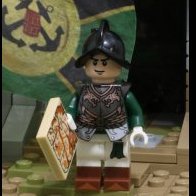 Supporting the Resistance, Western France 1944 Supporting the Resistance, Western France 1944 by Nicholas Goodman, on Flickr Supporting the Resistance, Western France 1944 by Nicholas Goodman, on Flickr Supporting the Resistance, Western France 1944 by Nicholas Goodman, on Flickr Supporting the Resistance, Western France 1944 by Nicholas Goodman, on Flickr Supporting the Resistance, Western France 1944 by Nicholas Goodman, on Flickr Supporting the Resistance, Western France 1944 by Nicholas Goodman, on Flickr
 -
The Sienar Technologies board of directors did not really appreciate that Rothana Heavy Engineering - one of their direct competitors - started selling the Katyoucha variant of their TX-225 tank to the Empire. (see the full article from 3 years ago here). Clearly, by proposing a relatively cheap rocket-launcher, Rothana would start grinding some of Sienar's market shares. But Sienar did not waste time before reacting and quickly started their own project of a rocket-launcher for the Imperial Army. In order to remain competitive from the pricing side, Sienar took two important decision. First, the new design should reuse as many existing components as possible. This first decision quickly make Sienar look toward their TIE families and existing designs. The second decision was to use the same model of rockets as Rothana. This would allow the Empire not to change their ammunition supply chain and permit in theory to quickly swap the Rothana TX-225 Katyoucha by the future design from Sienar. The project resulted in a fast prototype delivery and the TIE-Calliope was released. It was based on the existing TIE-Crawler which was already in use inside the Imperial Army but on tope of the existing Crawler a rocket launcher was mounted. But Sienar did not mount any small rocket launcher. They designed a rocket launcher that could carry no less than 50 rockets! And the TIE-Calliope could fire these one by one, in salvo, or even all of them within a handful of seconds. Useless to that the the impact of such firepower on any target was devastating. On top of that, the noise produced by the rockets during their flight generated a frightening feeling on the receiver's end. Thanks to this impressive solution, Sienar could even develop a great commercial argument: the ratio between the firepower and the deployed man on the field is way above whatever any competitor can offer (and almost 10x higher than the Katyoucha ratio). Indeed, the TIE-Calliope is equipped with 50 rockets, 2 blaster canons, and one turbolaser canon while only requiring a single pilot. On the other side, the TX-225 Katyoucha is only equipped with 16 rockets and 4 medium blaster canons and requires 3 crewmen to operate. Definitively, Sienar knows how to market their products. TIE-Calliope by Veynom, on Flickr But enough of the historical speech and let's discover the beast: TIE-Calliope by Veynom, on Flickr TIE-Calliope by Veynom, on Flickr TIE-Calliope by Veynom, on Flickr TIE-Calliope by Veynom, on Flickr Both of them together: TIE-Calliope & TX-225 Katyoucha by Veynom, on Flickr Naturally, before creating the Calliope variant, I had first to build a TIE-Crawler. Here it is, without its launcher. TIE-Crawler by Veynom, on Flickr You can see the 2x3 plates inside the track module panels. They were intended to receive the rocket launcher. In the final version, these plates were moved backwards. After all, when moc-ing, it is all about doing and undoing, isn't it? TIE-Crawler by Veynom, on Flickr TIE-Crawler by Veynom, on Flickr For those of you following our Desert Wars project, the TIE-Calliope will replace the Katyoucha as of June 24. Have a thought for the poor Katyoucha. Katyusha! by Veynom, on Flickr Please note that neither the TIE-Calliope, neither the TX-225 Katyoucha appear in any Star Wars material. They are both designs I created, aiming to propose ideas that could exist in the Star Wars universe. And while the old TX-225 Katyoucha was based on a soviet rocket launcher truck from WW2, the TIE-Calliope is based on a M4 Sherman tank variant. In the end, it is quite common to derive Star Wars designs from WW2 materials. Comments welcome, hope you liked it. PS: in the end, the Imperial Army selected the AT-AT from Kuat to mass equip their forces. Sienar and Rothana only received minor orders.
-
Sturmgeschütz III Ausf. G by Veynom, on Flickr Behind the strange name of Sturmgeschütz III Ausf. G (also shortened into "StuG III"), we can find one of the most successful German armored vehicle of WW2. Initially designed as mobile and armored artillery support for infantry, the StuG III quickly revealed itself as a very effective tank destroyer. In fact, it was so successful that it became the most produced German fully-tracked vehicle of WW2, and the 2nd most produced armored vehicle (just behind the Sdkfz 251 half track). Sturmgeschütz III Ausf. G by Veynom, on Flickr So, why manufacturing a tank destroyer when you already have the best tanks around (Panzer IV, Panther, Tiger)? The answer is quite simple: cost. The StuG III was cheaper and easier to produce than all other more modern German tanks. Still, it could carry the devastating 7.5cm anti-tank gun. Moreover, it offered easy maintenance when on the field. Thanks to that, more than 11,300 units were built (all versions included). This number is to be compared with the number of built Panthers (6,000), Tiger I (1,500), or even with the total number of armored vehicles built on the Panzer IV chassis (8,500). Sturmgeschütz III Ausf. G by Veynom, on Flickr The Stug III's low profile made it hard to spot and target, as the above picture can illustrate. Sturmgeschütz III Ausf. G by Veynom, on Flickr The side armored plates are named "Schürzen" and offer additional protection. The Ausf. G version is characterized by the wider superstructure, and the rotating cupola with periscopes. My model depicts an early-to-mid production model. late-production models have a sloped and rounded gun mantlet and a machine gun on top of the structure. Sturmgeschütz III Ausf. G by Veynom, on Flickr Another characteristic of the StuG III is its capacity to store and carry a lot of equipment behind the superstructure. This was often used to carry spare parts (tracks & wheels), food, water, gas, and ammunition (ok not when in the front line). Sturmgeschütz III Ausf. G by Veynom, on Flickr For the build, my model is freely inspired by those from Brickmania (BKM), Custom-Bricks (CB), and other MOCs from the Internet. The minifig and crate stickers are from BKM. The tracks and tanks stickers are from CB. All of my olive green tiles were used for the camo. That was a challenge: it had to look realistic and yet, the model had to hold together. Enjoy!
-
The images for my model are too large to put here, so here's a link to them on Bricksafe This model is a 1:25 scale replica of a ship that served in Czechoslovakia and Germany in WWII. While in Czeckoslovakian service it was named Presedent Masarysk, named after their first presedent. It was a river monitor that was the leader of their brown water flotilla. It was launched in 1932 and in 1936 when Czechoslovakia was annexed by Germany was transferred over to their navy and renamed Bechelaren. It mostly did escorting on the Danube river, however it partook in the German counter-offensive on Budapest in 1944. In 1945 the ship was turned over to the allies, whom disarmed it then gave it back to the newly reformed Czechoslovakia in 1947. It was used as a working platform until it was scrapped in 1978. The model, if built out of actual lego would be exactly 2 METERS long. Despite minifigure scale normally being either 1:32 or 1:45 I've personally found that I prefer 1:25 scale for minifigs. Also it was originally a typo that I didn't catch until I had already finished the model. I made it so that you can remove everything on the deck and take the hull apart by bulkhead. I had to get creative with the interior since I couldn't find anything about it other than how many bulkheads it had. I also kept finding conflicting numbers as to how many crew it had, so I put in as many beds as the largest of the numbers I came across. (43) If you'd like to build the model you can buy the instructions here: https://rebrickable.com/mocs/MOC-81516/Legodudelol9a/bechelaren-presedent-masarysk-river-monitor/#details
-
Here is a Messerschmitt bf109 directly inspired from a real model from WW2. All bricks are genuine Lego. Messerschmitt Bf109 G-6 by Veynom, on Flickr Messerschmitt Bf109 G-6 by Veynom, on Flickr This is a G-6 sub-version as piloted by Gruppenkommandeur Friedrich-Karl "Nasen" Müller". Nasen was a nightfighter pilot who survived the war with over 30 confirmed victories. My model depicts his G-6 from Summer 1944. Here is below a comparison between a real drawing from his fighter and my creation. Btw, the G version was nicknamed Gustav. You may detect 2 differences between the above pictures and the below ones ... answer at the end. Messerschmitt Bf109 G-6 by Veynom, on Flickr I had to make hard choices for the color section but ultimately, I decided to use LBG, DBG, dark green (I would have preferred a dark dark green) and black for the underside. Messerschmitt Bf 109G-6/As by Veynom, on Flickr Decals are custom and come from AIMS for 1/32 scale models, except for the propeller nose where I cut some Lego sticker sheet. Messerschmitt Bf 109G-6/As by Veynom, on Flickr Here are a few shots from the field: Messerschmitt Bf 109G-6 by Veynom, on Flickr Messerschmitt Bf 109G-6 by Veynom, on Flickr Messerschmitt Bf 109G-6 by Veynom, on Flickr Messerschmitt Bf 109G-6 by Veynom, on Flickr Messerschmitt Bf 109G-6 by Veynom, on Flickr I had started with the idea of an all black bf109 but as I could not get the corresponding decals for the exact marking, I progressively moved to this camo version. Doing nice camo with bricks remains a challenge, particularly dependant on available colors and shape. But I've hope for the future as TLC just released a part matching perfectly the bf109 nose ... About the 2 differences: The G version has no support for the rear wings ... I had incorrectly mounted 2 antennas like in the E version (Emil). In my final version, I made the canopy longer by 1 stud. The top bars are therefore 5-stud long (from cut hoses), instead of 4. It better match the pictures. The comparative picture still have the 4-stud long canopy. Hope you like it ...
-
Behind the barbarian name of Sd.Kfz. 250 mit 5cm PAK 38 hides a very rare variant of a WW2 German half-track. Sd.Kfz. 250 mit 5cm PAK38 by Veynom, on Flickr While the standard version was designed for troop transport, there were many variants fulfilling many purposes, just like its longer cousin the Sd.Kfz. 251. Sd.Kfz. 250 mit 5cm PAK38 by Veynom, on Flickr This model represents a 5-cm anti-tank gun (PAK) mounted on a modified Sd.Kfz. 250. It includes the side storage boxes and has a longer frame on the rear to provide more space to the gun servants. Sd.Kfz. 250 mit 5cm PAK38 by Veynom, on Flickr This variant was seen in Yugoslavia in at least 2 different models. One of them is exhibited at the war museum of Belgrade. It is unfortunately not in good condition with many missing components. Sd.Kfz. 250 mit 5cm PAK38 by Veynom, on Flickr I've decided to apply a winter color scheme, which was done by hastily splash covering the vehicle with some white color easy to remove. This explain why the grey is still visible at the bottom of the vehicle. This type of color scheme is likely to match a German unit fighting in Yugoslavia during the first months of 1945. Sd.Kfz. 250 mit 5cm PAK38 by Veynom, on Flickr My model is loosely based on the old 2014 BrickMania version. It is however recolored, rebuilt, detailed, and globally improved as the kit was rather old and no more matching today's standards. I think my version is a bit better. Decals come from my stash of old 1/35 scale models: license plates, black cross, red numbers. The front engine service door sticker is an official lego sticker, or rather, this is the cut-around of an official sticker. It had the right shape and color (LBG). This is a first try for me but I like the results. I will reuse this trick when I need to add more panel hatches or so. Minifigs are mixing multiple sources, from custom to official. Say "Hi!" to Dengar when you recognize his head. Sd.Kfz. 250 mit 5cm PAK38 by Veynom, on Flickr For fans that read until the end: Sd. Kfz. = Sonderkraftfahrzeug (special purpose véhiclel)This page gives many details about this specific Sd.Kfz. 250 variant.
-
 The recent Brickmania magazine featured instructions for a Type 97 Ke-Te Tankette from WW2. I did a bit of research into this obscure vehicle and discovered it spawned a couple of variants which I decided to try and recreate using the chassis of the original vehicle. The Original Brinckmania Type 97 Tankette (the real life version performed reasonably well against the Chinese but was no match for US and Soviet forces) Untitled by g.nat, on Flickr Untitled by g.nat, on Flickr Type 98 So-Da Troop/Ammo carrier The first variant was a troop and ammunition carrier. The turret was removed and the engine relocated to beside the driver freeing up the rear to carry troops/cargo. Type 98 So-Da Troop/ammo carrier by g.nat, on Flickr Type 98 So-Da Troop/ammo carrier by g.nat, on Flickr Type 98 So-Da Troop/ammo carrier by g.nat, on Flickr Type 98 So-Da Troop/ammo carrier by g.nat, on Flickr It was also fitted with a frame to add a canvas roof and opening rear doors. It also had a towing hook and could pull artillery pieces. Type 98 So-Da Troop/ammo carrier by g.nat, on Flickr Type 98 So-Da Troop/ammo carrier by g.nat, on Flickr The original could carry up to 10 troops!! My LEGO version... not quite as many!! Type 98 So-Da Troop/ammo carrier by g.nat, on Flickr Type 98 So-Da Troop/ammo carrier by g.nat, on Flickr Type 100 Te-Re Artillery Spotting Vehicle Almost identical to the Type 98, this variant was intended for use by artillery spotters to direct long range fire. The troop/cargo section was equipped with radios and a rangefinder could be mounted on the engine deck. Type 100 Te-Re Artillery Spotter Vehicle by g.nat, on Flickr Type 100 Te-Re Artillery Spotter Vehicle by g.nat, on Flickr Type 100 Te-Re Artillery Spotter Vehicle by g.nat, on Flickr Type 100 Te-Re Artillery Spotter Vehicle by g.nat, on Flickr Close up of the radio (a printed tile from a Brickmania accessory pack) Type 100 Te-Re Artillery Spotter Vehicle by g.nat, on Flickr Figures are Lego minifigs with Brickmania torso stickers on. Accessories are mainly Brickarms and Brick Warriors. Thanks for looking - comments always welcome.
 -
-kpia.thumb.png.a265cddff9575859eea3a4d2aad663c2.png) Czechoslovakia WW2 tank. Power functions: 1x XL motor 2x L motor 3x M motor Fuction and chassis Lego. Desing Cobi small army WW2.
Czechoslovakia WW2 tank. Power functions: 1x XL motor 2x L motor 3x M motor Fuction and chassis Lego. Desing Cobi small army WW2. -
Czechoslovakia WW2 tank. Power functions: 1x XL motor 2x L motor 3x M motor Fuction and chassis Lego. Desing Cobi small army WW2.
-
When I was a kid in a primary school I had lot of fun with model-making of tanks, aircraft and armored vehicles from World War II. I also created some dioramas out of gypsum, styrofoam, wood etc. for models I made. Probably that's why I wanted to... Read more » https://www.youtube.com/watch?v=Ifi9fys03Ls Bigger photos and full story here: LEGO Gallery - [MOC] Sniper at church WIPs, Behind the scenes and other extras at my: Instagram | Facebook | Flickr
-
A stop motion flick I made over the past few weeks. Enjoy.
-
Hi, I'm new on Eurobricks, but not to the world of LEGO. I'm building for 1,5 years now and this WW2 build I made back in 2017 for a contest on Flickr. If you like what you see give me a follow on Flickr, Instagram, YouTube, Facebook and/or Pinterest. Background I build an accurate scene from the movie 'Saving Private Ryan'. I did some extended research to make this scene as accurate as possible. The hardest thing to figure out was the placement of each soldier. Second of all that the halftrack came in from behind and that Captain Miller and his men had to turn around 180 degrees so that the wouldn't be attacked from behind. Eventually Captain Miller and his men where surprised by the explosion from the other side of the halftrack. By the second hit Captain Miller and his men came into action and ambushed the small recon unit of the 2nd SS Panzer Division by surprise. Those German Soldiers didn't know what hit them! After the battle they found out that a small 101st Airborne squad from the 506h PIR was following them up close and took out that 2nd SS Panzer Division halftrack. The rest of the story is known and otherwise watch this great WW2 movie :) Hope you'll like what you see! Barthezz Brick - Saving Private Ryan - Halftrack Take Cover 1 by Barthezz Brick, on Flickr Barthezz Brick - Saving Private Ryan - Halftrack Take Cover 3 by Barthezz Brick, on Flickr Barthezz Brick - Saving Private Ryan - Halftrack Take Cover 5 by Barthezz Brick, on Flickr More detailed pictures on my Flickr account! Greetings Barthezz Brick
-
Brécourt Manor June 6th, 1944 U.S. Airborne Soldiers of Easy Company take out German artillery firing on the invading Allied forces on the Normandy Beaches. Brécourt Manor by Nicholas Goodman, on Flickr Brécourt Manor by Nicholas Goodman, on Flickr
-
A Band of Brothers by Nicholas Goodman, on Flickr A super simple build but with the new military section I thought I would post it
-
Hi all, It's a Soviet light bomber used in WW2. You will see the building technique similar to that applied in my last model, Bf109E. Enjoy! Features: - 2 x 23mm cannons on wings - 2 x 7.62mm MG on wings - 1 x 12.7mm Berezin defensive MG (can be aimed freely) - 6 x 100kg bombs (4 carried inside the wings, 2 mounted below) - 8 x 82mm anti-tank rockets (laser shooter bricks) - Cockpit accepts 2 minifigs - Throttle lever tilts back and forth - Landing gear retracts completely into the wings (VERY sturdy as well!) - Navigation lamps. (red, green, white) It's an homage to the tradition of Lego's airport sets that always had navigation lamps on the commercial airliners. - Engine may be separated for repair - Intake and exhaust slits for the radiator and oil cooler - National insignia is made out of bricks; no stickers used. Designed to be visible from all sides. - All white winter camouflage - Retractable skis for landing/takeoff on deep snow (optional) I have posted a video on YouTube so that you can see the moving parts:
-
Hi all, This is a German jet fighter in WW2. Features: - 4 x 30mm cannon barrels visible on the nose - National insignia made in bricks; no stickers used - Canopy opens backwards - Accepts a minifig pilot - Retractable landing gear - Navigation lamps (red, green, white) - Fuselage can be broken into 2 parts - A transparent support is required when the gears are extended because the tail is heavier than the nose. In the real fighter the nose would be way heavier because of the cannons and the engines, but my model is all ABS plastic so the weight difference cannot be put into practice.
-
 Finally finished my latest project, a Sdkfz 251/1 ausf.D in scale 1/10. History of the Sdkfz. 251 After the MK V tank, I wanted to do something different and the 'Hanomag' is just this. The suspension is made with torsion bars and works as it should. The MOC is powered by 2 x XL motors & steering is done with 1 x M motor with a clutch & an Sbrick module. I wanted to integrate the lock-steering system but I simply didn't have the room to get all things integrated, maybe this is something for the future. stickers are being made & maybe there will be a PAK-40 soon behind this, still thinking about it. Dimensions:51cm x 18cm x 20.5cm Weight: 2.5kg Total brick count: about 2.000. Leave a comment if you want. my Flickr page for more pictures on my projects & completed MOC's