Search the Community
Showing results for tags 'Power Functions'.
-
 Today, I found a video from our good friend Sariel about a new, Lego compatible motor system called RCBRICKS, from a startup of the same name. These motors look quite unlike PF motors, and seem to be based off of high torque hobby servo motors, and as such are quite capable. Watch the video for more information. (It's in Polish, but the subtitles are just fine, and in English.) Here are the Pros and Cons, as far as I can see: Pro: Lots of power Highly responsive Great range Should be relatively inexpensive. Compatible with any kind of RC gear. Con: Not compatible with Lego PF system in any way. RC receivers and transmitters are expensive. Questionable battery choice. Motors are entirely new shapes, and not readily compatible with the system, meaning that they are not drop in replacements Unproven startup. Receivers and batteries are not Lego compatible. I don't know, they sound okay, but the thing is, what most people have problems with is either the power supply, or receivers of the Lego PF system, and not the motors. While I think it is a valiant attempt to rectify the Lego systems short range, I don't think they are going about it the right way. I am also kind of dubious about the idea of using a USB batter pack for this, as it is not really Lego compatible, and has to be awkwardly rubber banded in place. It would be preferable if there were a way to go from RC standard to LPF standard, as having all new motors might alienate people who just want a drop in PF receiver replacement, like SBrick. What do you guys think?
 -
 A fully motorized and remote control model, sized to suit the old 1980s rubber tyres. 10 Motors, 4 IR receivers, 2 battery boxes. 9kg. Maximum height 2.8 metres Liebherr LTM1130-5.1 in 1:15 Scale by Nick Barrett, on Flickr Functions: Progressive rate steering on 1st, 2nd and 5th axles, powered by L motor. Last axle countersteers. The in-cab steering wheel is connected. Drive by 2 x XL motors on 3rd and 4th axles, and I-6 fake engine. Live axle suspension on all axles Four synchronized stabilisers, powered by L motor with gearbox to switch between extending and lowering. They lock in place when fully down. Slewing of superstructure by L motor. Boom Luffing - XL motor Boom Extension (four sections) by 2 x XL motors Hoist - L motor with gearbox to change speed according to load. Tilting operator's cab, powered by M motor. Liebherr LTM1130-5.1 in 1:15 Scale by Nick Barrett, on Flickr Liebherr LTM1130-5.1 in 1:15 Scale by Nick Barrett, on Flickr Liebherr LTM1130-5.1 in 1:15 Scale by Nick Barrett, on Flickr Displayed at The Great Western Brick Show 2015, before appearing online here. Liebherr LTM1130-5.1 in 1:15 Scale by Nick Barrett, on Flickr
 -
 Hello! This was my Halloween MOC. It uses a SBrick to control 4 functions: - White light - Ultra-violet light - Fog - Minifigs rotation The white light uses a regular LEGO Power Functions Light pair. One LED is inside the pumpkin at front, the other one is bellow the floor, pointing up. The ultra-violet ("black") light uses 3 home made Power Functions UV pairs, with UV LEDs. I'm using a rectifier bridge and two 100 Ohm resistors to drive the LEDs, a circuit identical to LEGO PF Light pair. 2 pairs (4 LEDs) light 4 torches in the left and right walls. I put the LED inside a technic 1x1 brick with hole, behind the trans-neon-orange flame to hide it (black light sources are also blue light sources). Some UV passes trough, not much but I complete it with another pair (2 LEDs) bellow the floor, pointing up. There is a fifth torch in the back wall, without UV LED behind but still glowing a bit, like the spider in the left corner. The fog cames from an home made fog generator. It uses a kantal wire to heat glycerole/glyrecin, like the smoke generators used in in model trains as also most e-cigs. Has a silica wick that takes the glycerin from a small tank, enough for more than 30 minutes of work. The fog is not spreading allover the MOC as I intended. I might add a small fan later. Finally the minifigs rotation uses an old 9V micro-motor. No gears so it turns to fast :( Everything is powered from a LEGO Power Functions LiPo. You can see most of the electronics in this photo of the base while being assembled:
 -
 Hey, i would love to share my latest Creation with you guys. Its been a while since my last MOC, but i took the time to build something cool. It is definitely one of my best so far. And for the first time i decided to provide detailed instruction for this MOC. What are the functions of the ZlL E134 Truck: First of all, i used 2x SBricks and 2x 88000 Battery Packs. 2 XL Motos for propulsion 2 L Motors for steering 1 M Motor for gear change (2 speed transmission) 1 LED on the roof (there is a lot of space to use more LED) a working 12 Zylinder Fake Engine behind the cabin. 2965 Parts , about 3,4 Kg. There is still room for improvements. Under the hood is enough space to put in what ever you want. The whole Bodywork can be removed very easy. (modular design) But as always, a short video can show you the Model in action. Instruction: https://rebrickable....nkmad-max-desig Thanks to Madoka for the inspiration with his Tatra 813 Truck. Great work as always.
 -
 I need suggestion with my car. I have images below of what I have so far. A few questions. What springs should I use. Hard or soft? What wheels or tires? And I need ideas on how to complete it. So far my axle has working steering and a driveshaft connected. I don't know what to do next as I am a new technic builder. If any more information or pictures are needed please tell me :) Images: http://imgur.com/a/QbhXw
 -
Well, I've got a bunch of ideas and other random things, as I am building more often, so rather than make a dedicated thread for every off the cuff thing or proof of concept I turn out, I'm just going to compile it here. The first item is a proof of concept chassis for a Gottwald crane, which I meant to be an AK-912, but there are many different models that have a similar chassis, including the AMK-1000, and the AK-680. It's a WIP, but I have other projects I want to finish first, so I made this, and am currently working on an LDD file. Once that file is finished, this thing will be taken apart, so I can use the pieces for other projects, and once I am ready to give this my all, I will use the LDD file to rebuild it. Gottwald AK-912 chassis. by Saberwing007, on Flickr The model is meant to be like an official set, like 42043, meaning one motor, and no RC. The chassi has a V-12 engine, like the real thing, and 8 wheel drive, with a single middle differential. I found that given how far apart the axles are, a differential is required between the 2 sets of driven axles. The different angle between the steering axles is achieved by a diagonal beam, which is very effective. There is almost no backlash, and the axles are in sync automatically. Also, due to how it works, the axles are set to the correct angle relative to each other automatically, due to how it is built, without any calculations. Another picture of the front unit: Gottwald AK-912 chassis. by Saberwing007, on Flickr In addition, the chassis can be separated into three parts, like the real thing. Seperate by Saberwing007, on Flickr Although the steering on the front and rear units works well, it's connecting the two that has proven problematic. I blame lack of stiffness in the middle reversing linkage, and using friction pins for every steering connection. But, for now, this is finished. I will get back to it later, I don't know how much later, though.
-
Hi, I have recently started a tracked vehicle project. I have made a few other topics about it, building it etc. I was wondering if anyone has made a vehicle then turned around and made it articulated. (Especially tracked) I also need tips on how to do this. Thanks
-
Hi, I am working on a new project which is a tracked vehicle, I have started on it and remodeled it 3 times already. I am new to tracked suspension and wanted to incorporate hard shocks. The motor I will be using is the Lego XL motor.
-
 This is a very small, robust, reliable and easy to maintain buggy. It is ideal for letting your kids play with all day. The design goal was to make a robust car as small and simple as possible. This means most of all no suspension system since that would require the use of CV joints. They are known to break and while they work nicely in LEGO super cars that you carefully push around the floor, it does not work with kids trying to race and crash their RC cars. CV joints will break. Of course it is possible to create a LEGO RC car with suspension and even four wheel drive/steering, but then you end up with LEGO’s own RC Crawler. The goal was to keep it small, simple and robust. One of the problems I encountered when letting kids play with the RC cars all day is that the axles in the differential tend to slip and move out. I hence build a differential assembly in which the axles are completely locked in and cannot move. The worst thing that could still happen is that a wheel comes off which is easy to fix. The car uses only one L-Motor and is pretty fast for that. The turning radius is very tight and the car is just fun to drive. The differential makes it perfect to drive around tight corners. The heavy battery pack is right on top of the back axle, giving it the best friction. Well, it does not accelerate like an F1, but it might still make a small difference. Building instructions, LXF, and further information are available.
 -
 Hi everyone ! This is a MOC I made 2 years ago. It is an artulated tractor. It has 2 RC functions : driving by a XL motor and steering by a M motor. There is a 2 speeds gearbox that you can select manually. The articulation allows the 4 wheels still touch the floor. There is a rear lift to hook tools. The PTO can be able and disable by the lever near the seat. Steering : The rear lift : The PTO : (the driving ring catches the bush. The rotation is done trought the rear differential) I tried to do a good design, with a lot of panels. The hood and the seat are red ; the mudguard are black. There is a lot of details like front and rear headlights, exhaust, switches. This tractor has 3 tools. You can see it in the video. :)
 -
 They call those who ride them "rednecks". But while you may ponder whether the setup like this is an overkill or not, a pickup mounted on 10' wheels is a thing to remember no matter the circumstances. Features: ► forward/reverse drive ► separately-driven L6 turbocharged Diesel engine with moving pistons and cooling fan ► steering ► differential and gearing for speed ► simplified cockpit with steering wheel and IR-receiver seats. ► opening cab doors and hood ► exhaust stack ► details such as radiator with grille, front and rear lights, bull bar and reinforced bumpers, roof rack with extra floodlights, rear view mirrors, desert safety flag and fenders 42030 C-model, uses more than 80% of set's parts (loose assumption). 42 studs long and heavy. Despite its weight and only one XL motor as means of propulsion, it has a quite decent speed - it picks up (pun intended) a huge momentum - and an impressive turning radius. Engine is separately powered by L motor. Steering is much like in a video game, where both reverse and brakes are controlled by the same button. Unsuspected bonus: by accident, the bed is perfectly shaped to hold the RC control unit which consists of two RC pilots with a standard RC-car additions. The set's M motor lies dormant, waiting to be used on some extra function I can't currently come up with. It'd be hard to craft the instructions in LDD, but I'll try one day.
 -
Hello ! I have made this skycrane for a contest on TechLUG. The objectives were : Have a mechanism for the rotation of the rotors A host mechanism The helicopter must can catch a container It can have a motorization with a battery box and a M motor for the rotation of the rotors ant the host mechanism We had a maximum of 900 parts I chose to make a gearbox to have the possibility to choose between the rotation of the rotors or the host mechanism. The gearbox is activated by a crank. There is a linear clutch to have progressive acceleration of the rotors and to secure they when the M motor is turning. On these pictures, you can see the rotors mechanism. Here, the pictures of the host mechanism. The clamp is openable by a little mechanism. The motorizatioon can be add in the cab, by removing the interior. It is not the best solution, but there is not space is this helicopter. (You can see it in the video) For the design, I choosed to have a thin fairing. The advantage is the helicopter is more resembling reality ; but there is little place for the mechanic. There are just 2 seats in the cab. A made a detailled turbine. It is imposing, it released to the fairing.
-
 RC driving and steering. All wheel drive and Live axle suspension Lifted with Mickey Thompson tires: Internals More on my Flickr Youtube video (I know doesn't work in some countries, you can find it on flickr too)
 -
 Do you have a young child who likes to help you cut the lawn? Do you have more brick separators than you know what to do with? Why not make child size toy weed whacker? LEGO Brick Separator Grass Trimmer by dr_spock_888, on Flickr Powered by one AAA battery box and XL motor. The brick separators are not sharp and will not cut a child's toes or fingers. Safety glasses should be worn. Created for Flickr's Separator Anxiety https://www.flickr.c...ps/2840637@N21/
 -
Hi guys, I have been trying to make some trains (generally diesel) and a problem that I have always found is powering. for a steam locomotive this is usually pretty simple because of the lack of articulation but wel, bogies are articulated and motors are mounted in the build itself. my question was, how does gearing react to this? and what is the handiest for compact solutions? vertical or horizontal? with vertical you get this: lego 6L train bogie by alterlegotechnic, on Flickr how could something like this be used in a locomotive? would the motor stick loosely in the chassis and what about a vertical motor like this (http://www.brickshel...16/cam06194.jpg) will there happen something in corners? like that the would go faster or some? and with Horizontal you get this Iowa Pacific SLRG 515/518 Mechanics by wildchicken_13, on Flickr how can gearing do this? i mean the rotating bogie, what happens to the gears in it? obviously could 2 M motors be needed for a small train (around 4 cars) or will it fail? I heard something about a V2 receiver? I have a V1 (I think) and that a normal one won't be able to give enough power to both? What is better? XL or M? when will a XL be needed? so in one sentence: vertical or horizontal? what happens to gearing and what is easier when using normal motors?
-
 The awesome tank engine Dutchiedoughnut is assembling inspired me to get stuck into my next project. I destroyed my new dark blue Creator Jet but used the wonderful parts to put together my first Saddle Tank 0-4-0 shunter. Lights by Canvas Rails, on Flickr The Details: Freelance design, there is no DB prototype as far as I am aware (The DB doors were the last ones I had) 6 wide chassis, 7 wide at the saddle tank. All power functions components on board Two working lights Minifig driver (I cheated a bit here, he has no legs on account of the extreme cable situation in the cab) 0-4-0 wheel arrangement of standard Lego wheels fitted directly to a train motor Cranks for the side rods have been kragled to improve reliability at exhibitions Cranks have also been shortened (sorry purists) to work on 12v track geometry Power button activated by pressing the sand dome PF receiver is in the bunker with 1x1 round plate coal LEGO Power Functions Saddle Tank Locomotive in Dark Blue by Canvas Rails, on Flickr LEGO Power Functions Saddle Tank Locomotive in Dark Blue by Canvas Rails, on Flickr LEGO Power Functions Saddle Tank Locomotive in Dark Blue by Canvas Rails, on Flickr LEGO Power Functions Saddle Tank Locomotive in Dark Blue by Canvas Rails, on Flickr I really love this dark blue but it does not photograph well with my lighting setup. The colour in the first photo is closest to how it looks in real life. Does anyone have any suggestions for photographing dark blue? I am considering Bricklinking some more 1x1 dark blue bricks for the cab but then again the black is a nice contrast and is growing on me. I would be most interested in your thoughts. Cheers, Rob
 -
Mercedes W123 Coupé
roxXx5 posted a topic in LEGO Technic, Mindstorms, Model Team and Scale Modeling
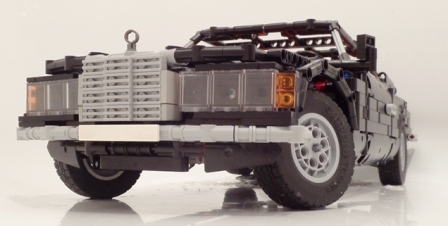
Hello fellow brickers, today i want to introduce you into a new MOC i've started to build at the beginning of august. It's a Mercedes W123 coupé. The reason for me to build this car was one of my co-workers drives one and every once in a while he takes me for a ride in this beauty. But enough about the story behind. Here are some technical features. Power Functions: - 2L-motors for driving - 1M-motor for steering - 1M-motor for shifting gears Drivetrain and suspension: - fully independend suspension - ackermann geometry - kingpin inclination - casterangle - 3-Speed gearbox - RWD with differential - working straight 4 fake engine - working steering wheel Bodywork: - openable doors, bonnet and trunk I tried to upload at least 2 more pictures here but it won't let me do this.... so here is a link to mocpages for you: http://www.mocpages.com/moc.php/419387 Thank you all for watching. Rolf
-
 Regional-Express with Bombardier doubledeck coaches and a Siemens Vectron engine Today I am presenting my new train set which is a typical German Regional-Express with doubledeck coaches and a modern electric loco. These trains can be found all over the place in Germany and some years ago I used one of the to comute to work. Since then I had the idea in mind to build a LEGO model of this train. The train consists of 3 Bombardier doubledeck coaches (one with the streamlined end cap) and a modern Siemens Vectron electric engine (you can find the original at https://www.flickr.c...oto/13558726015). The train is build in 7-wide and is powered by Power Functions and two train motors in the bogies of the engine. The Deutsche Bahn company does not use the Vectron engine to push or pull regional trains like this one but I felt that the "grill" structure on the head of the Vectron engine is a nice challenge to be captured in LEGO bricks. The most challenging part was in fact the end cap of one of the doubledeck coaches. Using various curved slopes I ended up in a result which is not perfect, but close to the original shape (see it at https://www.flickr.c...6man/9465049170). At least I've avoided the non-curved 75° slope bricks which would have been to square-edged for the latest version of the end cap. The design phase started with the windows of the upper deck. They have a very iconic bend in the lower half of the window. And I also wanted to have a complete brick-build red-colored frame around the window. The lower part of the window are transparent cheese-corners with the higher side facing outside. The bended part of the window is a SNOT transprent panel which is attached to a Technic hole somewhere inside the coach. The upper red window frame is build using the thin part of a 1x2 - 2x4 bracket element. Unfortunatelly the 1x2 plate of this bracket is facing right inside the interior so I had to modify the minifigs a little bit. The display on each side of the coaches between the lower and upper deck has an offset of 1/2 a plate height and again the thin part of a bracket was used to cover the small gap which is left over when a 1-stud-wide subgroup is build in SNOT wise. Videos I took two short, bad videos just to prove that this train is running. At the end of the "push"-video the power of the batteries died. Pictures You can find more pictures in my Flickr album https://www.flickr.com/photos/holgermatthes/albums/72157662500969610 Enjoy and happy new year to all of you in the Train forum! Holger
 -
Hi, over the weekend, I started work on building my new Lego LNER 4472 Flying Scotsman Steam Locomotive, as the final order from Bricklink arrived on Saturday, it took me a couple of hours to build the model, I had already built the chassis couple of weeks before The Lego LNER 4472 Flying Scotsman model is 19.5 inches long, 2.5 inches wide, just under 4 inches high, the front and rear lights on the Lego LNER 4472 Flying Scotsman work, two bricks behind the rear lights had to be modified to allow the power function lights to be used, the large train wheels are XL Big Ben Wheels The model just needs some extra details like pipes, lining, and lettering to be added, the wheels have to be dye green and other details to finish the model. I have taken new photos of my Lego LNER 4472 Flying Scotsman Steam Locomotive, including some other parts Couple of images showing closeup of the wheel hubs A Image of couple of modified Lego 1x2 Panels with Lego white headlights bricks A image showing the power function lights fitting into the modified Lego 1x2 Panels with Lego white headlights bricks a couple of images of the Power Functions Battery (AAA type) in the tender, show the wires packed around the battery box, Couple of Images showing the wire connections between the locomotive and tender A couple of Images showing the tender including the Lego Coal Pile (Lego 1x1 Black Plates) A couple of images showing the rear and front lights working, the second image is darker as the front lights don't show up well in bright light when on A image of the Flying Scotsman Tender with its wheel arrangement
-
Hey folks! Well, some years ago I designed a model of an LMS (London Midland and Scottish Railway) Ivatt Class 2MT 2-6-2T engine designed in LDD. So one week ago I changed the livery to the one that was really used and reduced bricks (it just has about 580 for that detailed model). Furthermore I tried to incorporate Power Functions. There is enough room for them, the PF Small motor will definitely fit, but I'll try it with the PF Large motor first. Here is the design from LDD: Here is a pic where you see the PF components: I have built some of the model in real bricks, I just don't have all the parts yet( at least in the right color), though I nearly finished one side: The trailing wheels all clear nicely in curves. I also designed a model of the BR 9F 'Evening Star' which could be operated with Power Functions or 9v in the tender, maybe I will try my hands on that one sometime: I hope you enjoyed it, I will update the thread when it's more finished.
-
 This is a moc I've created. I sort of just threw it together, so it's not based off of any vehicle in particular. It's got the Tatra suspension, and crawls over uneven terrain just wonderfully. When I finished the front I noticed it sort of looks like an older range rover, didn't do that on purpose though. Hope you enjoy the pictures. Hopefully I can put together a video in the next week or so.....
 -
 Greetings everybody, it's me again and today I'd like to show you my new creation. It is a 1:10 scaled coupe, equipped with five PF motors (2 XL & 3 M), remotely controlled and with three pairs of LEDs. The functions of the vehicle are quite simple or, being exact, it only has one, main function: it can ride with the help of two XL-motors. The M-motor (equipped with return-to-center system) is used for steering. The other two M-motors are used to control a relative small 4-speed gearbox. Each motor controls two speeds and has the same return-to-center system as the one for steering. The gearbox doesn't work perfectly all the time, that's because the elastic bands are not and will never be a good substitution for Servo motor. :) However, approximately 97-98% of gear changing are successful. The gear ratios are 1:3, 1:2, 1:1 and 2:1. The rear part of the car looks quite strange and futuristic: There are two white stripes along the whole car's body: Side view: Let's look at the bottom of the car. You can see the four of five motors and the gearbox: The doors can be easily opened. However, they stay closed during the ride thanks to the simple fixation mechanism. The video will come later, because it's raining now and I cannot test the car outside. :) Thanks for watching!
 -

Light Rail system, motorized with battery box underneath
BrickBuff posted a topic in LEGO Train Tech
Who doesn't love train sets? I certainly do. But since the introduction of the Power Functions system for motorization, with all its benefits, also came with the need to house a battery box. In passenger train sets in particular, this is a bit of a downside to the system. My Light Rail design solves this elegantly by placing the battery box underneath the train, leaving almost the full length of both carriages available for passengers. See high def pictures here: https://flic.kr/s/aHsjWsg6Ek You can also support me on CUUSOO: http://lego.cuusoo.com/ideas/view/61944 -

Hello for Lego-Tech startup Model Motivators
model-motivators posted a topic in Hello! My name is...
About Model Motivators: Hello from a new high Tech startup - Model motivators. We are working to bring a new Bluetooth enabled, Lego compatible control system to you so you can control multiple power functions simply and easily from your Bluetooth enabled mobile device. We are at the stage of having a working prototype but would like to know from real Lego fans what is important in a product. We have produced a survey at the following link and if you are interested in helping us define our product please click through and fill in our survey. https://www.surveymonkey.com/s/NLBQMLF About me: I have being playing with Lego for more than 45 years and have a large lego collection including the original (large) cog wheels from the 1970s plus some of original lego bricks minted in 1960. My logo is of a Tank built earlier this year to test our prototype and having 7 power functions motors. Controlling the tracks the turret and the gun. -
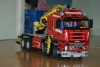 Hello People, I have a question, I have seen this wheeled excavator a view year ago on Brickshelf I realy like it. http://www.brickshel...ruction_000.jpg On Brickshelf there is a compete instruction and partslist of this excavator with old electrics and pneumatics. I ain 't an expert builder myself, so I wonder if there is someone out there who wants to pick up the challange to build a PF version of this wonderful machine and create new instructions and a new partslist. I would be thankfull for the effort and would love to buy the insrucions and parts needed to build this new and improved version. I also like the FSB 001, Skid steer loader, also somene up for this challange??? http://www.brickshelf.com/gallery/fivestarbrick/FSB001/instruction_00.jpg Greetings, Christian