

DrJB
-
Posts
3,006 -
Joined
-
Last visited
Content Type
Profiles
Forums
Gallery
Everything posted by DrJB
-
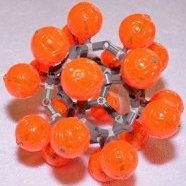 I tried to build this with physical parts and I can tell you this. Putting this together is much more difficult in real life than it is in LDD. Can you show only a single layer? It seems the construction I ended up with is twice as dense ...
 -
[MOC] AC Cobra 427
DrJB replied to shimon's topic in LEGO Technic, Mindstorms, Model Team and Scale Modeling
The amount of detail is mind boggling , even the gas tank lid. Nicely done! Aren't those silver rims rare? I saw them only once, on the Power Puller. -
Milan as Technic Moderator
DrJB replied to Jim's topic in LEGO Technic, Mindstorms, Model Team and Scale Modeling
Congratulations @Milan ... all the best with the new responsibility. Jim 'annoying' ??? Never heard such non-sense :) -
Non-Existent Parts
DrJB replied to DrJB's topic in LEGO Technic, Mindstorms, Model Team and Scale Modeling
Beautifully done, Thank You!. So, of all the 24 possible combinations/geometries, 13 do exist (green), and the other 11 (red) are not really that 'interesting' or needed (at least not yet). Next Challenge: 3×1×1 ... there will be many more cases here. -
I thought that as well, but upon further examination, it is not. Graphite has 2 'distinct' layers. The lego structure has 3 distinct layers.
-
The structure of diamond is a cube inside an octahedron, inside another cube ... Not sure there are lego elements suitable for this, but definitely worth a try. This reminds me of a cuusoo proposal few years back where the author wanted 'basic' elements to do chemical molecules.
-
Thinking a bit more about your proposal ... YES, you can use the above structure to create an infinite staggering. ALl you need is to build several 'sheets' like the above and then connect them with the pin-axle (below). If we then accept that the structure needs not be 'identical' in all 3 directions, then the smallest primitive consists of one each of these parts
-
Non-Existent Parts
DrJB replied to DrJB's topic in LEGO Technic, Mindstorms, Model Team and Scale Modeling
Yes, what parts are NOT available, and do we really need them? Of course, the 'mathematical' description ensures we do not miss any combination. -
This is becoming very interesting. Let's look at the original 'design' from OP. 1. It uses the same parts, oriented along the 3 directions of an XYZ space 2. All combined together, the parts have In total 12 pinholes and 12 pins. Some are already mated/connected but three of each are left not connected so they mate with the next 'module'. The above says that whatever combination of parts we pick, the total number of male/female mating connections must match (can anyone prove the opposite?) Perhaps the 'logical' candidates are to include these parts, though I have not figured out a way yet to interconnect them and some parts with male pins Whatever collection of parts we pick, one (at least) has to have 3 connection points. A part with 2 connection points can only lead to 'chains' (1-dimensional periodic structure). This rules out the second part (by itself) but it could still be used in conjunction with other. Yes I know, I do not have an answer ... yet.
-
I thought of that as well, but the OP mentioned it had to be 3D ... the above is rather 'flat'. :) PS. I've been 'collecting' the above shapes for a while, they open up many possibilities in 'geometric' design.
-
[MOC] Bucket Chain Excavator (DONE)
DrJB replied to doug72's topic in LEGO Technic, Mindstorms, Model Team and Scale Modeling
If I may, I think using the chain links 'complicates' seriously the design. How about a chain made up of BWE buckets, and 5M liftarms on both sidee. It's narrow but would require some 'positive' means to move. -
I saw a display in Chicago this past weekend, at the Museum of Science and Industry (working on photos and will create own thread). It is not the smallest 'primitive', but it is made with 2×4 bricks.
-
Non-Existent Parts
DrJB replied to DrJB's topic in LEGO Technic, Mindstorms, Model Team and Scale Modeling
Exactly, good to know we're converging onto something already known/validated and put to good use. I bet this is how Lego build their prototypes as well, by adding well known 'modular' geometries. I think it's rather simple here (or I'm missing your point). That L shape is just 3 pin holes connected together. Care to clarify your point? If we first decide on how much space the part is to occupy, for example a 2×2×3, then there are a finite number of combinations of 'useful' and unique connectors that can be made to fit in that space, by simply adding pins and axles male/female. Though, most available parts fit in a max of 1×2×3 volumeat most. Yes, there are exceptions such as the frames and large connectors. -
Non-Existent Parts
DrJB replied to DrJB's topic in LEGO Technic, Mindstorms, Model Team and Scale Modeling
I fully understand why you would reach a different conclusion. Maybe I need to clarify the point of this discussion: I am not after 'suggesting' that new parts be made, not at all. In fact parts by themselves are totally useless ... they become useful once they are connected to other parts. In that context, if you need to connect two parts (via a third intermediate part) occupying two separate positions in 3 D space, then there are multiple ways of achieving this. And, here is where the current 'assortment' of parts seems sufficient. So, you're right, but again, this is more a mathematical exercise (for me), and maybe a way to convince ourselves that what we have is good enough. With all this, there is one part that I needed a while back and found no other way to use a substitute: the part shown below but with a 2M axle attached to it... I needed this to build Nico's 2CV car. He used the 3M axle with stud, but that could be better. -
Non-Existent Parts
DrJB replied to DrJB's topic in LEGO Technic, Mindstorms, Model Team and Scale Modeling
Thank you, that's exactly where I was going with this: Some sort of mathematical description with all possible combinations, then those 'impossible' can be removed (e.g. the 2 parallel pins as you mentioned). In fact, if we think of all such connectors and parts as occupying some space in a 3-dimensional matrix, then that matrix can be filled with any of such basic shapes, to yield a large numbers of options. Not sure at this stage how 'useful' those new parts/connectors would be, but still, it is worth the 'mental/mathematical' exercise. In fact, even the most basic pins/axles can fit such framework, namely, all parts below are candidates I mentioned in my original post that lately we've seen some new connectors. I was thinking of those below In fact, a related question/observation can be made about the 'quintet' below, which all are 1×3 but aligned male/female pins/axles There are 3 missing from the above set and they have either no usability or are impossible to connect. Can you guess what they are? -
What part is this?
DrJB replied to Rikus's topic in LEGO Technic, Mindstorms, Model Team and Scale Modeling
It's a rather 'rare' part (came up in only 9 sets). https://www.bricklink.com/v2/catalog/catalogitem.page?P=424#T=C In some cases, you can replace it with https://www.bricklink.com/v2/catalog/catalogitem.page?P=18654#T=C -
Non-Existent Parts
DrJB replied to DrJB's topic in LEGO Technic, Mindstorms, Model Team and Scale Modeling
@agrof I agree there are other types that I have omitted. My main focus was on the pin/axle type as most connectors are made up of those. Yes, we could add the spherical joints but those serve a very 'specialized' purpose. As for the connection of with , the last time I tried in LDD it was NOT allowed. Yes, I know the Mercedes truck has many of those. In fact, while assembling that truck, it dawned to me that such truck has way too many of such part. -
If we look closely at many of the technic connectors, these are made of only four possible 'elements': 1. Male pin (friction or smooth, does not matter) 2. Female pin 3. Male axle 4. Axle hole (old bushing) Then, each of the available connectors (below) is essentially a combination of the above 4 sub-elements stacked next to one another, and with 3 relative orientations/rotations. With such 'basic' framework, What parts are 'missing' i.e., not in the current lego assortment? We have some recent connectors recently, but there are few still missing. For example, all connectors shown below fall into such group made-up only of male/female pins and axles Incidentally, all lift-arms (thick, not thin) are series of female pins and sometimes axle holes, all stacked next to one another. Some connectors that do NOT fit in this scheme are those that have half-width beams and those at angles
-
No I did not ... got other sets for the kids (Friends and Architecture) ... maybe my next trip. The porsche was there on display too, and per the store owner, they're selling quite a few of them.
-
I was today at the Lego store in CHicago and those sets ARE available for sale. I too was surprised as I thought we won't see them before August.
-
Rainbow Wave GBC
DrJB replied to Berthil's topic in LEGO Technic, Mindstorms, Model Team and Scale Modeling
Very nice. One question: Where did you get the long black 3mm rigid tube for the marble run? -
Favorite Technic Part
DrJB replied to Aventador2004's topic in LEGO Technic, Mindstorms, Model Team and Scale Modeling
The parts below ... for building all sorts of 'bucky balls'. ... and these, for building holonomic wheels ... and these, for TrisStar wheels ... and these, for rubber tracks (a la Mahjqa) ... and this part, for one day bulding a helicopter rotor with both cyclic/collective controls ... and Lastly, these for one day building my own 'small' bucket-wheel excavator Needless to say, I've been collecting these parts for some time. -
This sounds very promising. Looking forward to your finished model.
-
And your intention is to ... have us guess what you're working on? Hmm ... what's the prize for the one with the correct guess?
-
You could always work 'in parallel'. That is what I do with my kids whenever we get a large lego set. One person uses the printed manual, the other team members build various 'sub-systems' based on PDF instructions on tablets (iPad), usually available on the lego website. It might not be as much fun ... but that's how we clear out the kitchen table in one evening.