


legomen
-
Posts
27 -
Joined
-
Last visited
Content Type
Profiles
Forums
Gallery
Everything posted by legomen
-
 Sorry. It is not an open source design, yet. I am using DRV8317 driver.
 -
I agree with you that it is simply a matter of conversion. If there would be a servo motor with PU or PF connector and RC servo inside, I would use it. But there is not. GeekServo has 3 wire connector capable of connecting to RC radios directly. It can't be connected to the Buwizz or LBX or Lego Control box. People is using those Lego compatible boxes. My ESC is using PF signals to control the motor and from the user point of view, the LMX motor is completely replacable with Lego L Motor od Cada motor. But on the other hand, LMX has higher RPM and torque. And that is what I want.
-
When you stack PF connectors, the current through the first connector multiplies. So for example, you connect two Buggy motors on the same PF output, the Buggy motor can draw over 3A and then you will have >6A on the connector. Each PF connector has some impedance, which is not neglible and when you square the current and multiply it with the connector resistance, you will get a considerable power (remember you are squaring the current). The same goes with wires. Lego PF wires are 26AWG, I think. They can withstand 2A continuosly and even higher with short bursts. If Buggy Motor is not burning them, I think LMX will not too. Have you seen the battery wires inside the Buwizz? And now imagine you put two Buggy motors on Buwizz and 4 L PU motors on other 4 channels. It all goes down on internal battery impedance, which I asure you is not so small. And have a look to hpl502852-5c-3s1p battery specification (which I think it is used in Buwizz). That battery has BMS integrated and it will disconnect the battery at around 7A. But in that case the battery chemistry is already damaged, IMHO. There are also 8 PF channel Chinese batteries with 1000mAh inside a very small case. I would not dare to connect all of them at the same time:) This why, I chose 18650, because some cells are rated up to 30A of discharge, although 10A should suffice. I know, connecting them is another problem on its own and distributing that power to the ports.
-
You are right. It is a control unit with a battery box. Nowdays almost all battery boxes are control units also. Replacing the batteries in the model is one of the requirements, so without bottom (it is easier to take out the battery box and replace batteries) . Battery holder is usually tight enough that the batteries will not fall out, but normally the battery is not hanging from the model, it is sitting in the model, and thus batteries are supported somehow. Yes, I am also thinking to have a closed design, but this will come later maybe. PF and PU ports are on the same side because on the other side is a charging port. I have decided to use PicoW board for the first prototype and this limits thing a bit. Pico is a large board with USB on the side and needs to be put somewhere. With full custom controller board, price and development time could become an issue. Regarding the PU orientation, it depends how you look at it. Even Buwizz has one PF and two PUs on the same side, although they are looking upwards. The cables are then taking space on upper direction. If I am honest , I am designing LBX to be put into Formula 1 model, where battery would be sitting in the middle and two motors behind and everything should be placed as low as possible. Maybe this subconsciosly influenced on my decissions:) 10 stud limitation comes from the battery size itself. Regarding the size is like this: you can't have large energy reserve without sacrifing space. If you have tighter space requirements, go with Buwizz or Chinese clones. I am not trying to compete with them. If you put the battery deep into the model, so it can not be removed easily, then you need to buy quite a lot of batteries. In the case of Buwizz, this means a cca. 200 euros per model. I do not know for you, but for me is too much. My design decision was that one can reuse the battery for many models, but then again one need to design a model for easy access of the battery. 18650 cells are used everywhere (power tools, laptops, etc) and they are cheap. Yes, also RC pouch LiPo are good, but they come in different sizes and with different connectors. To get exactly right battery for my battery box is actually not as easy as it sound. And then you need to integrate the battery into a casing and when it needs to be replaced, you have problems. Tak a look at Buwizz. Quite a lot of problems with dead batteries I am hearing about. With 18650, everyone can buy a battery and replace it. Try to replace a Lipo in a delicate LTehnic model where connectors are so tight that when you pull it appart, everything goes flying. I did not say that my LMX motor is not working with other batteries. I am actually using it with original Lego Battery box and SBrick. It does not draw so much current that connectors are melting. PF connector can withstand 5A current easily. The problem with PF connector is that people are stacking motors on the same connector and then they have a problem. Why are they doing that? Because they can. I am designing a new battery box (controller) because I am not satisfied with existing solution. To drive 2 or more LMX motors you need much more power then you can get from single existing battery box. Also using thos controllers with Andorid or IPhone app is not for me. I like to drive them directly without an app in the middle. And lastly, because I took some satisfaction to design new things. Maybe you are right, maybe you are not. But GeekServos are using RC protocol to control them. They are not Lego world. For me, it would be much easier to develop a battery box controller with RC radio and RC servos and RC ESC. But this is not a point here. As I mentioned before mixing RC world and Lego Tecnic is like putting Marvel superheroes and Disney characters in the same movie Wonder what would happened? Again, for those who want a RC motors and Control, they can 3D print motor housing, put a LiPo battery and cheap ESC into a model and enjoy it. But this is not for everyone. Please don't get me wrong. I appreciate everyone opinion.
-
Of course. That is the whole point of having PU ports. For servos.
-
Good question. There are numerous ways to do it. Firmware can have a special button on a gamepad dedicated to enter programming mode. Or a simple tty console on an USB port for programming. Anothe great one. I was thinking of that also. The easiest way would be to have one device as a slave to another. Master will be connected to the gamepad and channeling commands to the slave. Firmware would be supporting not just Playstation or XBox, but also other devices, if those are supporting universal Joystick protocols. There are some devices with proprietary protocols and those would need to be supported through firmware change. This way open source:) IMHO, mixing RC world and Lego Tecnic is like putting Marvel superheroes and Disney characters in the same movie Wonder what would happened?
-
Ok, I understand now. You mean a LiPo pack connector, like one used in RC world. Well, it is an option, but I think somehow against my principles to not use stuff from RC world in Lego Technic. If the battery would be encapsulated in the casing (like Buwizz), maybe. On the other hand, 18650 batteries are way easier to use, they are powerful (if proper type is used) and easily replacable.
-
I do not understand what you mean with that. No, it is an USB Micro. This is due to a fact that I am planning to use RPi Pico W for the main controller board. Why Pico? It is cheap and available. It has a good roadmap. I would also prefer USB-C. Maybe in the future:)
-
Hi Eurobrickers, Recently I have decided to develop a new battery box with controller for Lego Technic stuff. An idea emerged when I was developing brushless L Motor with integrated ESC, i.e. LMX (Lego Motor eXtreme) This motor demands more powerful power supply then ordinary Lego battery can provide. There are of course alternatives to Lego battery (e.g. Buwizz), but this motor can have even higher peak current than those batteries are comfortable with. So I have decided to set some basic requirements for the new battery system: 1. Replacable LiION cells. One can swap batteries in the field with new charged ones when needed. Look, a whole day of playing with Lego:). For storage, just remove the batteries and no worries. 2. 2S battery topology. Peak 8.4V, because most brushless motors of this size are specified for this voltage. 3. 2xPF connector and 2xPU connector. 2 LMX motors and 2 PU motors, acting as servo or not. 4. Full BMS and Charger integrated. 5. Open Source Firmware - direct connection to standard game consoles or phone (acting as console). 6. No, and I mean NO Android or Iphone app. Those apps need to be regulary updated and who has time to do it;) 7. Low price - of course. I came up with preliminary design and look for the new battery and I would like to discuss pros and cons. This is my first iteration of mechanics. Some details are still missing. I have deliberately omit battery cell cover in favour of easier replacing of batteries in the model. And it looks cool IMHO, especially with some fancy cells:) I chose the LiION cells instead of pouch LiPo due to high current demand and obtainability. Also 18650 format is somehow standard and you can buy those cells almost everywhere. Battery pack is 10x5x4 studs, a little bigger then Buwizz, but it has more then twice of energy (with 3000mAh cells 25Wh). Have fun.
-
Thanks. Yeah, this why I am now working also on my own battery, although Buwizz should have enough power to drive it.
-
And here is the test rig for the first prototype. I have used this rig to test Lego L motor and compare the speed with Brushless L motor. Later is more then twice the speed. The bottleneck here is the battery. Because of the voltage drop, the motor has only 6V to work with. Need to try it with Buwizz at 11V. That will most surely speed things up. I have decided to design a NEW battery system to be used with my brushless motors. It is in the working:)
-
It is using standard PF PWM signal to define desired RPM (in both directions). 100% duty cycle means highest rpm and 0% is stop. PF has two signals, one for each direction. The ESC is using FOC algorithm in order to maximize efficency at every RPM. From theory of FOC, the most problematic is startup, because the motor is sensorless and FOC can not estimate the proper rotor angle. For that ESC is using different technique to start the motor and once it is started it switches to FOC. Motor assembly with Kyosho XSpeed41. Expensive, but very high quality motor. and fresh ESCs.
-
It is in prototype stage. I am testing it with two different motors. 3500KV and 4100KV. Motor can draw up to 5A, but this are short spikes. Normally, it draws far less current. I do not think the wires are a problem. Also did not notice connector troubles. Motor with an ESC.
-
L Motor with brushless motor and integrated ESC. The motor uses existing L Motor housing and PF connector. It can be connected and controlled with existing batteries, like Buwizz or even Lego.
-
Some time ago, I played with an idea how to simplify a remote for kids to play. Food for thought. https://brickshelf.com/gallery/jturnsek/Remote/Motion.jpg
-
I think Lego should go back to somehow early days of remote controls, for example IR transceivers and like. With that system and PF motors, one just grab the toy, switch the battery on, pick the transciever and play. With Control+ app you need to first find the phone, find the app, start the app, connect to the hub (god forbid not loosing the connection) and the ackwardly control through touch screen. Believe me, kids don't like it. I believe IR could be replaced with BT or BLE, but ditching the app and having a HW transciever with replacable battery (AAA), because those will be around for some time in the future.
-
Buwizz 3.0 Pro Current Limit?
legomen replied to Silicon's topic in LEGO Technic, Mindstorms, Model Team and Scale Modeling
Exactly. M motor is much more forgivable when building, although L motor could be better fixed, due to rear stud holes. I think my ESC could also fit into M motor, but space there is much more limiting. I really do not like those phone apps to control Lego stuff. It is always giving me problems when connecting. I have two SBricks (now you know what I am talking about:)). And is also slow as hell. Haven't try connecting it with Joystick. I would say addtional delay between control and action. This why I am looking to design a battery system where controller will connect directly to a Joystick console, like DualSense or XBox. Regarding the servo action, I was thinking to use brushless motor also for servo, but things are not so easy if you don't have angular position sensor. I could make an ESC board with that, but then the whole housing should be newly designed as well. And from work, I can tell you, mechanics is not cheap:) -
Buwizz 3.0 Pro Current Limit?
legomen replied to Silicon's topic in LEGO Technic, Mindstorms, Model Team and Scale Modeling
Thanks. That is the inrunner. I am not arguing anything:) I am only stating my opinion regarding the use of RC stuff in Lego world. I understand the speed and power from RC world is impressive. I own ARRMA Typhon 3S and I can tell you it can fly, literally:) But Lego Technic needs its own stuff. For example, PU L motor is great addition, because old PF servos (originals) are expensive as hell and fake ones are not steering as they should. With PU steering things could be much more precise. For the propulsion, yes they are faster brushed motors available, but they make annoying sounds and are not as efficient at low speeds. Brushless is quiet, and you can control them efficiently even at low speeds. They have their own quirks, like starting, but with proper control even that is managable. Even sensoreds motors are not out of reach. What I wanted to say is that making the Lego Motor with brushless motor inside is addition to already established motor lineup (from Lego or some others). Imagine, what can be done with brushless motor inside Buggy motor. You could have twice the speed and with proper motor also torque. The limiting factor here is the battery. I know it is easy to put a LiPo from RC in a model, but it is not the point here. When I was designing the motor itself, I have deliberately choose one of the smaller brushless motors out there, first to put it in into existent L motor housing and second not to make it too powerful, because otherwise it will brake (plastic)things easily. What is the fun of that (I can bash away with Typhon 3S easily a few hundred euros:))). For those who want raw power, RC motors and ESCs and 3D printed metallic parts are the way, but not for the purists. Here is also a picture of assembled motor and ESC (without gearbox and casing): BTW, impressive stuff you have there on other threads. Congrats.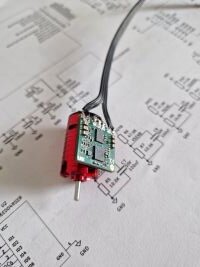
-
Buwizz 3.0 Pro Current Limit?
legomen replied to Silicon's topic in LEGO Technic, Mindstorms, Model Team and Scale Modeling
The model on the previous picture has 4100KV motor built in. On 9V, the motor is spinning up to 1400RPM (after 1:26 planetary gearbox of course) without load. I have tested it with standard Lego AA battery box, with resetable fuse removed. Compared to ordinary L motor, it has more then twice the speed under load. I have not tested it with Buwizz 3.0, yet. I have decided to design a new battery controller to be used with my motors. This perticualr brushless motor can spike up to 8A when stalled, although I did not see this kind of troubles when testing my motor. But nevertheless, a new battery is needed tu support at least two motors or more. I have designed and built the ESC myself. It is Field Oriented Control ESC, with Lego PF signals controlling the speed of a motor. It has all needed protections integrated (overcurrent, temperature, ...). Yes, I saw some of Chinese ESC with simple trapezodial algorithm, but they are still to big to be used inside L motor and I have took on a challenge to develop my own. It was quite a ride:) The point was to made a better L motor, which is still fully Lego (interface wise) interoperable. I have seen mixing of Lego and RC and honestly I think it is not the right way. RC is on another level of speed and control, but Lego is something different, although some more speed and fun would be appreciated. Although Lego is upgrading its motors, they are still pretty much to slow to drive larger and more complicated MOCs. We have many official Lego models and even MOCs and my kids are always complaining about speed and control. The most enjoyable model for my kids is 42065 with simple IR controller and it is quite fast, but still underpowered. IMHO new control apps on Android or Iphone are not that good. My little one preffer IR transmitter over phone anytime. This why I have took on a challenge to make something better. Maybe a new thread to discuss this new world?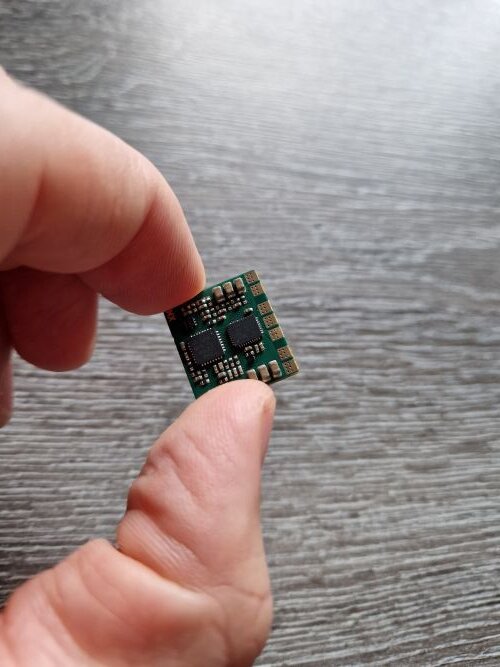
-
Buwizz 3.0 Pro Current Limit?
legomen replied to Silicon's topic in LEGO Technic, Mindstorms, Model Team and Scale Modeling
I have developed my own brushless motor with integrated ESC. It has a standard PF connector. Yes, one could use RC ESC and battery, but that somehow seems wrong in the Lego world:)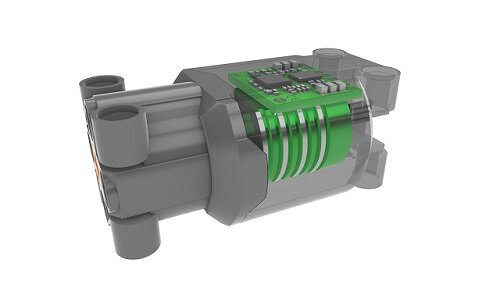
-
Buwizz 3.0 Pro Current Limit?
legomen replied to Silicon's topic in LEGO Technic, Mindstorms, Model Team and Scale Modeling
I come from the RC world, where LiPo cells could swell considerably when pushing them too far. Reading the battery manufacturer specification where around 1A current is maximum gives me little confidence. I am experimenting with brushless motors, where high current spikes could damge the whole thing. -
Buwizz 3.0 Pro Current Limit?
legomen replied to Silicon's topic in LEGO Technic, Mindstorms, Model Team and Scale Modeling
Looking to Buwizz 3.0 battery replacement video, it seem they are using something like HPL502852-5C-3S1P 800mAh battery, which has a specified continuous discharge current rated to 1C. That means only 0.8A. Four amps per channel are far from that specified value. Wondering about safety. -
Greyhound can be driven with single Lego battery box (Eneloop Pro batteries installed), but PTC resistor must be shorted, although lacking torque on wheels. We really need better L motors:)
-
I was also thinking that, but needed to be sure:) Yes, I would like to buy 1 Buwizz as a battery and use additional SBrick to have all 7 ports available. I actually need 6 ports for Greyhound. Would one Buwizz be enough? Originally Greyhound is using two of them, one for two L motors.
-
Does Buwizz 2.0 provide constant voltage (up to 11V) on voltage supply pins or does it only provide PWMed voltage on C1/C2 only? I own SBricks only, but prior to buying Buwizz to use it also for powering SBrick, I'd like to be sure it is possible. Thanks.