oracid
-
Posts
578 -
Joined
-
Last visited
Content Type
Profiles
Forums
Gallery
Everything posted by oracid
-
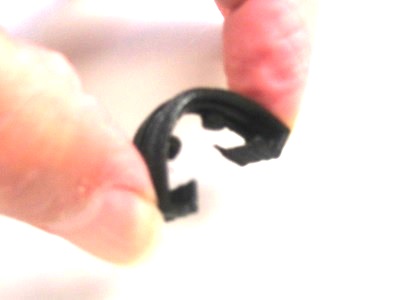
I have already ordered NinjaFlex. I am waiting for it. The PolyFlex will be useful for making flexible beams, shame he's black. For the overlaps of the edge I think I understand what you mean but can you be more specific. I can reduce the recovery but not much. Have you a better idea?
-
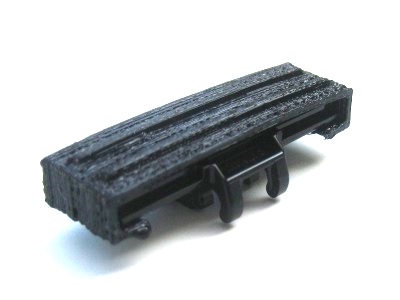
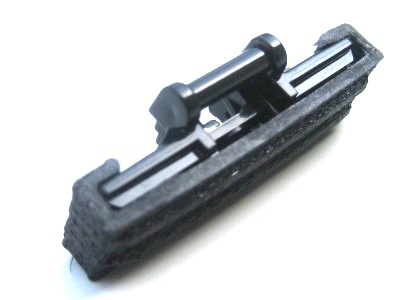
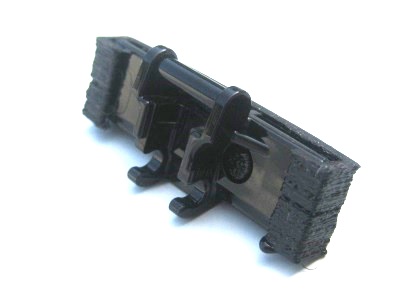
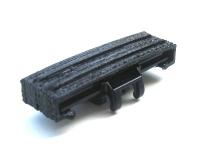
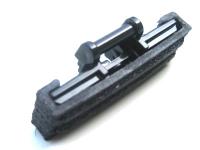
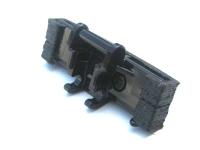
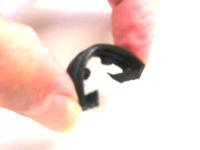
I have printed my first track shoe. Here is the result. I'm not really satisfied because the PolyFlex is quite slippery and has not the effectiveness of the window joint. The weight is 1.5 g. I'll try to make it thinnest.
-
Here is a shoe draft for LEGO track link.
-
Thank you Tommy for sanding 123D files, that is far better than stl. I will recevied my Flex thread very soon, I hope To day, I will try to make a draft of my Flex track part. So you can see.
-
Here is my 3D printer, http://www.dagoma.fr/en/produit/imprimante-discovery200/ The material I use is the PLA, http://www.dagoma.fr/en/categorie-produit/fil/octofiber/ My 3D printer is very basic and uses the FDM technology. My software is 123D Design, http://www.123dapp.com/design What I want to show is that today we can print his parts at home with his printer for a very low cost. Parts quality is not excellent, but things will get better quickly. @ Driftworks..I think what makes the quality of a printer is first precision. @ Kelkschiz. It is the printer software, CuraByDagoma who determines the price of the parts based on the price of the thread. The purchase of the printer, working hours and electricity costs are not taken into account. @Tommy Styrvoky. Yes, I'll probably quickly make rubber pads for LEGO tracks, and perhaps new track elements. This is my priority. I am waiting for rubber thread. Thank you for your files, I will study them. @dr_spock. What do you mean by "local public library"
-
I know the Efferman parts of course and I already ordered somes. Their design and quality are very good. My approach is different because as indicated by the title of this thread, I make the parts myself, at home, with my printer. The quality is lower, but the cost is significantly lower.
-
I have got a 3D printer to create original pieces. This is a French printer, the Dagoma Discovery200. This printer cost 400 € and is at the moment very popular in France. My goal is to show that we can produce parts of acceptable quality for a very low cost. For example, below small parts cost about € 0.06 and large about € 0.25 My pieces do not satisfy me completely, but as soon as possible, I'll post them on http://www.thingiverse.com/ At the moment, 3D printed parts absolutely not rival those of origin. Nevertheless, an overall movement can create impulse that would make LEGO to increase and supplement its offer. But I do not doubt that in a few years the quality will be there. I think we have already to be prepared. In the world of robotics, the one that interests me, we cannot wait. Robotics revolution has already begun. Here I show you parts used for assembly, not for torque.
-
[MOC] Rope Braiding Machine
oracid replied to Hugolin's topic in LEGO Technic, Mindstorms, Model Team and Scale Modeling
Bravo Hugolin ! -
Longer Studless Beams
oracid replied to doug72's topic in LEGO Technic, Mindstorms, Model Team and Scale Modeling
Thank you for your help. Indeed, I have no experience at all. Your work looks very good. If you don't mind I will show you my work when I will receive my 3D printer. But I wonder if this thread is the good one for that. Sorry Doug72. -
Longer Studless Beams
oracid replied to doug72's topic in LEGO Technic, Mindstorms, Model Team and Scale Modeling
Thank you MarcoUbtz, I know this measurements, but do them work good and with what kind of 3D printer and material. My 3D printer will be this one, which is the most popular this days in France, http://www.dagoma.fr/produit/imprimante-discovery200/ My material will be PLA. http://www.dagoma.fr/categorie-produit/fil/polymaker/polymax-pla/ @admin, may be a thread about 3D printing should be necessary. -
Longer Studless Beams
oracid replied to doug72's topic in LEGO Technic, Mindstorms, Model Team and Scale Modeling
I hope to receive my 3D printer today. I am very interested about your 123D Design file. I made my own file with 123D Design, but I would like to compare your sizes. -
Longer Studless Beams
oracid replied to doug72's topic in LEGO Technic, Mindstorms, Model Team and Scale Modeling
I am waiting for my 3D printer. When I will get It, I will make all beams from 1L to 34L with holes in each side. For me the goal is assembly solutions. No matter about breaking. -
LEGO Tank Warfare
oracid replied to Kelkschiz's topic in LEGO Technic, Mindstorms, Model Team and Scale Modeling
I am very flattered... I have duly noted what you say about the tank size. -
Nico71's Creations
oracid replied to nico71's topic in LEGO Technic, Mindstorms, Model Team and Scale Modeling
Very interesting ! I would have liked to see a little more about its capabilities. -
LEGO Tank Warfare
oracid replied to Kelkschiz's topic in LEGO Technic, Mindstorms, Model Team and Scale Modeling
Great tank and great vidéo ! -
Flying Lego Technic...!?
oracid replied to Technic Jim's topic in LEGO Technic, Mindstorms, Model Team and Scale Modeling
I love that ! -
LEGO - Tank climber test
oracid replied to oracid's topic in LEGO Technic, Mindstorms, Model Team and Scale Modeling
I think my new project will also be a tank. Maybe not much bigger, but with 8 XL motors and an EV3. If it does not exceed 3kg, then I would like to fit it with an articulated arm. Something like a deminer. Of course, I will talk about it here, but probably in a new thread. -
LEGO - Tank climber test
oracid replied to oracid's topic in LEGO Technic, Mindstorms, Model Team and Scale Modeling
I do not think the problem comes from the motors but from the battery. No, I will not do more rigid chassis. The goal was to climb real stairs and it reaches. With this new knowledges, I will make a new project, and there, I promise you, the structure will be more rigid ...... if necessary. -
Nico71's Creations
oracid replied to nico71's topic in LEGO Technic, Mindstorms, Model Team and Scale Modeling
Excellent! I'll probably start a new project and I will study very carefully what you do. -
LEGO - Tank climber test
oracid replied to oracid's topic in LEGO Technic, Mindstorms, Model Team and Scale Modeling
In this video, I propose a solution for crossing the nose of the first step of a stair. My solution consisting of 4 small fixed arm, which does not increase the complexity of control, unlike the mobile arms. The other advantage of this solution is that it does not require an increase in the height of the tank which would have required an heavy rigidification of the structure. -
[HELP] Tank Width
oracid replied to oracid's topic in LEGO Technic, Mindstorms, Model Team and Scale Modeling
Thanks a lot for your answers. As far as I understand, my intuition was therefore good. For a tank with an imposed length, to reduce friction of the track, it is best to do the widest possible. By reading you, I realize that I forgot to mention that my tank is rather intended to robotic base. I doubt that for a tank, climbing stairs is a problem. Nevertheless, I must carefully consider the problem of the turret which in my case would be dedicated to an articulated arm, for example. It remains for me to explain it in a video with very few words... -
What is the best tank's width ? As you know, I am interested in tank and you can see my tests on this thread, http://www.eurobricks.com/forum/index.php?showtopic=119844 During my tests, I found that the more the tank's width was big, the less the track goes out of his lane during a turn on a spot. I have the intuition that when the track follows a large circle, the friction caused by ripage is less. I guess this is because of the shorter distance of the extremities of the track and the perimeter of the circle. But how to prove it? I will like to make a video on the subject, but I have not done great studies and I'm afraid to say stupid things. Could someone explain this without too much math? Thank you in advance.
-
LEGO - Tank climber test
oracid replied to oracid's topic in LEGO Technic, Mindstorms, Model Team and Scale Modeling
Lego – 17cm Stair Tank Climber #10 My goal was to climb stairs of real life whose steps have a height of 17cm. To reach this goal, I thought it had to be a very large tank (81cm) and so very heavy 7.5kg. This was a failure. So I changed my mind by making a tank, the smallest and lightest as possible. A final issue exists, it is the nosing that I cannot cross. But it is true that there are all kinds of stairs, each with specific constraints, and want to solve all issues is to risk not to take the first step. I started by 5cm steps and 10cm and today I crossed steps 17cm. I think I have reached my goal. Length: 67 cm Width: 42 cm Height: 12 cm Weight: 1,560kg 4 XL motors -
Very, very, very good ! May we have some pictures as clear as the first one, on the top of this thread ?
-
LEGO - Tank climber test
oracid replied to oracid's topic in LEGO Technic, Mindstorms, Model Team and Scale Modeling
Big Tank Weight: 7.5 kg Length: 81 cm Width: 51 cm Height: 12cm As you know, I show you what works, but also what does not. To climb stairs of real life, with steps of 17cm in height, I need a big tank. Unfortunately, it is too heavy. However, the assembly of 3 tracks with D joint may interest some of you, as well as the drive wheel (2903c01) and the guide pins (32002). This solution is not good, but already I am thinking about another one. I do not give up, be sure of that. Here my YouTube channel :