
Search the Community
Showing results for tags 'truggy'.
Found 4 results
-
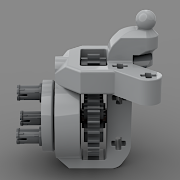 Hi Eurobrickers! This time I'm here with my first build that explores non-lego electronics components for maximum off-road performance :) I have always been curious about what proper RC electronics could do with Lego, how far the performance could be pushed without damaging lego parts or using metal parts. So this is the first chapter in this exploration. As usual, I am more interested in off-road stuff as opposed to super fast cars, such as crawling, precision, maneuverability and good suspension. I start on a fairly large scale for two reasons. One is to see what the electronics and the parts can handle, and second is that on this scale I can maximize the performance os suspension / drivetrain. For crawling, live axles are great, planetary hubs are a must to minimize the stress on drivetrain components, and on this scale the axle design of @Attika is superior, especially with deep rims and 95mm RC tires, so I started with adopting that to my needs and building a generic chassis around them and the electronics components. For the bodywork, I choose a truggy because they are designed for crawling and are typically minimalistic, which is good for weight saving. And when I started searching for truggies, most of what I found turned out to be a Toyota Hilux, so I just went with that. The largest wheel arches are a good match for 95mm tires, and dark blue was a color in which they are available and I already had many parts in, so it was an easy choice. Features All wheel drive with about 6.5% front wheel overdrive Triangulated long travel 4-link live axle suspension on both axles Independent 4-wheel steering, servos on the axles Detachable body (single piece), openable doors Custom electronics Buggy motors inside L motor housing for drive GeekServos for steering Injora ESC 3s LiPo RC receiver and transmitter (FlySky) Custom cables with PF connectors Chassis, suspension, drivetrain I started with the design of the axles based on that of @Attika with the planetary hubs, but I made them 4 studs wider wrt the original 17 stud design because of using the deeper rims and also for a wider stance. My main objective was to integrate the GeekServo on top of it. A key simplification factor I used is the lack of open differentials (would be locked for crawling anyway), this way reducing the space requirement of the gearing, and allowing a flatter profile and lowering the servo while fixing it in a simple and solid way. The steering linkage has really small amount of slack, and the 8T gear on the rack allows very powerful steering. In fact the GeekServo is so strong (especially in this configuration), it can steer the wheel under any circumstances on any surface I tested. On the rear axle, I managed to lower the springs for a more compact suspension to leave space for the bed above it. The suspension is a 4-link triangulated one using 9L links that keeps the axles in place even without a panhard rod. In the drivetrain I wanted to experiment with front wheel overdrive. First I built one with 25% overdrive using 16:16 gearing on the back and 20:16 gearing on the front. It worked, however it felt a bit too much and was not flawless; the 20:16 gearing offset the front driveshaft to the side which created an asymmetric load at the point of the driveshaft entering the front axle which generated quite some wear over time. Also, first I used 12:12 gearing inside the axle as a closed differential, which also worn out after some time. After seeing an RC video that tested 5-6% overdrive against 25-30% overdrive, and concluded that significantly more than 5-6% is not really beneficial for climbing, I thought I'd try a more modest one. The current one on the image below uses 20:12 = 5:3 gearing in the front, and 2 stages of 20:16 gearing on the rear, resulting in 25:16 ratio. The ratio of the front/rear is then 16:15 = 1.0666, so roughly 6.5%. Most importantly, this setup is symmetric, keeping both ends of the driveshaft centered. At the same time I used a 12:20 gearing inside the axle as a differential, taking some load off. So far it has not cracked.. Here is the overall chassis. The motors look like L motors, but they have their insides replaced with that of a buggy motor, as that has the same size as the L motor's, so fits perfectly. This modification is not my own, but was done by @Jantayg and he lent me the motors for testing (the pinion gear was replaced and the thermistor was taken off and soldered back in). They are quite amazing. I measured their speed and torque against the Lego L motors, and found that they have about 1.8x speed and 1.65x torque, so almost 3x power overall!! At the same time, their speed is also in a very reasonable range, about 900 RPM on a 3s LiPo, which means good speed control but a good amount of punch at the same time, quite perfect for lego crawlers. All in a very good form factor! I only wish such a motor was available off the shelf. Luckily, the red chinese PF replicas you can find on Aliexpress approach these ones in performance; I ordered some and measured that they have about 2.5x the power of a lego L motor, only a bit worse then these modified ones. I haven't yet tested those in a build though.. Control Electronics For control, I am using this Injora ESC. It's quite small, about 5x3x1 studs in a nice housing that can be easily attached to Lego parts with sticky tacks and has a turn-on button and status LED. It is designed for smaller scale RC crawlers, but for lego motors it is more than enough, and allows for quite precise speed control. In fact, in the video the model often moves slowly not because that is its max speed, but because I wanted to move with precision; its top speed is much faster than that. Apart from that I use a FlySky transmitter and receiver, and a 3s LiPo. I also had to make some custom cables for connecting the motors to the ESC and splitting the output of the ESC for the two motors to avoid stacking them on the same PF port (I made several versions). Unfortunately, currently the cables result in a bit of a mess.. It would be nice to house these electronics in a 3d printed box or something.. Bodywork For the bodywork, I was aiming for something simple but rugged, but at the same time I wanted to test how the whole setup would work with some actual weight, whether I can later try to build a more detailed scale model at this large scale. I really like 95mm tires, both Lego and RC ones (I bought these inexpensive ones from Aliexpress, option TN1003), as they go really well with large 15 stud fender parts, both the Defender ones and the ones from sports cars. So as I mentioned in the intro, a Toyota Hilux truggy seemed like a good choice, and the Bugatti fenders went well with that, along with some long curved slopes for the hood available in dark blue. I wanted to replicate the characteristic front grille, which I managed by using large window pieces and a lot of small grille parts :) The rest of the body is a just a few large panels and beams, and a simple bed to accompany it with some roll-bars, all connected together to a single piece so that it can be mounted in the chassis on a few points, like in a 'real' RC car. Here are some more renders and images of the complete model. More images are available on Bricksafe. I haven't made instructions for this because of the large amount of custom parts, but the Studio model is available on Rebrickable. Altogether, the model has very good handling, both for speed and steering, and I am quite satisfied with the power of the motors. This all shows to me that Lego RC has much more potential, than the official electronics. And out of all these components, the only 'dangerous' one for the plastic parts are the powerful the motors, but even that danger is minimal in this setup; for smaller models it would even be less (even with this heavy model, the wheels rather spin under it than get stalled). It was really fun playing with this model and making all these video footages! Let me know how you like it and what you think about all those possibilities with custom electronics! Cheers, Viktor
 -
 Hi guys, this is my first Lego Technic MOC so far. It's a truggy inspired by a real RC model, HPI Trophy Truggy Flux. I wanted to create a model that resembled as much as possibile a real RC truggy. The model is 100% Lego and it's 39 cm long and 25.5 cm wide. Its weight is 1.230 kg. It's powered by 2 RC Motors and a RC Unit, and it also features 4 independent suspended axles. The chassis is flat and the arms are parallel to the ground. The front steered axle comes with several mods from Sariel's great Trophy Truck. Unlike Sariel's model, however, the real axle insn't dragged but the arms are fully independent. The rear towers that support shock absorbers are wider than the front ones. Note that rear shock absorbers are mounted differently than the front ones because of the different design of the axles (the front ones have limitations due to the use of the part #15459 - Light Bluish Gray Technic, Steering Arm 5 x 1 with Towball Socket Rounded, Chamfered) I choosed to use the outer output of the RC motors, that in theory should give less speed but more torque on offroad tracks. The hubs mount 56mm D. x 34mm 3 pin holes wheels, so both 94.8 x 44 R Balloon Crawler's and 94.3 x 38 R Unimog's tyres fit the model perfectly. The chassis is completed by two oversized bumpers and a sturdy deck wing. As in a real RC model, the bodyshell can be completely removed from the chassis (in a Lego RC truggy this feature has no real meaning, because there are no electronics to have access to, but I always found this feature cool, so I kept it! ) For the bodysheel I took my inspiration from the new 42065 Tracked Racer. The white-and-red colors scheme is anyway the same of the HPI Trophy Truggy Flux. I choosed to leave the bodyshell rather crude, without adding many details, to make it light and simple as real RC models. This is also useful when driving outside, because it minimizes the risk of losing parts. I tested the truggy in my aparment and then outside on asphalt, cobblestone, dirt and low grass, and it performed not bad... for being a Lego model, I mean The best performance was on harder terrains, like asphalt or cobblestone. On the dirt the motors started to suffer due the lack of torque. The poorest run was on the grass, even if it was dry because of the winter cold. The lack of torque was particularly evident climbing little hills... the motors often stalled. On the straight, the peak speed was decent even if not amazing. ...Maybe in a couple of weeks I'll shoot a video of the truggy to show you its performances!
 -
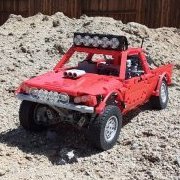 Hello, I am trying to reverse-engineer a MOC by RM8. I am having trouble making the front suspension and steering sturdy. Does anyone have ay ideas of how to make it more stable? Here is what I have so far: Any advice is appriciated. Thanks in advance. Here is the video the truck is in.
 -
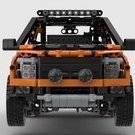 Hello everyone! I want to show you my MOCs. My first successful project is a Rallycross car. Rear-wheel drive by two L-motors, opening doors and hood , and a detailed cockpit . The model has already dismantled , there are only pictures. https://pp.vk.me/c62...ihPWp7O4agM.jpg https://pp.vk.me/c62..._rec4h9q5wU.jpg https://pp.vk.me/c62...OoJ932OSU_8.jpg https://pp.vk.me/c62...86qu_VzpQNk.jpg And my last project is somewhere between Class 1 unlimited buggy from Grof Peter (front suspension and general form) and Baja Trophy truck from Madoca. That's why I named my model "truggy" (truggy is a portmanteau of the words truck and buggy). These two models have inspired me. https://pp.vk.me/c62...j6iB9_qFSAA.jpg https://pp.vk.me/c62...RXOzREj-ysc.jpg https://pp.vk.me/c62...5GVmMvlGmfE.jpg https://pp.vk.me/c62...vXKh5iihnog.jpg https://pp.vk.me/c62...vTEImVfbxmM.jpg https://pp.vk.me/c62...H6o537Qw5tI.jpg https://pp.vk.me/c62...-J0gjUVRX3E.jpg Creating a movie is in full swing, and more pictures are coming soon! P.S. Sorry for my bad English, from Russia with love!