


Ludo
-
Posts
94 -
Joined
-
Last visited
Content Type
Profiles
Forums
Gallery
Everything posted by Ludo
-
@coaster Found an interesting article on this website with the 9V ME track problems. Hope you find it interesting, as you work also on a 9V solution. Better to avoid the same problem. Best regards, Ludo
-
Realy amazing build. Great details, and the fact its modular adds more flexibility for the use of it. Any chanche you post details of the trees?
-
@raised, Don't forget that we have high shipping cost in the EU too. Some Bricklink stores don't add shipping cost when ordered above a certain value, while others don't.
-
@cptkent You have to know that customs are alowed to open parcels if they 'smell' some anomalies. So, perhaps a few parcels will pass, but once they open a parcel, and it's declared value is too low according their view, you will pay all taxes plus a fine on top of the total. Google is your best friend, also for customs, who can check the sale price and compaire it with the declared value. I know there's no way to avoid import and VAT, but if the value of the track could be lowered, cut in the shipping cost + profit marge for the reseller, it could be interesting to buy the track in Europe.
-
The 'normal 'VAT in Belgium is 21% for 'luxury' goods and 6% on food. Despite that we are part of the EU, VAT depends from EU country to EU country. I don't know how it works for bussiness-to-bussiness import. I guess there's import taxes on the goods, don't know how many % it is, and when it's sold then there's the 21% VAT added to the netto retail price. I hope @HoMa is still reading this treath, and can give his experience with import & VAT for Germany. As an AFOL customer who can't buy without VAT, is it interesting to know that we pay the VAT % in the country where we buy. Let's say Belgium have 21% VAT & France have 19% VAT, could it interesting to buy it in France. The 2% gain on VAT is not much on low amounts, but can make a difference with larger orders. Still one thing we may not forget is the margin of profit for the seller AND the constantly increasing shipping costs! Paid past week 25 EURO for a parcel (2,905kg) comming from France. if the total sales price (margin of profit + import tax (bussiness-to-business) + VAT+ netto price of the article + shipping) surpass the price we pay for direct import despite the taxes, then we could buy it directly at the source. To make a long story short, it will be expensive for us.
-
@coaster and @daoudbazaar And don't forget import taxes and administration cost for Europe which are added to the VAT. This is a real killer for us. My experience 4 years ago was to pay 186 Euro on administration cost + import tax & VAT for a parcel comming from the USA with a value of 750 Euro. That's aprox. 25% as @daoudbazaar mention in his message. So, if you want to sell them too in large amount to European customers, there's definitely a need for a solution for this 'financial problem'. If not, sales will be low and perhaps mostly concentrated in the US.
-
It's a choise you have to make between the different 3rd party providers. I think all depends on your use of the PF receiver. the one i mentioned is specially developped for train users with a lot of extra's what others don't have. And all 3rd party PF receivers will cost more than the original LEGO receiver. Low production volume, higher production cost Also the idea from Peterab will only work in one direction if single transistor used. If you want to drive forward or backwards, you need at least 4 transistors. And this is one of the major problems, you lose too many voltage across the transistors (aprox. 1.5V). Better is the use of FET's (which is the case in the PF-V2 receiver).
-
Hi, I would recomment you to take a look here: main page: https://www.fxbricks.com/ Specifications: https://www.fxbricks.com/pfxbrick/specifications/ 2 motor outputs up to 3Amp / channel.
-
@Capparezza, I can confirm this too. Have 3 or 4 90 degrees 9 Volt crossovers (4519), used them only twice and never again. The wheel flange bumped against the wires and when driving too fast, it could be that the locomotive jumped and derailed. This was a bad buy. And on the other hand, how many of those crossovers do you find in real life track? It would be better to invest in more usefull track (half and quarter) and switches. I think that there's no money growing on Coasters back , so making the right choice is something to think carefully about it. @coaster You made me really curious, so i'll stay tuned (9V track).
-
@coaster Realy looking forward to see the R104, R120 and switches in 9V. Anyhow, what i read here above is very promising. I wish you a lot of success and hope you'll succeed in your adventure. regards, Ludo
-
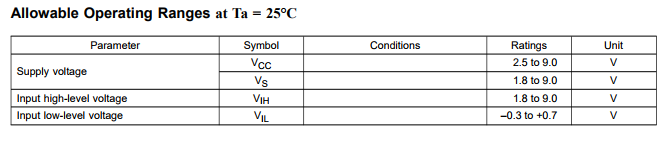
According to the data sheet (Sanyo) are the allowable operating voltages @ 25°C Ambient temperature: Don't know what the lowest VCC voltage is for the used Alpha chip, the controller inside the IR receiver controlling the motor driver chip. The LB1836M absolute maximum voltage is 10.5V @ Ta = 25°C
-
Hi @Capparezza, I've replaced in the past the wires from one cable with 2 colored Flatcable wires, and agree that you can replace the old wires with new ones. But the problem is to split the bottom plate from the top plate without damaging it too much. It can be done, but is a bit tricky. found this weekend an other cable with pulverizing isolation, just on the exit from the 2x2 plate. Time to repair it also. found disintegrating isolation Inside a 9V train regulator too, so it's not due to sunlight that the isolation is disintegrating.
-
Hi @coaster, Your explanation make sense, I understand what you mean,and doing it this way, it looks ok. The only problem i'll see - now and in the future - are a lack of affordable priced 9V cables and 2x4 electric plates. What do you think from following idea. 9V cables are already expensive, and certain of them have a pulverizing isolation ( specially the rectangular formed cables with a kind of rubber isolation - I own a few of them and worthless to use due to short cirquit!). These days, cables used for Arduino are very cheap and available around the world. So if you could use a 2 pin (or 4 pin to secure the electrical contact) female socket on the wheelset (Dupont connector or similar with or without locking), and you can plug in a male Arduino cable in it (or a pin header with pins at 0.1"" spacing - they are most common used), would make the 'system' cheaper on the long term, and those connectors are widely used and available in the electronics world. If for practical reason (production cost) an inversion of the male/female connectors is nesesarry, ok for me, as long as the pins on the wheelset are hidden in the wheelset to prevent bending of the pins (damaging) if wheelsets are stored in a bin, shipping, ... I'm convinced that the 9V CABLES will disappear on a middle to long term (who buys them nowadays? Only for replacement of an old cable? And @ what price?).And while you create a compatible wheelset with power pickup, I would leave the 100% LEGO compatibility, specially concerning connectors and wiring and go for a widely used and cheaper solution. Or you need an extra mold to make 2x4 / 2x6 / 2x8 plates with electric contacts like the one you mentioned in your reply and how many will you sell on the long term? thats my idea.
-
Hey @coaster, Just bumped on this tread and I like this wheelset but have some questions/remarks. I notice the cable connection on the wheelset, but how to deal if you want to use 2 of them next to eachother and using the original bogie plate, making a double axle bogie 4x6 (example : Emerald Night coach)? You can connect only one of them, because the connector for the second wheel pick up can't be placed because the first one sit in its way. What would you think to extend the power pick up contacts to the long side of the plastic casing, making it possible to 'daisy chain' the wheels? Then you need only one cable to connect, but you have 4 wheels making contact (2 on each side) with the track and a more reliable power pick up. Wouldn't the cable introduce more friction on the R40 & points and derail the train/coaches? The 2 wire cable from the 9V era posed some problems in the past, but with the 4 wire PF cable it's even worse (very stiff cable). Personally, I prefer the cable wires to pas trough the pivot pin of the bogie plate, this eliminates the problem of the extra friction, and the wire is not visible. I know it's not an easy task to create a wheel pick up that suits everyone's needs. Specially for the ones who build there brickbuild bogies as close to the real thing. Best regards.
-
@coaster See you added the pictures for the upcoming curved tracks. Great! As said before, i'll hope youre bussiness runs well, so we can expect the 9V curves and points too. Thats what i'm waiting for. I and my coussin are willing to order a double crossover point as can be seen on page 4 in this tread. also interested in a few left / right points and larger radii (9V).
-
Hi @M_slug357 This is a great idea and shouldn't be neglected. People visiting the site will be more interested and come back.
-
Hi Coaster, Great news. I hope you sell a lot of them so you can continue with the 9V tracks Wish you a lot of success!
-
@Barduck I see also the problem as M_slug357 says: it's not friendly to longer engines, and specially not to steames with the close positioned driver wheels. They can float over the track, losing most or all of their traction power and spin. Best way to get a 'nearly flat' display table is to put beer felt (Nederlands = Biervilt) under the table legs to equalise the table top. Explaination of 'Beervilt' : is a - standard - 94mm by 94mm light carton from abouth 3 mm thick thats been placed under a beerglass. See here for a picture to see what i mean. Or use small wooden gussets (Nederlands = houten spie). Personally, I would never use such track piece. The story change a lot when you want to get an inclined track to aproach a bridge. Then you need a track that goes gradually up, as mentioned in an earlier post in this tread. We've done it with 2 plates / straight track piece with standard LEGO trains, and even then you need a huge room. Additional problem then is that the train slows down while running uphill, but gain a lot of speed when running downhill. Precautions need to be taken!
-
Hi all, If i look to the right bottom picture, I have the idea that you will end up with a bumpy track, and no smooth increase of height if several placed one after the other. Or is it an optical illusion?
-
Hi Cale & Coaster, Thanks for this update from someone who could see them from close by. I guess you where thrilled to get them in your hands. Very glad tho hear that there's almost no warpage on the samples, and hope, when going into production that it stay so. I'm far from a specialist in plastics, but i visited years ago , when i was still a hardware engineer for the company, a plant where they did mold injection, like the plastic 3 1/2 floppy casing and the front & rear car bumper for Volvo & Opel. When the mold for the floppy casing opened too fast (plastification time too short), the plastic was still to hot and deformed (warpage!). The timing to mold plastic pieces need to be precise, not to fast or the pieces are worthless = higher cost, and not to long or the production number decrease = higher cost, and perhaps this was also the case of the warped LEGO track. Increasing production number by decreasing the plastification time? It's risky. Quality should be on top of the list, but i'm sure that Coaster wil keep a close eye on this issue, isn't it? Anyhow, it's in his interest. Bad quality = low or no sales = Financial hangover. I'm looking forward to the release of the 9V track & 9V points! @coaster when you go into production, did you look already for a distribution point in Europe? Best regards, Ludo
-
Hi Coaster, Great track pieces! They look very promissing. Besides the missing "BT" on the studs, how is the overall quality? Like connection strength, mechanical clutch on plates/bricks? I hope that the "minor" adjustments won't cost a lot, now that you have already one working mold.
-
Great to see this progress. :) PF track i suppose. question: what are the long 'trenches' for between the two tracks? I wish you a lot of succes and hope that the 9V will be up and running in the near future. best regards, Ludo
-
I think the same. Have a few straights with broken connecting ends. Can be re-used at the end of a side track with a buffer over it. Allways found the connection points the weakest point of the 9V / RC track. If disassembling track after a show is done incautious, you can end up with a broken or bend connection point. Glad to read that the majority like the angled guards. .
-
@3797 Regarding your remark, it's true. The goal of having a (long enough) angled guard rail 'entry' is to prevent that wheels /wheel flanges hit the guard rail, and guide the flanges towards the rail. The guard rail acts like a funnel. If you take a close look to a LEGO point, you'll see also a short piece of the guard rail that isn't supported at both ends. They don't even have a side support to prevent the guard rail to break down . see picture:
-
Hi 3797,Cale,Coaster & M-slug357. Thanks for the additional information & the great CAD renderings. I can only agree with M-slug357 regarding the angled guard rails. They look great. I say YAY to the change. I guess that the angled guard rails are molded together with the sleepers with the exeption of the far end angled guard rails on the deviating track. And as already written, not everyone will ballast the track, but on the difficult locations to ballast, if you want to do it, there will be always a solution.Cutting & gluing are among those solutions, but only if nessesarry. I know Coaster, i'm a heretic
