

LEGO Historian
-
Posts
1,358 -
Joined
-
Last visited
Content Type
Profiles
Forums
Gallery
Everything posted by LEGO Historian
-

Photographing MOCs: obtaining a white backround
LEGO Historian replied to Hive's topic in General LEGO Discussion
I guess with all the LEGO colors, using a neutral color background is probably best. That blue background image I posted is complemented by the blue and white bricks. That might not be so flattering for other colors.... -
LEGO 4th of July History Quiz
LEGO Historian replied to LEGO Historian's topic in General LEGO Discussion
Thanks, wasn't sure... I was wondering why I couldn't post over there (since I've been a member since 2007)... but you have a 100 post minimum. Gotcha... (lol... to bad it wasn't a thousand word minimum... I'd have made that a long time ago... ) -
The 'Golden Age' of Lego, is it now?
LEGO Historian replied to Hey Joe's topic in General LEGO Discussion
IMHO (and very biased one at that...) the first golden age of LEGO was 1960-66... when the first Town Plan system came out. There were MANY hours of creative playtime here, a lot of beautiful specialty pieces, and it didn't take that long to build... so you had less build time, and more play time!! -
I have an acquaintance who inherited (from his grandmother's estate) a late 1940s unused boxed Lionel Train set that is in incredible mint shape and has all the boxes in mint condition. It's worth thousands, but he was wondering if he would be taken seriously by EBAY buyers since he has zero feedback. I told him that if he wants to sell it there, he could have me sell it for him, since I have good feedback there, and have been selling for years. I also told him that he should start selling some of the smaller more inexpensive items in the estate under his new ID... and that would be the best way for him to start up a sales feedback history. But that expensive train system would send out red flags to serious buyers.
-
REFERENCE Dusting Lego displays and layouts
LEGO Historian replied to SirNadroj's topic in General LEGO Discussion
As was stated already... the longer you wait to dust... the harder it is to get it clean again. Regular dusting will save you headaches in the long run. And anytime you use water on a MOC surface... do make sure you use an oscillating fan afterwards to dry up any water that may have seeped into the areas between LEGO parts... -
Photographing MOCs: obtaining a white backround
LEGO Historian replied to Hive's topic in General LEGO Discussion
One of my LEGO acquaintances in the Netherlands uses a nice blue background for some of his LEGO images. This particular image of a 1960s LEGO glued retailer display model shows very nicely how a blue background really enhance the look of LEGO building MOCs. This particular one is so nice, that he let me use this image at the top of the Table of Contents for my Unofficial LEGO Sets/Parts Collectors Guide (1949-1990s) on DVD and downloads. A very nice image indeed... -
OK, I'm not sure if this is the right place to post this... but here goes... 1) Where were the first LEGO motors sold? 2) What is the most valuable part in the 7760 Shunter Locomotive... 3) LEGO founder Ole Kirk Christiansen married a lady named Edith... what was her nationality? 4) Why was the tall modern Cypress Tree discontinued in 2002? 5) What LEGO tragedy happened on Oct. 30, 1969? 6) What LEGO tragedy happened on Feb. 4, 1960... that changed the way LEGO did business? 7) What set did this rare LEGO part (with cross supports underneath) originate from.... http://www.bricklink.com/catalogItemPic.asp?P=733eX 8) In the 1970s... what was DUPLO called in Australia? 9) What was the largest size LEGO baseplate (stud sizes) that TLG ever sold? 10) What was the 2nd oldest LEGOLAND park?
-
Lego turning 55 in 2013... So what do WE get?
LEGO Historian replied to Artifex's topic in General LEGO Discussion
I hate to be a stickler for details (well it never stopped me before... ) The 1958 date was ONLY the 50th anniversary of the introduction of the tube bottom brick... nothing more... LEGO dates are so muddled (the official TLG site timeline mixes "first sales date" with "sales office opens date") that besides principle LEGO owner Kjeld Kirk Kristiansen, I doubt that more than a few old timers at TLG really know the true LEGO dates. But here they are.... LEGO sets (Automatic Binding Bricks) were first produced in 1949 (63 years ago) in Denmark. LEGO sets were first sold from 1950-51 in Sweden for a short time (poor sales) and then reintroduced in 1955. LEGO sets were first sold in Norway in 1953. LEGO sets were first sold in Germany in 1956. LEGO sets were first sold in Switzerland, Netherlands, Belgium, Austria, Portugal in 1957. LEGO sets were first sold in Italy in 1958. LEGO applied for their tube bottom patent in 1958 (Patent Pending)... and started using the tube bottom bricks that year.... hence the 2008 anniversary date... LEGO sets were first sold in France and Finland in 1959. LEGO sets were first sold in the UK/Ireland in 1960 and Australia in 1962 via a license to Courtauld's Corp. (a chemical corp.) LEGO sets were licensed to Samsonite of USA/Canada in 1961... the first sets were produced from a Stratford Ontario plant and shipped to the USA from 1961-65. Canada sales started in 1962 from that same plant. TLG said that USA Samsonite was under-performing, and litigated to get the license back from Samsonite in 1972. So TLG LEGO sales started in 1973... and in 1998 there was the USA Silver Anniversary (25 years) bucket (only going back to the 1973 date, and ignoring the 1961-72 Samsonite years). Since Samsonite of Canada "toe'ed" the TLG line better, their license was not revoked... so Canada anniversary for LEGO uses the 1962 date... which explains their 35th anniversary bucket in the late 1990s. All this is explained (country by country) in Chapter 73 (LEGO Sales/History by Country) of my Unofficial LEGO Sets/Parts Collectors Guide (2,800 pages on DVD or as a download). -
LEGO parts made of Chinese plastic?
LEGO Historian replied to Henchmen4Hire's topic in General LEGO Discussion
Actually... in my Unofficial LEGO Sets/Parts Collectors Guide (1949-90s)... available as a DVD or as a download... I mention that British LEGO Ltd., the Courtauld's Corporation licensee for LEGO from 1960-92 had a Courtauld's plant in Wrexham Wales, that produced LEGO parts for Britain, Ireland and Australia. Some parts such as streetlights, 1:87 vehicles, trees/bushes, and other specialty parts were produced in Denmark... and the parts pack boxes of UK/IRE/AUS mention "Made in Denmark" on those parts pack boxes. But regular bricks, plates and other parts were produced at that Wrexham Wales plant until 1992, when TLG bought the LEGO license back from Courtauld's (a UK textile/chemical maker), and all parts since 1993 have NO LONGER been made in the UK. Also, old 1960s British style Town Plan boards (#200) were produced by Waddington's... a British game board maker. -
Why are there spare parts in the sets?
LEGO Historian replied to benredstar's topic in General LEGO Discussion
From 1955-58 TLG made a #1247 Esso Service Accessories packs with an Esso Sign, a set of 3 Esso Gas Pumps, and 3 Esso Oil drums (which were discontinued by 1958). After 1958 the packs were numbered #231, and no more oil drums. If you were lucky enough to find more than 3 small oil drums (1x1 round bricks with an Esso sticker) in your pack... you were lucky indeed!!! They are among the most valuable of all 1950s LEGO items... and today (depending on condition), can command $75-$150.... EACH!! -
With TLG... differences between box art and instructions go back to the 1950s... Here is an example of a 1960 700/0 large basic set.... what is on the box top HAS ABSOLUTELY NO RELATIONSHIP to what is in the instructions on the box top inside... or the contents.... this was the rule, rather than the exception 1949-65. (Image from my Unofficial LEGO Sets/Parts Collectors Guide 1949-1990s)...
-
In the early days (1960s) TLG made the same road signs for continental Europe, USA and Canada (even though most of these road signs are never found in real life in USA/Canada). In my LEGO DVD I show the 19 unique road signs that were produced for Britain/Ireland/Australia... everyone's favorite always seems to be the "MOTORWAY M1" sign.... Now... I find out that a 20th sign exists... the blue round sign with white arrow pointing left (same pair exists in continental Europe).
-
-
Hey Fugazi, thanks! In a toy store where it will be surrounded by LEGO I thought it would be an eye catching countertop display item. Several toy stores (Lasting Toys of Toronto is one) will be selling it. I'm having a 2 day special on the DVD... I found the mint parts of the USA/Canada only #455 Lear Jet (1975) in my basement to build 5 of the Lear Jets. Am offering them free with a $29.95 DVD purchase... right now in my Gary Istok Rare LEGO Store in Bricklink.
-
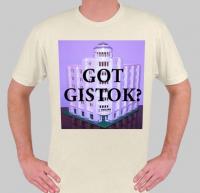
I'm coming up with a promotional logo for Toy stores (and LEGO Conventions) that will be selling my new LEGO DVD (as either a real DVD or as a download). This will be a counter top image next to a container with the actual DVDs. Since toy stores show display images of only toys... I decided to take a different route, and show another image... yet an eye catching one. How does this one look? Honest feedback welcome!
-
Unfortunately Peeron seems to be on "cruise control", and a lot of new catalog submissions and older catalog submissions are not being added to their database...
-
Yes... although that particular box dates to 1960 (the year TLG started putting "LEGO System" with "System" in yellow script), it appears that TLG had some older inner drawer style boxes (the outer box is a sleeve). And the bottom of that inner box shows the "LEGO selling countries" of 1958. Here's a breakdown on when LEGO sales began.... Denmark 1949 Norway 1953 Sweden 1955 Germany 1956 Switzerland 1957 Netherlands 1957 Austria 1957 Belgium 1957 Portugal 1957 Italy 1958 So by 1958, those red marked countries were the "LEGO universe". Sales started in France and Finland in 1959, Britain/Ireland in 1960, USA in 1961, Canada, Australia and Japan in 1962. (Info from Chapter 73 of my LEGO DVD - LEGO Sales/History by Country)
-
Strange how the company had a Lear Jet in the 1970s... but the LEGO Lear Jet set was only sold in USA/Canada (a few years later)... ... although the 657 Executive Jet was sold everywhere else (besides USA/Canada)...
-
Interesting topic... I can fully appreciate the frustrations of Aussies and Europeans at the bargain prices that are found in the USA... But the pricing issue is much more complex than just what country you happen to live in. Some sets are more or less expensive than other sets in one country, than in others (compared to other sets of the same system). Here's a very old example of this "price anomaly". Back in November 1957 TLG introduced the first Lighting Device set... the #245 Spare Part Packs. These had a white sliding inner box. But the price fluctuated (as compared to other parts packs) from one continental European country to another. In fact there were 5 price levels of spare parts packs, that all had the same box look (besides the sides). Retailers were confused, sold more expensive packs at a cheaper price (accidentally)... so in 1960 TLG came out with a color coded pricing system.... the most expensive packs had a green label on the side, the next most expensive had a yellow label, then came a red label, then a blue label, and the cheapest were the black label. Here's an example of the #245 set.... it has a red label (more expensive) for some continental European countries, and a blue label (less expensive) for other continental countries.... This differences in prices between sets is not just a 50 year old issue... it still goes on today. If you compare the price differences between sets of the same system today... sometimes there will be greater differences than in other countries. Is this a marketing issue? Or? Not really sure. But when it comes to pricing LEGO sets in different countries... it's much more complex an issue than just the specific country you are in....
-
This tiny little LEGO set was a promotional freebie that was given out in different countries, and they may have existed for all continental countries. TLG also gave away a small set at their HQ in Billund Denmark. It had a box with the rainbow of LEGO colors at the time (red, white, blue, yellow, black) on the box top. At a later date TLG made this box available to SAS Scandinavian Airlines (with the SAS label on the top). All of these promotional LEGO boxes are highly collectible today.... as are many of the food promotional sets such as the USA Velveeta Cheese sets, the Life Cereal sets, the British Weetabix sets, the Dutch Unilever sets (Unox Soup for example), the Dutch Chocomel set, the French Danone set, and many many others. In my Unofficial LEGO Sets/Parts Collectors Guide, one chapter covers over 100 sets in this category, including all the Maersk ship sets, the Viking, Silva and Finnjet Ferry sets.
-
Custom models on sale in LEGO stores
LEGO Historian replied to questforcastle's topic in General LEGO Discussion
Although I have not seen "store specific" LEGO sets... there have been a few very limited LEGO sets over the years. Some items are just borderline officially released items. One good thing about the heart set (and will help increase its' value) is that it has a set number and LEGO logo. There are some items, such as the "DONG" Danish oil platform set that while released by LEGO to Danish DONG customers, did not have a real LEGO box, and no number on it. A similar set was produced in the 1970s for the Philips electronic corporation. It was a LEGO model for a scanner type piece of equipment, and would be of little play value to a child, but would interest convention folks. Although very limited released sets like this Japanese ones seem to be the exception rather than the rule... we've all seen some sets that are "exclusives" of LEGO retailers... such as the orange pumpkin bucket of a dozen years ago by Target, and other similar sets (some sets in the 1960s and 1970s were USA/Canada department store mail-order exclusives... and I even saw a 1960-63 German KARSTADT (dept. store) version of a small LEGO house set (#210). The truly rare LEGO items (worth $$ thousands) were LEGO 1:87 scale trucks of the 1950s and 1960s that came with some very rare decals or stickers... and can fetch up to $4000 each (they're discussed in my Unofficial LEGO Collectors Guide, available as DVD or 688MB download file). Here's an example of one worth many thousands... http://www.flickr.com/photos/78913630@N02/7358531774/in/contacts/ -
Before the advent of stickers (1970 and before)... people would have used these LEGO items to calibrate their sizes.... http://www.geminisys.../lego/page2.htm Actually the 1x1 round Esso Oil Drums seen on this webpage (of old items in my LEGO DVD) were the first stickered LEGO parts... coming out in 1955-57 (Denmark only)... and command $100+ each or more (if the stickers have gold color) on the secondary market...
-
I love all the details and the incredible amount of planning (and finding the parts) to build all these wonderful medieval projects, both on this thread and in the others. But back when I grew up in the 1960s and 1970s... LEGO was so much easier to build with... and the "System of windows/doors" that was available back then, as well as the trees/bushes and other specialty items from the town plan... well it meant that you could build wonderful items in a short period of time. Take for example this Cotswold Cottage (designed similar to the Cotswold region of central England, where yellow stone was common)... it required absolutely NO gimmickry or SNOT techniques... and yet is a pure classic design....
-
Very nicely done up Kroger Station indeed!!!
-
Lego Road Plates in Sets
LEGO Historian replied to The Blue Brick's topic in General LEGO Discussion
The way TLG keeps changing road plates, maybe we should be grateful that they don't provide them anymore... 9 stud gray, 8 stud gray, 7 stud gray, dark gray, black... they kept changing the road plates so that it would frustrate the large town builders. I had over 100 of the very first 9 stud gray roadplates without sidewalks. I love them. But TLG keeps coming out with different ones... so that it gets frustrating... and you can only find replacements and additions on the secondary market... As for water feature plates.... the best ones that TLG produced were not water themed at all... they were the 24x24 and 24x32 blue Homemaker plates...with a double row of studs along 3 of the 4 sides. And they had the best looking water surface of any LEGO water related project ever!!! TLG should make 32x32 Homemaker style blue plates with studs on only 2 sides... and that way you don't have to stay on the 90 degree grid for building bridges, et al.