


Xfing
-
Posts
102 -
Joined
-
Last visited
Content Type
Profiles
Forums
Gallery
Everything posted by Xfing
-
 Self-explanatory. I've noticed that 3/4 pins will not securely attach to System plates with holes in them, due to there not being a groove on the rim like there is in 1/2 width Technic beams etc. But strangely enough, when you put 2 holed plates on top of each other, a full-length pin will clip securely. Is that by design? I find it a bit frustrating, since it'd be pretty cool to be able to use half-length pins on plates and such. It's particularly egregious with part 3176, which could work really nicely as a trailer attachment on a half-pin or something to that tune, but seems like you need to stack 2 on top of each other to make it work, and us a full length pin then.
 -
Well, like I said, it's mostly a one-off. I have some serious nostalgia and emotional attachment to Lego, so I'll just be rooting for them to catch up in terms of versatility. Too bad they're very rigid when it comes to their design philosophy and refuse to introduce certain part families for reasons which I consider less than reasonable.
-
Oh yeah, by Technic "going back" I definitely didn't mean returning to the oldest friction pins hahah Those were absolutely brutal. But according to Rebrickable, we're like on the 4th revision of the friction pin already, honestly not sure they needed to go past the first revision where they added the slots. I do have some of those old ones in my 80s Technic sets and the difference is serious
-
Interesting, I thought the only consideration was Lego's arbitrary refusal for some obscure, idealistic reason. Didn't know there were practical considerations as well. I understand for example with the "loose stud" part that Cobi so specializes in, it's possible to lose that part beyond retrieval if inserted into a brick rather than a plate. That's a rather serious problem. But I never figured there were similar ones with the inverters. No one has complained about structural problems or durability of those, to my knowledge.
-
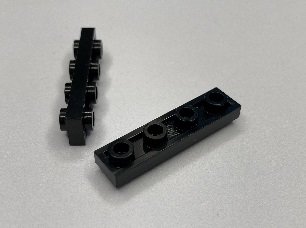
Sooo, we all know that Lego have been playing catch-up with their competitors and introducing some pretty revolutionary pieces in recent years, this late into the game (which just shows how behind they can be sometimes). This part family when, you think?
-
There's an easy solution for that "safety" concern - just add a thin, bracket-width ring in the middle, perhaps a square one even. Won't be quite as clean, but it'll work. But agreed, this piece is insanely useful, as are many SNOT solutions and brackets that Cobi has. I really do wish they'll continue appearing as proper Lego.
-
I'm for all intents and purposes an exclusive Lego guy, but recently I've found myself watching some channels on Youtube that do reviews of all those military sets, and finally I caved in and decided to try Cobi - it's another European brand, manufactured in Poland after all, so I thought it might be nice to check out what it looks like in its modern iteration. I think I had some Cobi set in the mid to late 90s that mimicked Lego City and then had those parts mixed into my Lego without noticing (until I made the purge, anyway), but I've heard that in recent years Cobi have drastically improved not only their designs, but also their brick quality. So the set I bought was the Challenger tank (2627). So far, I've put together the first bag, here are my impressions: The bricks look fine, there are very minor occasional mold defects in hidden areas that don't affect the brick's look or functionality. There is something off that I can't quite put my finger on when it terms to clutch - the bricks give off kind of a rubbery feel when being put together (hell, they feel rubbery, period!), also sometimes they're really tough to connect, as if the tolerances were too tight or something. You feel like the bricks are struggling against you when you try to put them together. I'm pretty sure the tank's floor which I put together first, in fact bent upwards when the SNOT connections were first made, as if the bricks were stressed while they shouldn't be if their dimensions were perfectly calculated. After some time the bend eased and it's straight again, but it did get me worried for a moment. I know it may have something to do with the density - their models are very spacially dense in small parts compared to Lego's (which some describe as a "model-like" quality). Overall, I definitely prefer building with Lego, that much I can already say. Also, the grip that pins have on bars seems to be loose and wobbly, to the point of feeling unreliable. That would be all the gripes I have though. Other points of interest and observations (except for the obvious stuff everyone knows, such as that they only use prints and no stickers): - Cobi is very Technic-minimal, in fact probably the single brand least eager to engage in Technic stuff. Almost feels like it's a point of honor or something - kinda like Lego steadfastly refusing to do any military sets, Cobi refuse to involve any Technic elements. I think they had to finally cave in their biggest tank models where the tread wheels were put on Technic axles, but that's about all Technic you'll ever see from these guys. I do suppose that limits them quite a bit, compared to brands such as Cada who happily use and mix both part families liberally. - The tank is 11 studs wide, and Cobi appears to favor odd width models. To that end, there is a lot more odd-length bricks (such as 1x7) and plates (1x5 to 2x7) that are regularly used than I've ever seen with Lego. AFAIK, the latest odd-length plate Lego introduced was the 1x5 in 2021 - in Cobi you see this stuff all the time, including two-by plates, as I mentioned. There are overall plenty of exotic plate dimensions such as 3x4, 4x5 and more. Gotta say, pretty neat. - This is by now common knowledge, but Cobi are probably the market leaders in stud reversal techniques at the moment. They feature tons of brackets and plates with side studs - most of which Lego does have, but it's in fact because Lego has been catching up on Cobi's own catalogue. There are still many interesting piece families that Lego doesn't carry, such as the super thin plates with reverse studs (same width as the thin part of brackets), which are very useful for putting together high-density constructions with studs in multiple directions), plates with studs on both sides etc (although I haven't found any such in the model as of yet), and even 1x1 bricks which are hollow on both sides. What's really cool though are plates with studs on the side without the addition of a bracket, which lets you do more compact SNOT stuff. And the coolest thing are definitely the insertable single studs, which you can put into plates to completely reverse a build. There are also 1/4 parts of the circular plate (Cobi's equivalent to Lego's 4032) - you can put 3 of them into a round cylinder thingy (like fuel tanks), and the empty part can be left for an attachment point, which lets you preserve the circular shape of the whole thing, don't think Lego has something like this either, and it might be neat. - They have a wider than Lego family of jumper plates, such as 2x2 tapering into 1x2 in the middle and many more, plus a significant number of plates with only part of the studs they should normally have. That makes it a breeze to shift between even and odd at the drop of a hat, pretty nifty stuff. - They have tons upon tons of differently angled (and even truncated) sloped tiles, many of which make flush surfaces very easily. They carry some angles Lego doesn't feature at the moment. - There is a number of miscellaneous bricks that resemble Lego's, but are just slightly different, such as the 1x2 plates with indented slopes, 4 of which are used here for the engine base - these seem like they could be a really useful addition for Lego too. There are also hinged headlights built of 3 pieces which the tank uses - something Lego doesn't really need, but quite creative nonetheless. Likewise, there are decorative tiles with a mesh pattern that Lego doesn't have, and a 2x2 version of the grille plate (superfluous). So overall - I do not regret this purchase, and am enjoying the build so far, but I think I'll be sticking with Lego in the future, regardless. The SNOT-heavy building process is very engaging and satisfying and the model is very sturdy, but there is very little inherent rebuildability and the feel of the bricks and the difficulty of putting them togheter turns me off a bit. What I'm really rooting for is for Lego to keep introducing the SNOT and stud reversal-centered solutions Cobi is so dominant in, as well as some other miscellaneous elements, as they have been slowly doing already, to extend the system in ways where competing brands such as Cobi no longer have any sort of edge over them.
-
Welp, at any rate I'm pretty confident the number of total technic bricks 1x3 with 3 holes made was not high, since there are like literally 9 of them used across the entire 2024 catalogue, in places where none is really necessary. I just find it curious is all. We'll likely see more of this part in 2025 though
-
What it says in the title. Can you even insert bars into these anymore? Was this done for sturdiness or to prevent breakage? I'm just curious
-
Still, making some models a testbed for the part like this where it's not at all necessary doesn't sound like a characteristic thing to do, by their logic they should be introducing the part in only the sets that particularly need it.
-
Hey guys, you know what? I found out by accident that Lego introduced a 1x3 brick with 3 axle holes aligned with studs this year (part number 5565). It came in white and red only, and was featured only in licensed sets such as Fortnite, Sonic the Hedgehog and Mario. I checked out the instructions for set 76997 - Tails' Adventure Boat. It uses two of these pieces at both sides of the rear of the boat. But the use is to insert a 2-pin assembly anchored by a 2x2 plate with 2 pins (part 15092). The thing is, this could have easily been accomplished using just a 1x2 brick with 2 pin holes (part 32000) coupled with a simple 1x1 brick for filler. So it doesn't seem like the addition of that part was justified by necessity. I checked out the instruction for the remaining models that feature this new brick and it's generally always the same story. The other Sonic set, 76998 also uses the part in a manner I don't find really justificatory of its use - the same could be accomplished with a 32000 combined with a 1x1 brick again. Then again, perhaps a little more stability was offered thanks to the new brick here at least. As for the Mario set 71438, the function from single piece used there could most definitely have been achieved by using a 1x2 once again (and in fact, the vertical assembly produced there features that very brick right above this one - in general showing how you can cleverly mesh studded and studless Technic by connecting all the studs with a liftarm later on). Last but not least, the Fortnite set 77072-1 featuring a sculpture of Peely Bone features 5 of these in white, they're used in limb assemblies, showcasing the convenience of being able to have pin holes aligned with studs. Still, in no instance are all 3 pin holes used, so whatever these pieces achieved in this set could definitely have been achieved by just using its shorter cousins. The stability, robustness and reach of one extra stud of length was convenient, but in no way necessary. So in summation, it would seem that LEGO are stealthily expanding the system without a pressing need in some cases, which would go against what we know about their policy to only introduce necessary parts, without which something can't be accomplished. And like that we now have 1x1, 1x2 and 1x3 Technic bricks with pin holes aligned with the studs, with the fist two introduced just 3 years apart back in '93 and '96, and the next in line taking 18 years to come. But indeed, it wasn't really needed - which, again, makes me think Lego are in fact starting to become more liberal and adding parts just for the sake of it, in case they might come in handy in the future. All these models look like they're a testbed for this new part, rather than that the part was added to make them possible. Bit of a shame they're taking this approach with the studded Technic bricks in particular and of all things - which like we've discussed in this thread plenty enough, are not really being used in Technic-branded sets in the first place. At this rate, in a few decades we might have a complete odd-length studded system to go along with the studless one xD Guess that wouldn't be such a bad thing after all and make the studded and studless styles even more easily combinable. Maybe that's what they're stealthily going for?
-
I definitely agree that extensions to the system should be introduced in bulk rather than piecemeal, especially revolutionary ones such as the alternating hole beams. To play the devil's advocate here a bit, I think the system is already so rich that it is really difficult for a designer to draw a blank on how to design something and say "damn, I just can't do it without a new part". That trend will keep worsening too, as there are less and less conceivable parts that might need introducing that would serve a purpose. No one ever thought of the flip-flops before Cada did (apparently), and while they do literally revolutionize Technic, the designers' job is to make sets that can be sold, not to come up for uses of potential new parts that someone higher up decides to introduce. That wouldn't be a bad thing though (at least IMO). I think Lego are just still following the principles laid down during the 2004 restructuring of the company. Previously there were tons of ultra-specialized parts made for very narrow uses (thinking 90s sci-fi System themes), since there was seemingly no regulation on that. Many of them were either <insert that tiresome argument> or very un-MOCable, and Lego are seemingly trying to avoid making that mistake again. The only problem is they're erring on the side of caution, but erring nonetheless - since introducing a family of extremely versatile and useful parts is the opposite of liberally adding new unprofitable molds just for the sake of it. The strategy has so far done Lego good, as modern sets tend to rely on multi-purpose parts much more than older ones, but that does hold them back when it comes to introducing stuff that's actually useful and revolutionary and should be boldly gone all in on. speaking of, is there some place where they list notable newly added pieces by year? I know bricklink has that function, but it's a bit annoying to have to sift through literal hundreds of new minifig arm paints and 1x2 printed bricks, I'm more interested in actual new molds.
-
All I can say is that I'm utterly taken in by the 2022 Goliath dump truck by Cada. All of that model's advantages aside, it features something modern Technic really doesn't and something I really appreciate - integration of System parts in significant numbers for detail building, particularly in the cockpit and bonnet. And funnily enough, they don't even rely on studded Technic beams for connection, as those were relegated to providing structural strength in the trailer base and are hidden entirely. Still, they were also used, showing that large-scale models can really benefit from mixing the building systems in clever ways. A close to perfect model right there, I'd say. Eric Trax is one talended mofo, that's for sure. As for being good competition, Cada has finally prompted Lego to start making beams with alternating holes, even though people have already expressed interest in that part family like 10 years ago. Good thing Lego are keeping a hand on the pulse when it comes to innovations - since no real competition is the enemy of innovation. It's just like AMD vs Intel - before AMD stepped up their game, Intel got away with making very small, incremental upgrades to their CPUs over like 4 whole generations. We might be dealing with an analogous situation here - strong competition from quality brands that introduce versatile pieces, such as Cobi or Cada might give Lego the much-needed push to adopt these parts sooner and more boldly - or at all, for that matter.
-
Holy cow, these parts look amazingly useful. Hook them up with friction pins horizontally to a square frame and you've basically got a simple, unpowered vehicle chassis ready with just 7 parts (11 counting wheels). Pretty insane that Lego doesn't have these parts yet. I think they've slowly been realizing that they are being forced into incorporating some parts thought of sooner by the competition, such as the flip-flop beams you mentioned (they suddenly feel SO obvious now), or the 1x2 plate with rounded edges and fully hollow studs (https://rebrickable.com/parts/35480/plate-special-1-x-2-rounded-with-2-open-studs/) The latter has been out only since 2018, and already it's finding its way into sets in huge quantities. Meanwhile Cobi has been using that part for at least several years longer. I frankly wouldn't be surprised if they ended up releasing the entire repertoire of stud reversal options from Cobi's repertoire eventually either, since those parts are such huge game-changers for omni-dimensional building. As for studless Technic - one thing I've noticed is that since adoption until relatively recently, studless technic was just as skeletal as studded Technic before it, only more recently have the designers started mastering solid structures. I suppose that's largely thanks to flat panels. The 42078 Mack Anthem for example feautres a legit box made of panels, one that is also functional (you can store stuff inside without it spilling out). I do believe solid bodywork-like structures could be achieved sooner, had the designers not been averse to using half-pin studs and traditional System plates. I suppose they thought that in studded TEchnic era the whole point was that the mechanisms are exposed so you can watch them work, while in the studless era they may have thought the visuals wouldn't match very well. I still think there are perfectly seamless ways of meshing the two systems together, as several recent big models by Cada prove beyond the shadow of a doubt. BTW, found an article from 2014 about "Technic pieces that should exist but don't". They prepared a summary picture, check it out: A lot of these have indeed been added, but some are still missing, right?
-
Or LEGO could simply adapt, it's not like it would be some big, mission-breaking concession to start using studded technic again where it helps and makes sense. They've done it in the past to great success, like in the models I quoted before. Also, let's be perfectly honest here, it's not like that's CaDA's biggest selling point anyhow. Some people might notice and appreciate it, but at the end of the day most Technic-style builders care mostly about functionality and mechanical intricacy. Looks-wise, Technic has only recently come close to catching up to System, with all the various decorative panels finally letting it shed the "skeletal" look of the past. But even there, if you think for a moment, System-style bricks do come in to fill in the gaps even further. LEGO does use them a little bit as is - stud pins are being employed to attach plates to liftarms for decoration routinely now. So we might actually start seeing more of that in the future anyway, since as history has already proven, shifts in Lego Technic design sensibilities are always gradual and slow. Also, for the record - my point was never that LEGO should revert to studded Technic from studless. Studless is a mechanically denser system with much better directionality etc, especially after adding liftarms with alternating holes (something I'm not sure if wasn't first devised by competition btw), so it's ideal for creating internal mechanisms at smaller scales and more action-packed than with studded. Plus many parts produced these days are optimized for studless, and not necessarily studded (such as the newer differentials, among others), because of odd rather than even distances. However, studded Technic also has certain advantages that the newer system does not have, such as firmness, rigidity, certain aesthetics and the ability to combine easily with System bricks. Ultimately the studless system is dominant these days in Technic and for good reason, even though studded models could be very functional in their day as well. It's the same for competition too, but the difference is competition isn't restricting itself to just studless elements as a rule. To make an analogy - it's like Lego were insisting to make a good song but in a very specific genre, with no room for any deviation, while competition just wants to make a good song period. All I'm saying is LEGO might want to embrace using studded pieces in small numbers again after the warm reception of competing brand models, in order to remain competitive themselves.
-
That's actually still nice, a few years back they'd have used all Technic panels for that. So I suppose they might actually be looking to system parts after all
-
Guess that's where competing brands such as Cada come in, just look at this design for example: they got a prominent MOCer on board to design it for them, an opportunity lost and wasted by Lego simply becasue they won't put studded technic and system parts on their Technic line, even though that makes the models objectively superior.
-
What's really cool is how the general layout reminds of the raised baseplates of old. But where those were single pieces, here we've got actual stuff hidden in the interior, amazing!
-
Not like super new, because this piece is said to have started appearing in 2023, but this: https://rebrickable.com/parts/2391/technic-beam-1-x-7-thick-with-alternating-holes/ And you know what? I've seen an equivalent piece in a clone brand set that was released in 2022. Here, check it out, at 11:11 specifically (among other times), you can see the piece in question. The video is dated for Apr 29, 2022. Does that mean we have evidence of Lego co-opting a piece that was previously introduced by a clone brand? If so, would it be the first time it has happened, or have there been precedents like this in the past?
-
I've been following Technic over the years and noticed that in recent years the models have sort of stopped progressing in complexity and techniques, as if the Technic system has reached its peak. But I've also noticed that for the Technic line, Lego designers have been absolutely averse to incorporating any studded and System elements at all. Which does seem like a deliberate, conscious choice, given how both studless AND studded Technic have bled heavily into System-primary models in recent years, to great effect. On the other hand, I've noticed that some alternate brand designers (where those brands even have designers at all) seem to not be working under this limitation, and while their models (especially large-scale ones) consist of studless Technic for the mechanics, they are not afraid to incorporate studded Technic bricks, especially where it would provide rigidity and integrity. Never mind the System elements used for detailing, which they're admittedly better and more versatile at than Technic decorative panels (although the latter also have uses and as with everything else, both approaches can be combined anyway). LEGO themselves did seem to enjoy incorporating studded bricks in to models in the mid 00s and early 10s - the studless Technic system was already fully realized by that time and there was no practical need for using studded elements, but the designers chose to do so anyway - to great effect in my opinion. Good examples of that would be the 42009 MkII Mobile Crane from 2013 or the 8275 Motorized Bulldozer from 2007. I believe both sets have received later reimaginings which do not feature studded parts like the earlier models do (although in case of the Mobile Crane it seems to be the opposite - the 2005 version had no studded elements while the 2013 version did!). But it does seem like trying to isolate Technic as its own thing as much as possible has exhausted its options and the only way to progress from here is start to seamlessly integrating studded technic and System pieces where applicable and sensible. All three systems can work on their own to great effect (for which we've got plenty evidence in the form of sets), but I feel they truly shine when combined together, the only question is in what proportions - many modern System sets already go like 80% System, 15% Studded Technic and 5% Studless Technic, so why won't Technic set designers even consider a similar, but reversed ratio where Studless Technic is dominant, and instead are going for 100% every time?
-
Sorry for necroing but yeah, I've noticed that many competitor brands, even (or maybe particularly) respected and legitimate ones such as Cobi, go all in on stud reversal techniques and make them absolutely integral, nay, central to their designs. Cobi has plates with studs on both sides, even single studs that you can insert into the bottoms of plates to turn them into two-sided plates, allowing for reversal with literally zero extra thickness. They've even got 1x2 blocks that are hollow on both ends, allowing for the opposite. LEGO in recent sets they've been releasing has been using stud reversal occasionally, but the designers are forced into using parts that only accidentally have this function, because the company still refuses to make proper, dedicated parts for this purpose. I can understand their fears, since Cobi's stud reversal options are so extensive and versatile that the whole idea of top and bottom kinda loses meaning, and I understand that LEGO wants to preserve the "system" as going from the bottom up. Still, many MOCers who are concerned with staying loyal to LEGO are literally clamoring for stud reversal options. I think even just having those small tubes that serve as studs that Cobi has would already be enough - maybe coming with some sort of stopper so they can't be inserted deeper than 1/3rd a stud. Think part 85861, but with a stud instead of a stud socked on the other side of the outer ring. As for the issue of the profitability of introducing new moulds, it's been discussed above - but what I think can be added is that people probably started believing this myth after the 2003 restructuring of the band's philosophy. LEGO was making too many part types, many of which were extremely situational and single-use. An example of this could be a much beloved part by me (largely due to nostalgia): 6042. It looks really cool, but there really aren't many ways to use this part that would look aesthetically pleasing and be well-integrated into your creation. So the issue at that time probably wasn't getting or maintaining the moulds, but the fact of how many of them LEGO was forced to have for how few pieces they actually produced - that takes factory space which could be used for moulds for manufacturing more versatile and reusable parts. Meaning that the overall output of the company was smaller than it could have been, which is one reason I can think of why it was bad for business. Correct me if I'm wrong but I think they wouldn't have abandoned all those overspecialized parts in favor of more versatile and reusable ones if it werent' some sort of problem.
-
Is It Possible To Reintroduce Old Sets?
Xfing replied to SpacePolice89's topic in General LEGO Discussion
No worries, I just used the j-word" there, in quotes too for that matter. I was referring to specialized parts that can be easily built using smaller ones, such as https://rebrickable.com/parts/30200/cockpit-6-x-6-x-3-13-octagonal-canopy-base/ I personally don't take issue with parts like these. They can be tricky to build around, especially if one is after modern aesthetic standards, but it can be done. -
Ok, that Doosan is pretty amazing. Light on technic bricks, but makes fantastic use of System for the bodywork. I agree it's hard to combine the two systems, but for example that humvee made by a competing company with a name starting with "c" contained a huge number of technic bricks, in addition to combining liftarms with System for the bodywork. Pretty sure the model could be built with all Lego pieces without too much trouble.
-
Is It Possible To Reintroduce Old Sets?
Xfing replied to SpacePolice89's topic in General LEGO Discussion
While it is definitely possible to emulate old, specialized moulds with modern bricks with no significant visual deviations, as proven by the 40370 Steam Engine, some of the parts no longer in production would be pretty hard to replace. Many "<insert that tiresome argument>" parts of the late 90s can be built without too much trouble with a combination of smaller pieces, but there are some that there's still just no replacement for. Talking for example about the Aquazone octagonal pontoon-like pieces. Those had a ton of character to be sure! They may have not been used in the best of ways in the sets of the time, ironically enough, but they could definitely be put to better use combined with today's new parts and techniques. Same goes for propeller casings, those may no longer play into modern LEGO's rounded look, but they were a great part that always felt satisfying to use. The moulds for these are definitely long gone, but if TLG ever wanted to do a tribute to Aquazone, today's technology would allow them to easily recreate the moulds for these pieces. Even 3d scanning would probably not be necessary, since those pieces and even older ones are still in LDD for example. -
As an enthusiast of Lego Technic, I definitely appreciate all the benefits that have come with the studless system, but we can't pretend like studded models can't be intricate either, which is well known from some legendary big sets from the studded era. Still, what really gets me going are sets which are hybrids of studded and studless. While I appreciate some benefits of the studded system, such as strength, robustness, rigidity and triviality of combining them with System pieces, what I really like about studded first and foremost are the aesthetics. My favorite example of that is the primarily studless set 8275 Motorized Bulldozer - where the designers used studded bricks pretty much arbitrarily and primarily for decorative purposes, and in most if not cases they would have been entirely interchangeable with studless beams. And yet, studded pieces make for a not inconsiderable part of the aesthetics of this model's exterior, which is a net positive IMO. If that set was designed today, I'm pretty sure it would have no studded pieces in it whatsoever, or in negligible numbers. While Lego have been pretty crazy with using studded Technic for play features of primarily System sets, ones marketed as Technic have pretty much made it a point to not use studded at all. And I think it's regrettable - as apparent from my sentiments about set 8275, I really think that set kind of embodies the healthiest approach to set aesthetics: use studless where needed, use studded where you can get away with it. Real shame Lego have moved away from this, even though when that set was designed back in 2007, a fully studless building system was already well in place, so it wouldn't have cost them anything to stay the course. So my request to you guys would be to rec me some sets, probably MOCs that successfully combine studless and studded building schools. Not necessarily in the same proportions as 8275 and not necessarily in the late 90s style (pre-beam but heavy on liftarms). I'll take anything where I can admire some nice studded/studless hybridization :D