3v3rt
-
Posts
1 -
Joined
-
Last visited
About 3v3rt

-
The CMF collector's problem
3v3rt replied to 1980-Something-Space-Guy's topic in Special LEGO Themes
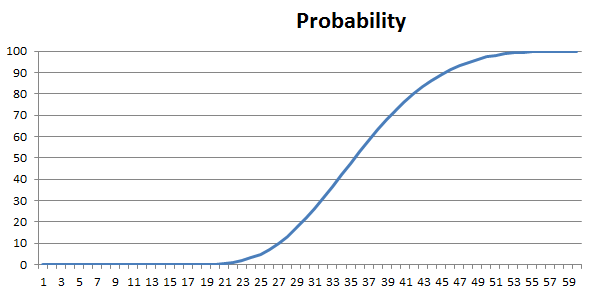
To add to the original post, I noticed that the shops in my area typically sell figures from 1 box from behind the counter, so the total amount of figures is fixed and no one has gone through them to pick the rare ones. This is not covered by the original post, so I took a few minutes to simulate what happens in that case. The simulation consists of filling a box with the known distribution of figures (I took the series 6 distribution mentioned by WhiteFang in his review) and then counting how many you have to open before you have a complete set. This I repeat 100.000 times and the probabilities are directly calculated from that. The graph is below, and the interesting observation is that you still require quite a lot of packets (35-36) to have a 50% chance of getting a complete set, but quite a bit less than in the 'open' situation. You're pretty much guaranteed to get to 100% before you reach 60 packets, simply because you bought the entire box in that case :).