Rumpelmuck Posted October 27, 2014 Posted October 27, 2014 Hi Folks, maybe that topic has been discussed somewhere else, but searches here, youtube and other forums wouldn't led me to the proper results . I'm thinking of the best way to power two HE 10233. Basically there are severeal ways to do so with PF: 1. 1x train motor (88002), 1x IR receiver (8884), 1x battery pack (88000) For 2x HE it may be a little bit less power. It shall be moving but at low speed. Agree? 2. 2x train motor (88002), 1x IR receiver (8884), 1x battery pack (88000), 1x polarity switch (8869), 2x extension cord (8871) Extension cord is used to lead the power through the entire Train, poalrity Switch to change driving direction of the second motor. More power should drive the train faster but also will shorten the time until the batteries/rechargebles are empty. 3. Most expensive solution: 2x train motor, 2x IR receiver, 2x battery box Due to the two battery boxes the polarity switch is not needed and also the extension cords are obsolete. But what will happen, if the 2 Receiver will get different signals!?!?!?!?! So, what do you think? Cheers Thomas Quote
snowvictim Posted October 27, 2014 Posted October 27, 2014 Hi Folks, maybe that topic has been discussed somewhere else, but searches here, youtube and other forums wouldn't led me to the proper results . I'm thinking of the best way to power two HE 10233. Basically there are severeal ways to do so with PF: 1. 1x train motor (88002), 1x IR receiver (8884), 1x battery pack (88000) For 2x HE it may be a little bit less power. It shall be moving but at low speed. Agree? 2. 2x train motor (88002), 1x IR receiver (8884), 1x battery pack (88000), 1x polarity switch (8869), 2x extension cord (8871) Extension cord is used to lead the power through the entire Train, poalrity Switch to change driving direction of the second motor. More power should drive the train faster but also will shorten the time until the batteries/rechargebles are empty. 3. Most expensive solution: 2x train motor, 2x IR receiver, 2x battery box Due to the two battery boxes the polarity switch is not needed and also the extension cords are obsolete. But what will happen, if the 2 Receiver will get different signals!?!?!?!?! So, what do you think? Cheers Thomas I used the 3rd method. Most conventional in my opinion. The extra weight from the battery packs helps too as the engine-car weight ratio on the HE isn't too big. 1 battery box is out of the question in my opinion. Also the feeding of the cable through the whole train - it's quite long you know, I wouldn't do that. 1st option, it would barely move (tried it). Quote
cimddwc Posted October 27, 2014 Posted October 27, 2014 I'm using "option 2a", so to speak: no extension cords, just two motors on one engine. (Just enough space to squeeze the switch inside.) Works quite well, but you might need a 1x2 tile connecting the pulling engine to the first car since the magnets alone aren't strong enough for all situations (engine on a straight downhill, cars in curves...). Quote
baard Posted October 27, 2014 Posted October 27, 2014 I used a variant of option 2, i.e. an extra RC motor with the extension/conversion cable in the first loco (just because I had one laying around). This provides enough pulling power for the whole train. Option 3 is not viable in a layout with tunnels Good luck with your choice Quote
deraven Posted October 27, 2014 Posted October 27, 2014 I'm using "option 2a", so to speak: no extension cords, just two motors on one engine. (Just enough space to squeeze the switch inside.) Works quite well, but you might need a 1x2 tile connecting the pulling engine to the first car since the magnets alone aren't strong enough for all situations (engine on a straight downhill, cars in curves...). Now, personally I'd go with 2 9v motors and call it a day. But as far as PF stuff goes, I'd have to agree with cimddwc- fit as much as you can in 1 loco and help out the coupling if you need to. That way you don't have to worry about signaling issues, but you still have enough power to move it easily and it's still cheaper and easier than doing a whole PF setup in each loco. And yeah, with only 1 RC motor the HE really isn't very express. Quote
Man with a hat Posted October 27, 2014 Posted October 27, 2014 I'm using "option 2a", so to speak: no extension cords, just two motors on one engine. (Just enough space to squeeze the switch inside.) Works quite well, but you might need a 1x2 tile connecting the pulling engine to the first car since the magnets alone aren't strong enough for all situations (engine on a straight downhill, cars in curves...). Yes, that's my option too. And it works very well. Quote
Duq Posted October 27, 2014 Posted October 27, 2014 How about putting the second motor under the first carriage behind the engine? No need for a polarity switch, no need to run a cable the length of your train (which would make it tricky to lift it off the track). Not sure if you'd need a single extension cable in that scenario. Quote
Rumpelmuck Posted October 27, 2014 Author Posted October 27, 2014 Tanks a lot for your replies. I'll think I should go for Option 2a. How do you power the lights in the second loco? Quote
detjensrobert Posted October 27, 2014 Posted October 27, 2014 Try either an old 9v battery or an 9v battery () Quote
Redimus Posted October 27, 2014 Posted October 27, 2014 I did option two, minus the polarity switch, I just put the second motor in backwards. It's not idea having the hole for the wire the wrong side of the motor, but it doesn't actually seem to affect the train at all., also I used old (and very long technic wires plus short modern wires to convert to the right type of connection, but that was because I happened to have the old wires spare. Quote
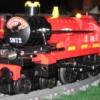
Rumpelmuck Posted October 31, 2014 Author Posted October 31, 2014 Here's a pic how I managed to put all necessary items the font loco. Any ideas to optmize to put in the nice Lady again? Quote
dr_spock Posted October 31, 2014 Posted October 31, 2014 Make the engine with switch the rear. The girl can stay in the unmodified front engine. Quote
Rumpelmuck Posted October 31, 2014 Author Posted October 31, 2014 I tried to put the switsch in the rear but didn't manage it. Either the IR Receiver didn't fit or the battery pack collided with the Switch. :-( Do you have any pics? Quote
detjensrobert Posted November 1, 2014 Posted November 1, 2014 I think what dr_spock meant was the powered engine in the rear of the train, pushing instead of pulling. Quote
Man with a hat Posted November 1, 2014 Posted November 1, 2014 Here's a pic how I managed to put all necessary items the font loco. Any ideas to optmize to put in the nice Lady again? This is how I managed: Quote
Rumpelmuck Posted November 20, 2014 Author Posted November 20, 2014 Perfect. Copy that! Thanks! Quote

Recommended Posts
Join the conversation
You can post now and register later. If you have an account, sign in now to post with your account.